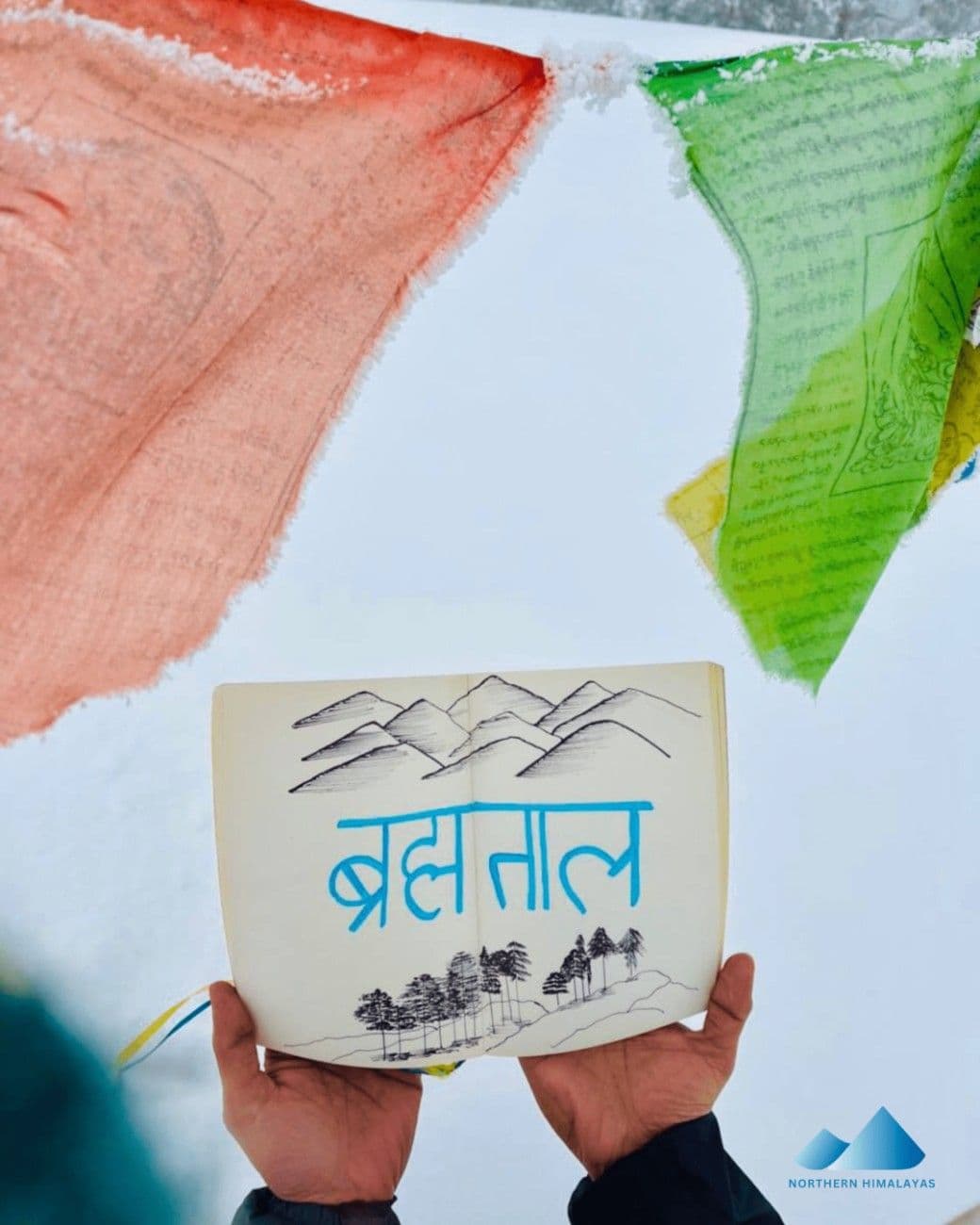
December to February — Peak Winter Season (Frozen Lakes and Heavy Snow)
December to February is the best and most popular time to do the Brahmatal Trek. During these months, the entire trail is covered in snow, starting from Lohajung itself. Both Bekaltal and Brahmatal Lake remain completely frozen, creating a true winter trekking experience.
December- December brings the first heavy snowfall of the season. The forests, trees, and trails look fresh and beautiful under white snow.
This is a great month for trekkers who want fresh snow and balanced winter conditions.
January- January is the coldest month and also the snowiest. Snow on the trail can become very deep, and the frozen lakes look stunning.
This month is best for trekkers who want a complete snow trekking experience and have proper winter gear
February- February still offers excellent snow conditions, but temperatures slowly start becoming easier compared to January.
It is a very good month for trekkers who want snow and frozen lakes without facing the extreme cold of peak winter.
March to April — Spring Season (Rhododendrons and Melting Snow)
March to April is one of the most beautiful times to do the Brahmatal Trek. During this season, the snow slowly starts melting and the forests become colourful with blooming rhododendron flowers.
In March, snow is still present on many higher sections of the trail, especially above 10,000 ft. The red rhododendron flowers look stunning against the white snow and blue sky.
-
Early March may still have partially frozen lakes
-
By late March, Brahmatal Lake starts melting around the edges
-
Trails can be slightly wet and muddy due to melting snow
Temperature
-
Day: 5°C to 12°C
-
Night: –2°C to –5°C
April is quieter compared to the winter season, with fewer trekkers on the route. The meadows near Brahmatal Lake slowly turn green, making the trek peaceful and scenic.
This season is perfect for trekkers who want a mix of snow, flowers, greenery, and comfortable weather.
May to June — Green Meadows and Pleasant Summer Weather
By May, the snow is largely gone below 11,000 ft. The trail is fully accessible with dry, clear paths through the forest and open meadows near the lake. The rhododendrons have bloomed and the meadows are beginning to green. Temperatures are pleasant — 12°C to 18°C in the day, 5°C to 10°C at camp.
The lakes in May are fully thawed, which removes the frozen lake experience. But the views of Trishul and Nanda Ghunti are still clear, the trail is easy, and the flowers are beautiful. This is a good season for trekkers who want Himalayan views and green scenery without snow.
Early June is the cusp of the pre-monsoon period — still trekkable but with increasing cloud cover in afternoons. Avoid late June as the monsoon approaches.
September to November — Clear Skies and Stable Weather
Post-monsoon autumn (late September to November) is excellent for Brahmatal. The monsoon has cleaned the air — visibility is at its best and the Himalayan peaks are sharp and clear. The forests are fresh and lush. Temperatures are comfortable in October (10°C to 16°C days, 2°C to 7°C nights) and cooling in November.
There is no snow at lower altitudes until late November, but the upper reaches may have fresh snowfall from October onwards. This season offers the clearest views of the trek without the extreme cold of winter. An excellent choice for trekkers who want good views and comfortable conditions without the January challenge.
July to August — Monsoon Season and Trail Risks
July and August are the monsoon months. Heavy rainfall makes the trail slippery, the forest paths become muddy and prone to flash waterlogging, and the road to Lohajung carries landslide risk. Most responsible trekking operators suspend Brahmatal departures during this period.
Views are largely blocked by cloud cover, the lakes are obviously thawed, and the trek experience is significantly diminished. Avoid this period entirely.
Month-wise Temperature and Weather Table
|
Month
|
Day Temp
|
Night Temp
|
Snow on Trail
|
Crowd Level
|
Best For
|
|
December
|
0–5°C
|
–5 to –10°C
|
Heavy (full)
|
Medium-High
|
Frozen lakes, winter experience
|
|
January
|
–3 to 3°C
|
–10 to –15°C
|
Very Heavy
|
High
|
Maximum snow, deep winter
|
|
February
|
–1 to 6°C
|
–8 to –12°C
|
Heavy
|
Medium
|
Snow + slightly warmer
|
|
March
|
3–10°C
|
–3 to –5°C
|
Patchy (upper)
|
Low
|
Rhododendrons + partial snow
|
|
April
|
7–14°C
|
0–3°C
|
Minimal
|
Low
|
Spring, green, comfortable
|
|
May
|
12–18°C
|
5–10°C
|
None
|
Low
|
Green meadows, good views
|
|
June
|
14–20°C
|
8–12°C
|
None
|
Very Low
|
Pre-monsoon, avoid late June
|
|
Jul–Aug
|
14–18°C
|
10°C
|
None
|
Avoid
|
Monsoon — not recommended
|
|
Sep
|
10–16°C
|
4–8°C
|
None
|
Low
|
Post-monsoon clears, fresh
|
|
October
|
8–14°C
|
1–5°C
|
None below 10K
|
Low-Med
|
Clear skies, best views
|
|
November
|
3–10°C
|
–3 to –6°C
|
Light (upper)
|
Low
|
Autumn clarity, early snow
|
Key Stops and Landmarks Along the Brahmatal Trek Route
Lohajung Village (7,610 ft) — Base Camp and Starting Point
Lohajung is a small village in the Wan Valley, Chamoli district — the start and end point of the Brahmatal trek. At 7,610 feet, it already gives you a proper Himalayan first impression: mountain ridges on all sides, clear cool air, and the quiet of a village without mobile data.
The village has several guesthouses that accommodate trekking groups, a small market area, and basic medical facilities during trekking season. Most trekkers arrive here on Day 1 (evening) after the long drive from Kathgodam or Dehradun, have dinner, attend the trek briefing, and sleep early for Day 2's start.
Lohajung also serves as base camp for two other significant treks: Ali Bedni Bugyal and the Roopkund Trek — making it one of the most versatile trekking bases in the Garhwal Himalayas.
The approach road to Lohajung — from Gwaldam onwards — is considered one of the most scenic drives in Uttarakhand. The route passes through Kausani's famous Himalayan panorama, the Pindar River valley, and the dramatic Wan Valley before reaching Lohajung.
Bekaltal Lake (9,700 ft) — First Campsite Beside the Frozen Lake
Bekaltal Lake is the first campsite on the Brahmatal Trek. Located at 9,700 ft, this beautiful lake stays completely frozen during winter and is surrounded by dense forests.
The trek from Lohajung to Bekaltal is around 6 km and passes through oak and rhododendron forests. Some sections are steep, but the trail is very scenic and enjoyable.
Camping beside the frozen lake is one of the highlights of the trek. During clear evenings, the lake and surrounding trees look stunning under the soft mountain light.
At night, the sky is filled with stars because there is very little light pollution in this area, making Bekaltal a great place for stargazing.
Winter night temperature: around –5°C to –10°C
It is usually the first really cold campsite of the trek, so proper winter clothing and a good sleeping bag are important.
Tilandi Top (10,495 ft) — First Major Himalayan Viewpoint
Tilandi Top is a beautiful viewpoint on Day 3 of the Brahmatal Trek, located between Bekaltal and Brahmatal Lake. At around 10,495 ft, this is the point where the dense forest starts opening into wide mountain landscapes.
From Tilandi Top, trekkers get their first clear and close views of famous Himalayan peaks like Trishul and Nanda Ghunti. The snow-covered mountains look massive and stunning, especially on clear days.
This point also marks a big change in the trek scenery. After walking through forests for two days, the trail now becomes more open with snowy slopes, mountain ridges, and wide Himalayan views all around.
Brahmatal Lake (12,000 ft) — Sacred Alpine Lake Campsite
Brahmatal Lake is the main highlight of the entire trek. At 12,000 feet in an open, snow-covered amphitheatre, the lake is frozen solid from December through February. The mountains — Trishul and Nanda Ghunti most prominently — are reflected in the ice on the few occasions when the surface is clear of snow.
Brahmatal Lake is also considered sacred in Hindu tradition. Lord Brahma — the creator in the Hindu trinity — is said to have meditated here for years. The lake's name comes directly from this legend: "Brahma's lake." There are no permanent structures at the lake — no temple, no dhaba, no human presence beyond the trekking camp. The natural setting is entirely preserved.
Camping at Brahmatal Lake at 12,000 feet is the most intense night of the trek. Temperatures drop to –12°C to –15°C in January, and even in December they reach –10°C. A high-quality sleeping bag rated for –15°C is not optional here — it's essential.
But the experience of waking up at 12,000 feet beside a frozen Himalayan lake, with Trishul directly in front of you catching the first light of sunrise — this is what makes Brahmatal one of the most memorable treks available to a beginner in India.
Jhandi Top / Brahmatal Summit (12,250 ft) — Highest Point of the Trek
Jhandi Top is the highest point of the Brahmatal Trek, located at around 12,250 ft. It is usually reached on Day 4 of the trek.
The route to Jhandi Top passes through beautiful snowy ridges like Chota Jhandidar and Bada Jhandidar, offering some of the best views on the trek.
From Jhandi Top, the full 360° panorama opens up. To the north: Trishul, Nanda Ghunti, Neelkanth, Chaukhamba. To the east: Nanda Devi (on clear days). To the south: the Roopkund route ridges including Ali Bugyal and Bedni Bugyal. To the west: the Wan Valley and the approach ridges you've walked.
The walk along the Jhandidar ridges is the most dramatic terrain of the trek — and also the section that requires the most caution. The ridges are narrow and exposed. In deep snow, the edges can be poorly defined. Stay on the packed trail, follow your guide, and don't rush this section for photographs.
Mandoli Village — Traditional Mountain Village Near Lohajung
Mandoli is a small Himalayan village on the route from Lohajung to Bekaltal. Trekkers usually pass through this village on Day 2 of the Brahmatal Trek.
The village is known for its traditional stone houses, narrow paths, and terraced fields. During winter, snow often covers the rooftops and nearby fields, making the village look very scenic.
During the trekking season, local villagers sometimes set up small tea stalls where trekkers can enjoy hot tea and simple snacks while resting on the trail.
Mandoli gives trekkers a chance to see the simple lifestyle and culture of the local Garhwali mountain communities before entering the higher forest sections of the trek.
Brahmatal Trek — Brief Itinerary Summary
|
Day
|
Route
|
Trek Distance
|
Trek Hours
|
Night Altitude
|
|
Day 1
|
Rishikesh → Lohajung (drive)
|
—
|
10–12 hrs drive
|
7,610 ft
|
|
Day 2
|
Lohajung → Bekaltal
|
6 km
|
4–5 hrs
|
9,700 ft
|
|
Day 3
|
Bekaltal → Brahmatal Lake via Tilandi Top
|
7 km
|
4–5 hrs
|
12,000 ft
|
|
Day 4
|
Brahmatal Summit (Jhandi Top) → descent to Lohajung
|
9–10 km
|
5–7 hrs
|
7,610 ft
|
|
Day 5
|
Lohajung → Rishikesh (drive)
|
—
|
10–12 hrs drive
|
—
|