Spring Season (March–April) – Rhododendrons & Last Snow
Spring is one of the best times to do the Chopta Tungnath Chandrashila Trek. During March and April, the forests along the trail come alive with blooming rhododendrons, painting the hillsides in beautiful shades of red, pink, and white.
One of the biggest highlights of this season is the combination of colorful flower-filled forests and snow-covered mountain peaks. While the lower trails begin to turn green, patches of snow often remain near Tungnath and Chandrashila, creating stunning landscapes for trekkers and photographers.
Daytime temperatures are comfortable for trekking, while mornings and evenings remain cold, usually ranging between 0°C and 5°C in Chopta. The weather is generally pleasant, and trail conditions improve significantly as winter snow starts to melt.
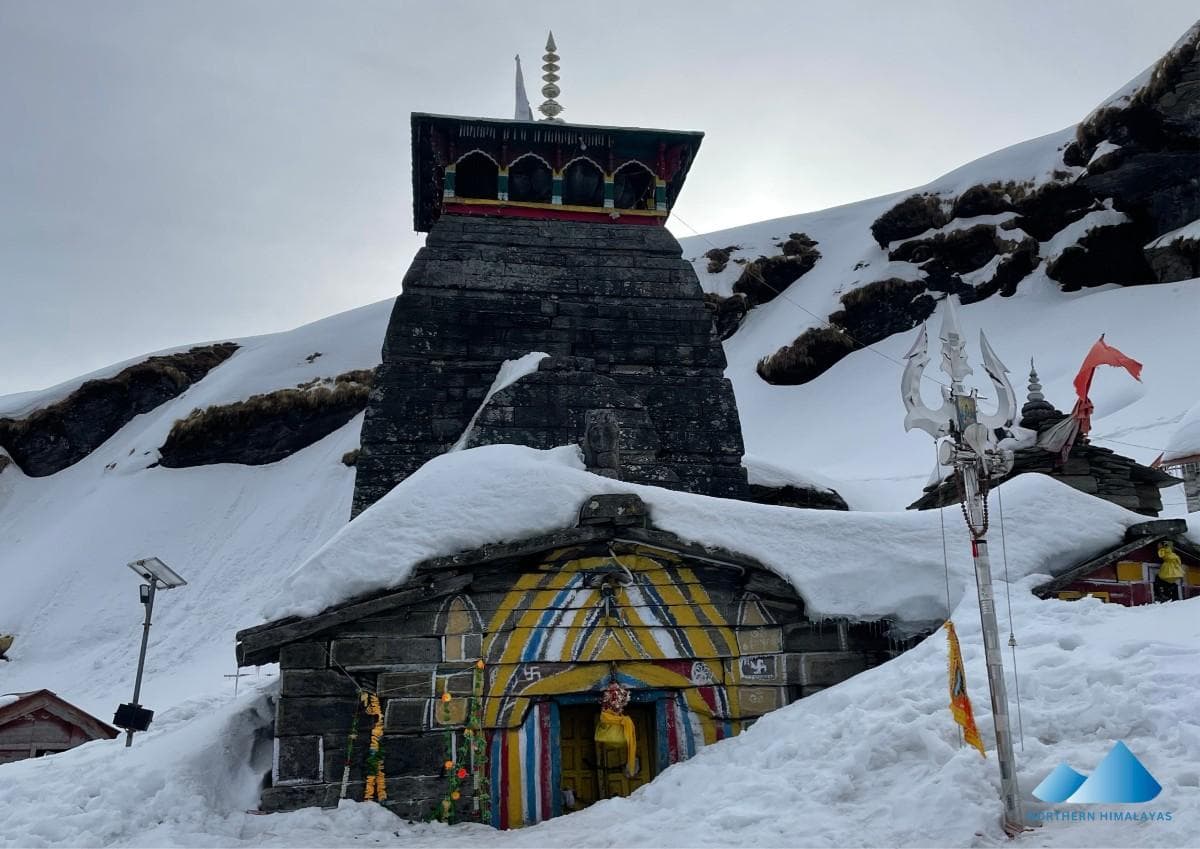
For pilgrims and devotees, this season is especially important because Tungnath Temple reopens after the winter closure. In 2026, the temple reopened on 22 April after remaining closed during the snowy winter months.
Why Visit in Spring?
Beautiful rhododendron blooms throughout the forests
Snow-covered views near Tungnath and Chandrashila
Pleasant trekking weather
Excellent photography opportunities
Reopening of Tungnath Temple after winter
Summer Season (May–June) – Pleasant Weather for Beginners
May and June are considered the most comfortable months for the Chopta Tungnath Chandrashila Trek. With pleasant weather, clear skies, and well-maintained trails, this is the perfect season for beginners, families, and first-time trekkers.
During the day, temperatures generally range between 12°C and 20°C, making trekking enjoyable without extreme heat or cold. Evenings and early mornings remain cool and refreshing, providing ideal conditions for camping and outdoor activities.
One of the biggest advantages of trekking during summer is the excellent visibility. On clear days, you can enjoy breathtaking views of famous Himalayan peaks such as Chaukhamba, Nanda Devi, Trishul, and Kedarnath. The trails are mostly free of snow, making the trek easier and safer for those with little trekking experience.
Since Tungnath Temple is open during this period, many pilgrims visit the region along with trekkers. As a result, the trail can be busier compared to other seasons, especially on weekends and holidays.
Why Visit in Summer?
Ideal weather for beginners and families
Clear mountain views and excellent visibility
Comfortable daytime temperatures
Snow-free and easy-to-follow trails
Tungnath Temple remains open for visitors
Great season for camping and photography
If you're looking for the perfect mix of pleasant weather, stunning Himalayan views, and a comfortable trekking experience, May is often considered one of the best months to do Chopta Chandrashila trek.
Monsoon Season (July–August) – Avoid This Period
The monsoon season in Uttarakhand usually lasts from mid-June to mid-September. While the forests around Chopta become lush green and vibrant during this time, July and August are generally not considered ideal months for the Chopta Tungnath Chandrashila Trek.
Heavy rainfall often makes the trails slippery, muddy, and more challenging to walk on. In the lower forest sections, trekkers may also encounter leeches, especially after continuous rain. In addition, the mountain roads leading to Chopta can be affected by landslides and road blockages, which may cause travel delays or cancellations.
Another drawback of trekking during the monsoon is the limited visibility. Thick clouds and fog frequently cover the mountain peaks, making it difficult to enjoy the panoramic Himalayan views that the trek is famous for.
Although some experienced trekkers still visit during this season, most trekking experts and tour operators recommend choosing another time of the year for a safer and more enjoyable experience.
Why Avoid the Monsoon Season?
Slippery and muddy trekking trails
Increased risk of landslides on mountain roads
Reduced visibility due to clouds and fog
Possibility of leeches in forested sections
Weather-related travel delays
If you must visit during the monsoon, late August is usually slightly better than July, as rainfall may begin to reduce. However, weather conditions can still be unpredictable, and caution is essential.
Planning a Monsoon Trek?
We occasionally operate treks during the monsoon season when weather and trail conditions are considered safe by our local team. Before making travel plans, we recommend checking our upcoming Chopta Tungnath Chandrashila trek batches for the latest updates on departures, weather conditions, and availability. If we are running scheduled departures during your preferred dates, you are welcome to join us for a safe and well-organized trekking experience.
Autumn Season (September–November) – Crystal Clear Views
Post-monsoon autumn (September through November) is the second-best season for Chopta Tungnath Chandrashila trek, and many experienced trekkers consider it the best. The rains have washed the atmosphere clean, so visibility from Chandrashila can be extraordinary — you can sometimes see peaks 150+ km away. Temperatures are moderate in September (10°C–18°C at Chopta) and begin dropping sharply by October and November. The forest turns golden and amber. Crowds are significantly lower than in summer. Tungnath Temple closes around November 4–5, 2026, so plan your visit before that if you want temple access.
Winter Season (December–February) – Snow Trek Experience
Winter transforms the Chopta Tungnath Chandrashila Trek into a breathtaking snow-covered adventure. From December onwards, snowfall begins to blanket the forests, meadows, and mountain slopes, turning the entire region into a stunning white wonderland.
This is the perfect season for trekkers who want to experience snow without attempting a highly technical Himalayan expedition. During January and February, the trail towards Tungnath and Chandrashila can be covered with several feet of snow, creating a truly memorable winter trekking experience.
The snow-covered forests, frozen landscapes, and clear mountain skies make winter one of the most photogenic seasons in Chopta. Unlike the busy summer months, the trails are much quieter, allowing trekkers to enjoy the peaceful beauty of the Himalayas.
However, winter trekking requires proper preparation. Temperatures in Chopta can drop as low as -10°C during the night, and snow-covered sections may require equipment such as microspikes, crampons, or trekking poles for better safety and grip.
Please note that Tungnath Temple remains closed during winter, and the deity is moved to Makkumath Village for seasonal worship. Trekkers can still enjoy the route up to the snow-covered surroundings, depending on weather and trail conditions.
Month-wise Temperature Table
Month | Min Temp (°C) | Max Temp (°C) | Snow | Trail Status |
January | -10 | 2 | Heavy | Open (with crampons) |
February | -8 | 4 | Heavy | Open (with crampons) |
March | -2 | 10 | Moderate | Good |
April | 2 | 15 | Light | Excellent |
May | 7 | 20 | Nil | Excellent |
June | 10 | 22 | Nil | Good |
July | 12 | 18 | Nil | Avoid (monsoon) |
August | 11 | 17 | Nil | Avoid (monsoon) |
September | 8 | 18 | Nil | Excellent |
October | 2 | 14 | Nil | Excellent |
November | -3 | 8 | Light | Good (early month) |
December | -8 | 2 | Heavy | Caution |
When Does Tungnath Temple Open and Close? (Opening & Closing Dates 2026)
For 2026, Tungnath Temple opened its gates on April 22, 2026, as declared by the Badri Kedar Temple Committee on Baisakhi. The closing date is expected around November 4–5, 2026, following the Diwali and Bhai Dooj festivals. During the winter closure (November to April), the deity is ceremonially moved to the Markandeya Temple in Makkumath village, where worship continues. If you're visiting in winter, you can attend darshan at Makkumath — but the Tungnath temple building itself will be closed and snow-covered.