The mythological story — why Lord Shiva's face is worshipped at Rudranath
The origin story of the Rudranath Temple dates back to the epic era of the Mahabharata. After the colossal war at Kurukshetra, the Pandava brothers felt deeply burdened by the guilt of Gotra Hatya (killing their own kinsmen and teachers during the battle). To seek forgiveness and wash away their sins, they traveled to the Himalayas to find Lord Shiva and seek his divine blessings.
However, Lord Shiva was deeply displeased by the widespread destruction of the war and wished to avoid them. He transformed himself into a divine bull and hid among the cattle grazing in the high meadows of Guptkashi. When the clever Bhima spotted him and tried to hold onto the bull, the deity dove deep into the earth, rematerializing in five distinct parts across the Garhwal region—an event that established the five sacred temples of the Panch Kedar Yatra.
The face of the bull emerged directly out of the rugged rocks of Rudranath, establishing it as a site of immense spiritual power where Lord Shiva is worshipped in the form of his face. Unlike many large, crowded temple complexes, Rudranath is simple and natural. The shrine is built inside a rocky cave surrounded by mountains and green meadows, where the deep silence creates a powerful spiritual feeling for visiting devotees.
Why this trek is unique — not just a pilgrimage,
The Rudranath Trek is unique because it is not just about reaching a temple—the journey itself changes your perspective and demands an intense personal transformation. This trail does not allow you to remain a passive tourist; instead, it tests your stamina and mental focus with steep terrain, long ridge walks, and unpredictable weather.
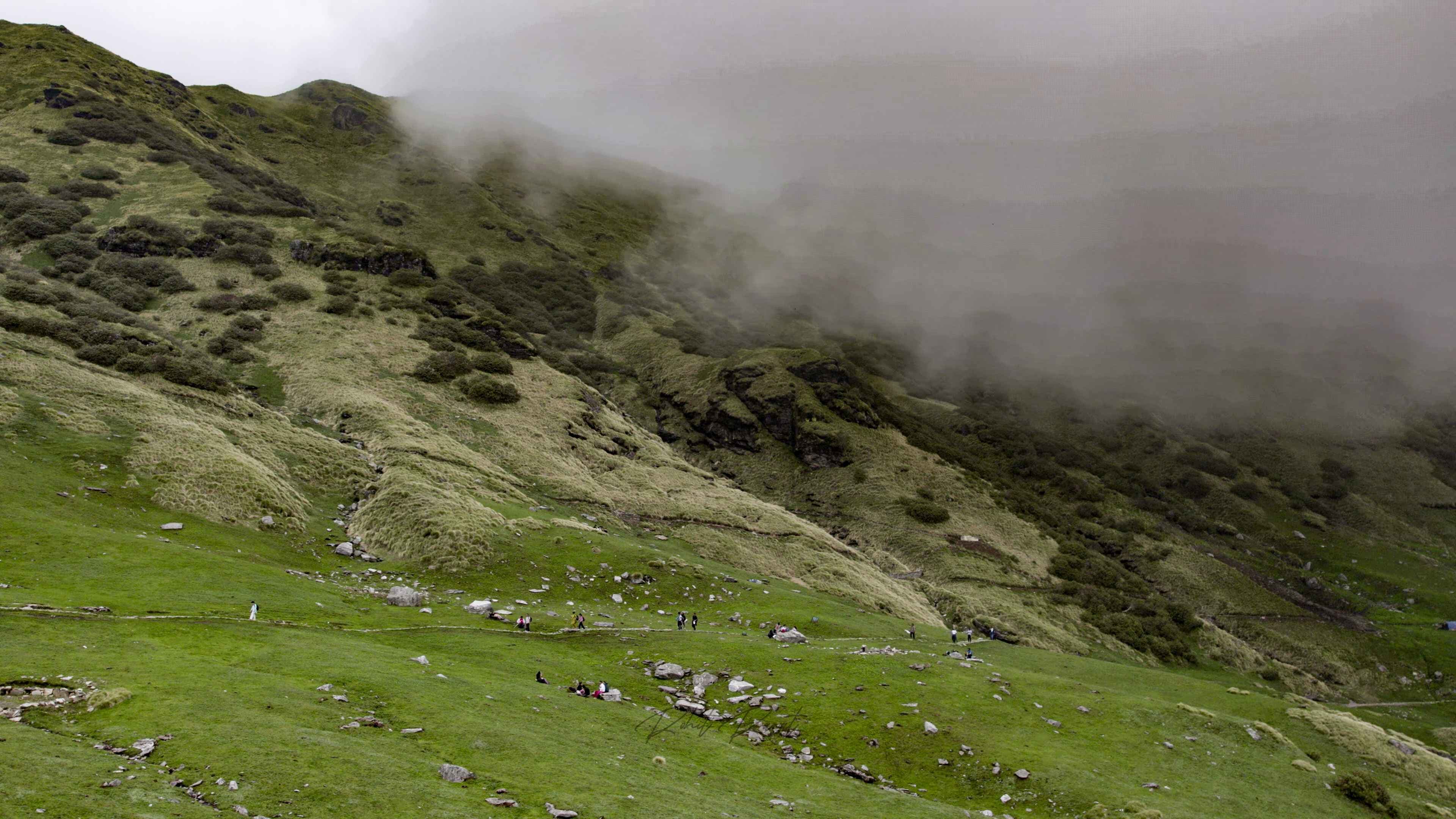
At the same time, the landscape constantly rewards your physical resilience. One moment you are walking inside dark oak forests, and the next moment the trail opens into massive alpine meadows (bugyals) with stunning views of peaks like Nanda Devi, Trishul, Chaukhamba, and Nanda Ghunti.
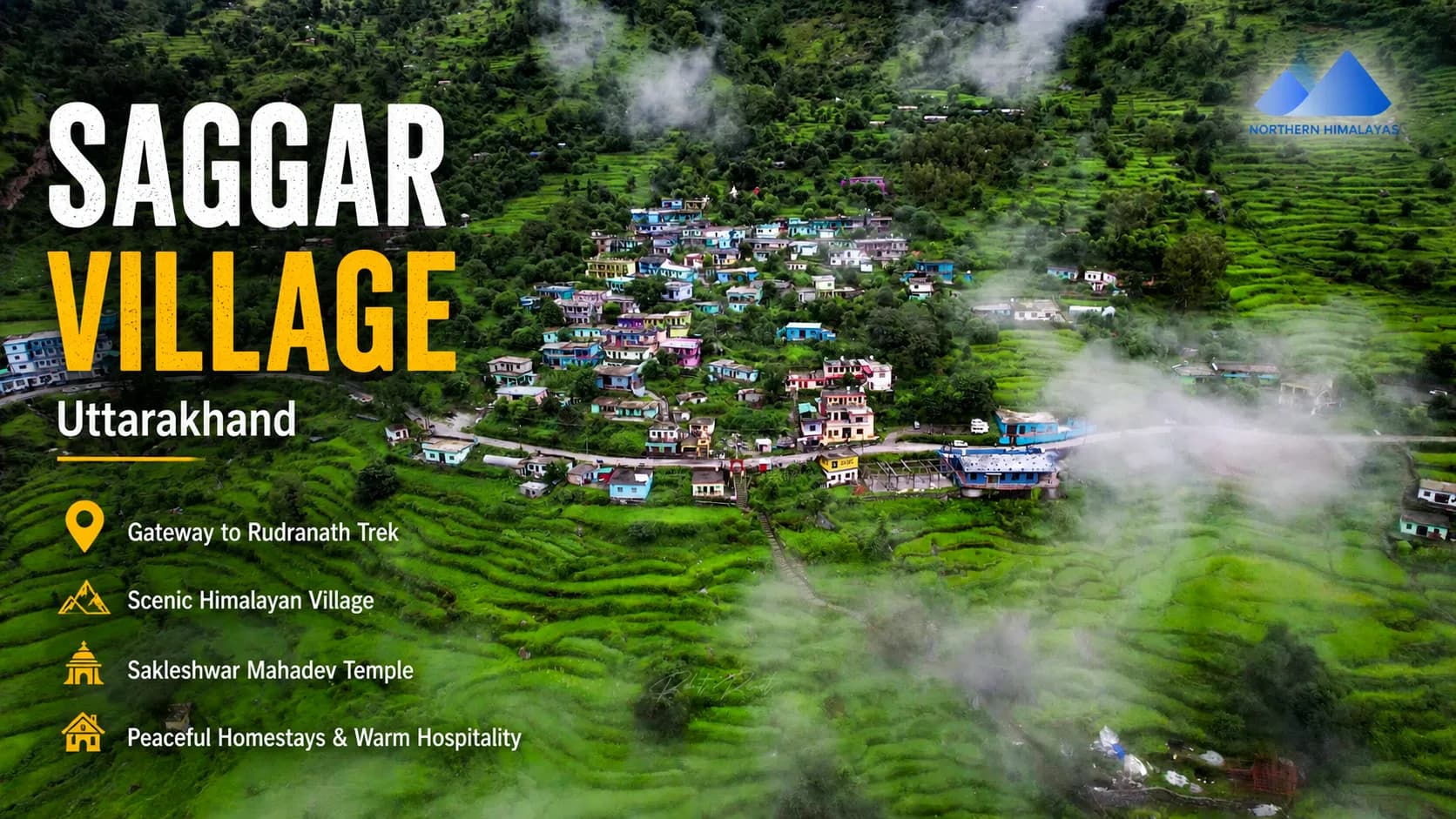
The isolation of this trail forces a deep internal shift. Once you leave Sagar Village, there are no large crowds, busy roads, or noisy markets. For long stretches of the hike, the only sounds you will hear are the wind rushing through the grass, flowing streams, and the distant call of mountain birds. Walking through this peaceful, quiet landscape forces you to strip away the distractions of modern life, replacing stress with a profound sense of clarity and accomplishment that stays with you long after the trek ends.
Basic trek information
To help you plan your travel logistics effectively, here is a structured operational breakdown of the core metrics governing the entire trail:
-
Trek Difficulty: Moderate to Difficult
-
Maximum Altitude: Approx. 11,800 ft
-
Trek Duration: 5–6 days
-
Total Trek Distance: Around 40–45 km round trip
-
Base Camp: Sagar Village
-
Best Time: May–June and September–October
-
Region: Chamoli district, Uttarakhand
-
Forest Area: Kedarnath Wildlife Sanctuary
Panch Kedar Yatra — Significance and Mythology of Rudranath
The Panch Kedar Yatra is one of the most respected pilgrimage circuits in Uttarakhand. It includes five temples dedicated to Lord Shiva — Kedarnath, Tungnath, Rudranath, Madhyamaheshwar, and Kalpeshwar.
Among these temples, Rudranath is considered one of the toughest and most spiritual because of its remote location deep inside the mountains. Unlike road-connected shrines, reaching Rudranath requires genuine effort and physical endurance.
Kedarnath Madmaheshwar Tungnath Rudranath Kalpeshwar
(Hump) (Navel) (Arms) (Face) (Hair)
The five Panch Kedar temples and their order of worship
According to ancient scriptural traditions, the five temples are recognized and traditionally visited in a specific spiritual sequence:
-
Kedarnath: Where the hump (Pindari) of Lord Shiva is worshipped at an altitude of 3,583m
-
Madmaheshwar: Where the navel (Nabhi) of the deity is enshrined in a stunning green valley.
-
Tungnath: Where the arms (Bahu) are worshipped at the highest Hindu temple in the world (3,680m).
-
Rudranath: Where the divine face (Mukha) is protected within a natural rock cave temple (3,600m).
-
Kalpeshwar: Where the matted tresses and hair (Jata) are worshipped, remaining open all year round (2,200m).
Rudranath as the fourth and toughest Panch Kedar — what makes it different
Among all the five temples in the circuit, Rudranath is universally respected as the most difficult and physically demanding destination to reach. While Kedarnath has wide, engineered paths and helicopter services, and Tungnath features a short, well-paved climb from Chopta, Rudranath remains completely wild and uncommercialized.
There are no motorable roads, no paved tourist tracks, and absolutely no permanent concrete structural developments within kilometres of the shrine. To reach it, you must rely entirely on your own leg power, carrying your gear across miles of steep dirt paths and exposed high-altitude ridge lines. This complete lack of easy access preserves its pristine nature, making it a true wilderness test.
Gopinath Temple at Gopeshwar — the winter abode of the deity
Because the temple is situated at a high altitude within a heavy snow zone, heavy snowfall blocks access to Rudranath Temple during the cold winter months. When the gates close in late autumn, the symbolic entry idol of Lord Shiva is carefully carried down the mountain slopes in a festive palanquin procession by local priests. The deity is shifted to the historic Gopinath Temple in the town of Gopeshwar, where the daily winter worship, rituals, and prayers continue until the mountain passes melt open again in May. Many pilgrims visit Gopinath Temple during this off-season when the main Rudranath route remains inaccessible.