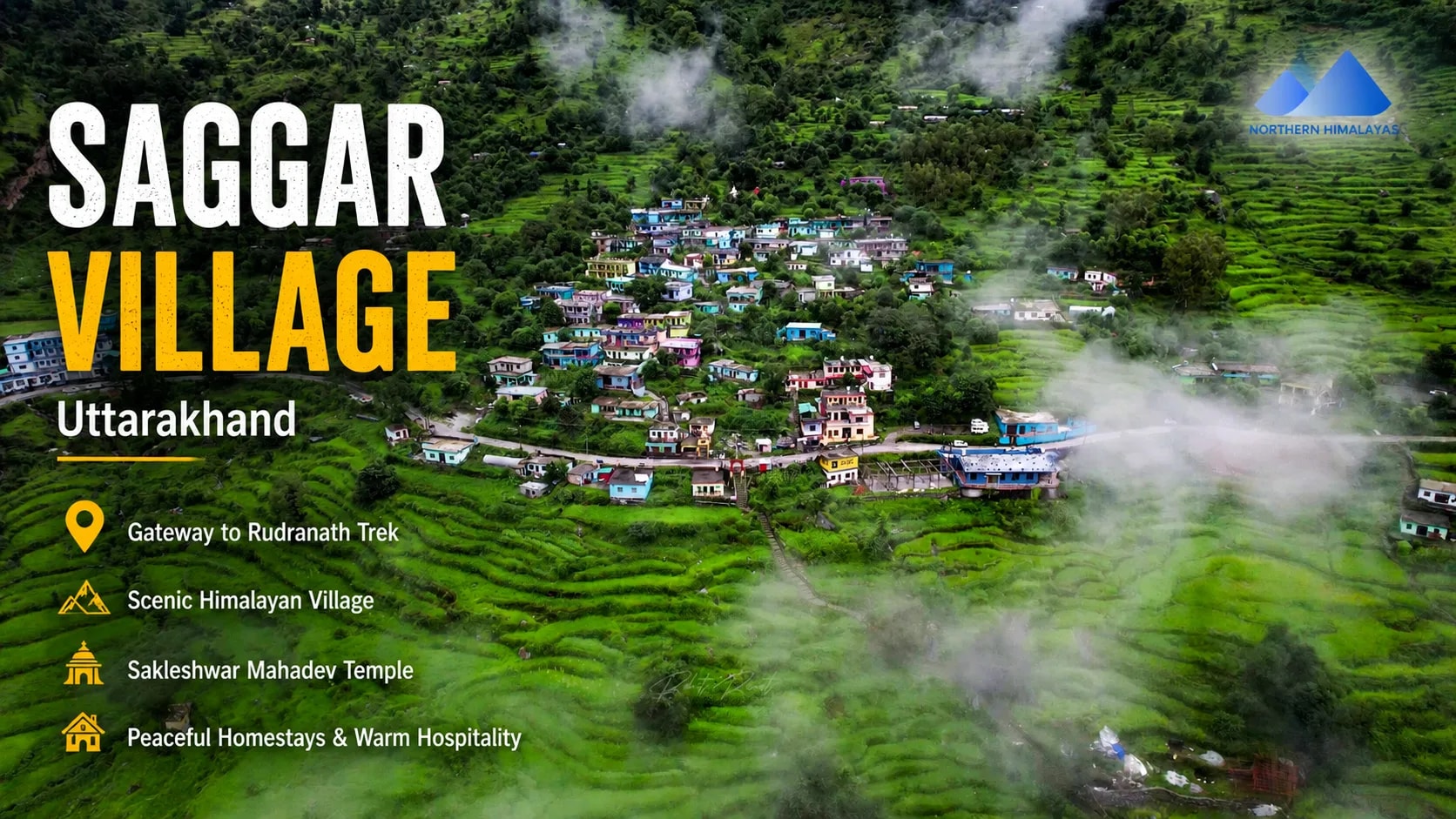
If you’re planning the Rudranath trek or exploring lesser-known Himalayan routes, chances are you’ve come across Saggar Village. But here’s the thing—most people treat it as just a starting point.
In this detailed guide, you’ll understand everything—from trek routes and distances to stay options, weather realities, and how to actually plan your journey from cities like Delhi or Rishikesh. If you're serious about trekking in this region, this is the only guide you’ll need.
Where is Saggar Village? Location, Altitude & Overview
Saggar Village is situated in the Chamoli district of Uttarakhand, near Gopeshwar. It sits at an approximate altitude of around 2,000 meters, which makes it an ideal acclimatization point before heading deeper into the mountains.
Geographically, it lies in the Garhwal Himalayas and acts as one of the main entry points for the Rudranath temple trek, part of the Panch Kedar circuit.
What makes this location important isn’t just its altitude—but its position. It marks the transition from road-accessible terrain to pure trekking territory. Beyond Saggar, you’re walking through forests, bugyals (meadows), and high-altitude ridges.
From a practical perspective:
-
Last motorable village for Rudranath route
-
Limited network connectivity
-
Basic facilities only
This means once you reach here, planning mistakes become difficult to fix. That’s why understanding Saggar Village properly matters more than people think.
What Makes Saggar Different from Other Himalayan Base Camps
Most Himalayan base camps like Sankri or Lohajung have become commercialized hubs filled with cafes and loud music. Saggar is different; it has retained its "old-world" Himalayan charm. One of the primary differentiators is the Sakleshwar Mahadev Temple.
Unlike other base camps where the trek starts from a parking lot, here, the trek officially begins only after you offer prayers at this ancient stone temple. It sets a spiritual tone that is unique to the Panch Kedar trails.
Another factor is the sheer gradient. Most base camps offer a gentle warm-up walk on Day 1. Saggar does not believe in warm-ups. The moment you leave the last house of the village, the incline hits a 35 to 45-degree angle. This "trial by fire" approach filters out the casual tourists from the serious trekkers. Furthermore, Saggar is located within a highly protected wildlife sanctuary. The biodiversity you encounter within just two kilometers of the village—ranging from Monal pheasants to the occasional musk deer track—is far superior to the more crowded routes in the Bhagirathi or Alaknanda valleys.
Finally, the homestay culture in Saggar is rooted in Atithi Devo Bhava. In many commercial hubs, you are just a booking number. In Saggar, you are often sitting in a local kitchen, eating Bhatt ki Churkani (black bean curry) and Mandua Roti (finger millet bread) while the host narrates legends of the Pandavas. It is an immersive cultural experience that prepares your mind for the spiritual solitude of the shrines ahead.
treks start from saggar village
Saggar is the undisputed nerve center for trekking in the Mandal-Gopeshwar belt. It serves as the primary artery for several high-altitude trails that cater to both spiritual pilgrims and adventure seekers. The trails here are characterized by dense temperate forests of oak and rhododendron that eventually give way to the "Bugyals" (alpine meadows).
Saggar to Rudranath Trek (Distance, Route & Key Highlights)
The Saggar to Rudranath trek distance is approximately 20–22 kilometers one way. This is not a distance to be taken lightly. While 20 km on flat ground is a morning walk, here it involves an altitude gain of over 1,500 meters in a single day if you attempt to reach the top quickly.
-
The Route: The trail starts from Saggar and goes through Pung Bugyal, Lwiti Bugyal, and Panar Bugyal, finally crossing the Pitradhar ridge (13,000 ft) before descending to the temple.
-
Key Highlights: The "Vertical Climb" through the forest is a test of lung capacity. However, once you break the tree line at Panar, the view of the Himalayan giants—Nanda Devi, Trishul, and Chaukhamba—is so close you feel you could touch them.
-
Expert Advice: Do not attempt to do this in one day unless you are an elite athlete. The thinning air at Pitradhar can cause rapid AMS (Acute Mountain Sickness) if you haven't rested at Panar.
Saggar to Panar Bugyal Trek: (Distance, Route & Key Highlights)
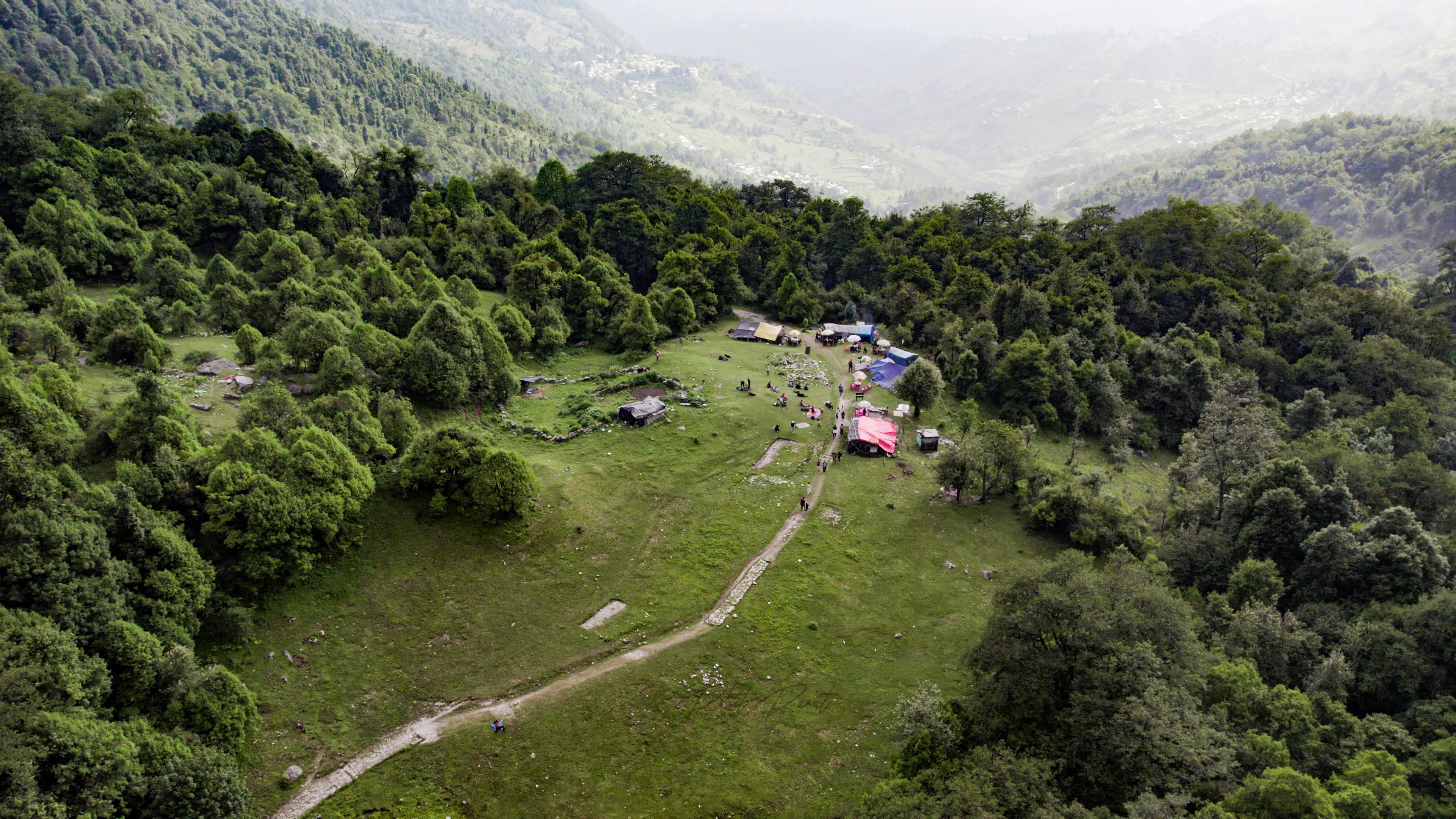
For those who find the full Rudranath journey too daunting, the Saggar to Panar Bugyal trek is a magnificent intermediate alternative. Panar is situated about 12 kilometers from Saggar.
-
Distance & Route: It takes about 6–8 hours of consistent climbing. The route is a relentless uphill zigzag through a canopy of ancient oaks.
-
Key Highlights: Panar is often called the "Red Meadow" in late spring because of the rhododendron blooms. It offers a 360-degree view of the peaks that is arguably better than the view from the temple itself.
-
Experience: Staying overnight in a shepherd’s hut at Panar, watching the sunset turn the Nanda Devi massif into a golden spear, is the highlight of this trek. It is the perfect spot for astrophotography due to zero light pollution.
Sakleshwar Mahadev Temple: (Distance, Route & Key Highlights)
Located right at the entrance of the village (0 km distance), the Sakleshwar Mahadev Temple is the spiritual guardian of Saggar.
-
Highlights: The temple architecture is classical North Indian stone style, featuring intricate carvings of deities. It is dedicated to Lord Shiva.
-
Significance: Every trekker and pilgrim is traditionally required to ring the bell here and seek permission from Sakleshwar Mahadev before entering the forest. It acts as a mental marker—once you cross the temple, the world of mobile signals and roads is left behind.
Saggar Village to Anusuya Devi Temple Trek (Distance, Route & Key Highlights)
While most people start the Anusuya Devi trek from Mandal, a more challenging and rewarding route exists from Saggar Village.
-
Distance & Route: This is an 8–10 km traverse through the forest. It connects the two most sacred valleys in the region.
-
Highlights: The trail is a birdwatcher’s paradise. You are likely to spot the Himalayan Griffon soaring above. The temple itself is dedicated to Sati Anusuya and is famous for its peaceful atmosphere and the nearby Atri Muni Ashram (a cave behind a waterfall).
-
Why take this route: It allows you to create a "circuit" trek, starting from Saggar, visiting Rudranath, and then descending via the forest to Anusuya Devi and finishing at Mandal village.
How to Reach Saggar Village from Delhi, Rishikesh, Haridwar, and Beyond
Reaching Saggar Village is an adventure in itself, involving a transition from the plains of India to the deep heart of the Garhwal Himalayas.
-
From Delhi: The most efficient way is to take an overnight Volvo bus or the Nanda Devi Express train to Rishikesh/Haridwar. From there, you must start early (5:00 AM) to catch a direct bus or shared taxi to Gopeshwar. Saggar is just a 15-minute taxi ride from Gopeshwar.
-
From Rishikesh/Haridwar: The distance is about 210 km. The drive takes 8–10 hours due to mountain terrain and the ongoing "All-Weather Road" construction. You will follow the Alaknanda River, passing through the famous "Prayags" (confluences): Devprayag, Srinagar, Rudraprayag, and Karnaprayag.
-
From Mumbai/Gujarat: Fly into Jolly Grant Airport (Dehradun). From the airport, you can hire a private taxi directly to Saggar (approx. 8-9 hours) or take a shuttle to Rishikesh and follow the bus route.
-
Pro Tip: Always try to reach Gopeshwar by 4:00 PM. This gives you enough time to reach Saggar, check into a homestay, and organize your permits/mules for the next morning.
Gopeshwar to Saggar Village Distance & Local Transport Options
The Gopeshwar to Saggar village distance is a short but scenic 5 kilometers. Because of this proximity, Saggar is incredibly easy to access once you reach the main town.
-
Shared Taxis: Locally known as "Maxx," these run every 15–20 minutes from the main Gopeshwar taxi stand. The fare is nominal (approx. ₹20–₹30).
-
Private Hire: A private Alto or Bolero will charge between ₹200 and ₹400 depending on the time of day and your luggage.
-
Walking: If you want to warm up your legs, the walk from Gopeshwar to Saggar is a pleasant uphill stroll through pine groves, taking about 1.5 hours.
-
Logistics: There are no petrol pumps in Saggar. If you are driving your own vehicle, ensure you fuel up at the Gopeshwar petrol pump, which is the last reliable one before the trek base.
Accommodation Options: Homestays in Saggar Village Uttarakhand
The accommodation in Saggar has evolved from basic trekkers' lodges to beautiful, culturally rich homestays.
-
Traditional Homestays: These are the soul of the village. You stay with a local family, often in rooms that are part of their ancestral home. The bathrooms are usually common but clean. These are the best for solo trekkers and those on a budget (₹800–₹1,200 per night including meals).
-
Trekker Lodges: Located near the Sakleshwar temple, these are designed for groups. They offer dormitory beds and basic private rooms. They have "Mud Kitchens" where you can sit around a fire—essential for the cold mountain nights.
-
Why Homestays? The information you get from a local host is invaluable. They will tell you if the "Pagal Jhora" (a seasonal stream on the trail) is overflowing or if there has been recent snow at Pitradhar. This real-time intelligence is something no Google search can provide.
Why most of the trekkers prefer Northern Himalayas for trek packages
When planning a complex high-altitude journey like Rudranath, many trekkers choose specialized operators like Northern Himalayas or Roopkund Heaven.
-
Permit Management: Getting forest permits in Gopeshwar can be a bureaucratic hurdle. These operators handle the paperwork in advance.
-
Safety Gear: High-quality tents and -10 degree sleeping bags are hard to carry from the city. Professional packages include tested gear and, more importantly, oxygen cylinders and oximeters for the climb to 13,000 feet.
-
Experienced Staff: The guides provided by Northern Himalayas are usually locals who have walked these trails hundreds of times. They know exactly how to pace a beginner to ensure they don't burn out before reaching Panar Bugyal.
-
Hassle-free Logistics: From picking you up at the Rishikesh railway station to ensuring a hot meal is ready when you arrive at a cold campsite, the "commercial" support allows you to focus on the spiritual and physical experience rather than worrying about where your next meal is coming from.
Best Time to Visit Saggar Village Uttarakhand (Season Guide)
The best time to visit Saggar village depends entirely on your objective.
-
Summer (May – June): This is the pilgrimage season. The weather is pleasant in the village (15°C to 25°C), and the higher reaches are finally accessible after the snow melts. This is the best time for beginners.
-
Monsoon (July – August): Only for the hardcore. The trail is full of leeches, and the rain is relentless. However, the village is surrounded by thousands of waterfalls, and the greenery is psychedelic.
-
Post-Monsoon (September – October): The "Gold" season. The air is crystal clear. You get the best views of the Himalayan peaks. The meadows of Panar turn from green to a deep burnt orange.
-
Winter (November – April): The village stays open, but the trek to Rudranath closes. This is a great time for a quiet retreat in a homestay to experience local Garhwali winter life, though temperatures can drop to 0°C.
Road Conditions and Travel Experience While Approaching Saggar Village
The drive to Saggar is one of the most beautiful in India, but it requires patience. The "All-Weather Road" project has significantly widened the roads, but it also means you will encounter construction zones and occasional traffic stops near Srinagar and Rudraprayag.
The road clings to the Alaknanda River for most of the way. You will witness the changing colors of the river at each confluence. The final stretch from Karnaprayag to Gopeshwar is a steep climb where you gain significant altitude. The road is generally well-paved, but during the monsoon, small boulders can fall, so daytime driving is highly recommended. The travel experience is a mix of awe (at the deep gorges) and prayer (at the sharp turns)!
Weather in Saggar Village: What Trekkers Should Expect
The weather in Saggar village is temperate but acts as a precursor to the extreme conditions higher up.
-
Daytime: Even in summer, a light breeze usually keeps the temperature comfortable. You can trek in a single quick-dry t-shirt.
-
Nighttime: As soon as the sun sets, the temperature drops by 10–12 degrees. You will need at least a fleece or a light down jacket.
-
Rain: The village sits in a high-precipitation zone. Sudden afternoon showers are common in May and June. Always keep your rain poncho in the outer pocket of your backpack when leaving Saggar.
-
Winter: Snowfall in Saggar village itself is rare but happens once or twice a year in January. However, the peaks directly above the village stay white for months.
Responsible Trekking: Leave No Trace Principles for the Saggar Village
Saggar is the entry point to a fragile ecosystem. As a trekker, you are a guest in the home of the Snow Leopard and the Blue Sheep.
-
Plastic Management: There is no waste management system in high-altitude meadows. Whatever plastic you take from Saggar (biscuit wrappers, bottles), you must bring back to Saggar and dispose of it in Gopeshwar.
-
Respect Water Sources: The streams flowing through Saggar are used by the villagers for drinking. Do not use soap or chemicals in the natural springs.
-
Local Culture: Ask for permission before taking photos of the villagers or their homes. Dress modestly—this is a religious circuit.
-
Stay on the Trail: Cutting switchbacks on the Saggar-Panar route causes soil erosion, which can lead to landslides during the monsoon. Respect the stone-paved path.
Frequently Asked Questions (FAQs)
1. Is there an ATM in Saggar Village?
No. The last reliable ATMs are in Gopeshwar. Because Saggar homestays and trek shacks only deal in cash, ensure you withdraw enough money at the Gopeshwar main market before heading to Saggar.
2. Is mobile network available in Saggar?
Yes, Jio and Airtel work perfectly in Saggar Village with 4G/5G speeds. However, as soon as you cross the Sakleshwar temple and walk 1 km into the forest, the signal vanishes completely.
3. Can I park my private car in Saggar?
Yes, there are small designated parking spots near the road-head and some homestays offer private parking. It is generally very safe to leave your vehicle there for 3-4 days while you trek.
4. Do I need a guide for the Saggar to Rudranath trek?
For beginners, a guide is highly recommended. The trail through the dense forest can be confusing during fog or rain. For intermediate trekkers, the trail is well-marked, but having a local guide supports the local economy and ensures safety.
5. Are there leeches on the Saggar trek?
Only during the monsoon months (July-August). During the peak seasons of May-June and Sept-Oct, leeches are almost non-existent.
6. Can I buy trekking gear in Saggar?
No. You can find basic supplies like sticks, raincoats, and torches. For professional gear like boots or rucksacks, Gopeshwar is your last option, though even there, the selection is limited. Buy your gear in Rishikesh or Dehradun.