Table of Contents
- Adi Kailash Yatra Suspended – Latest Official Update
- Why the Administration Stopped the Adi Kailash Yatra
- Inner Line Permit (ILP) Suspension
- Areas Most Affected by Heavy Rain
- Current Road Conditions for Adi Kailash Yatra
- Weather Conditions in the Adi Kailash Region
- When Will Adi Kailash Yatra Reopen?
- What Should Pilgrims Do If They Have Already Booked the Yatra?
- Travel Advisory for Future Pilgrims
- Official Sources to Track Adi Kailash Yatra Updates
- Frequently Asked Questions
Adi Kailash Yatra Suspended – Latest Official Update
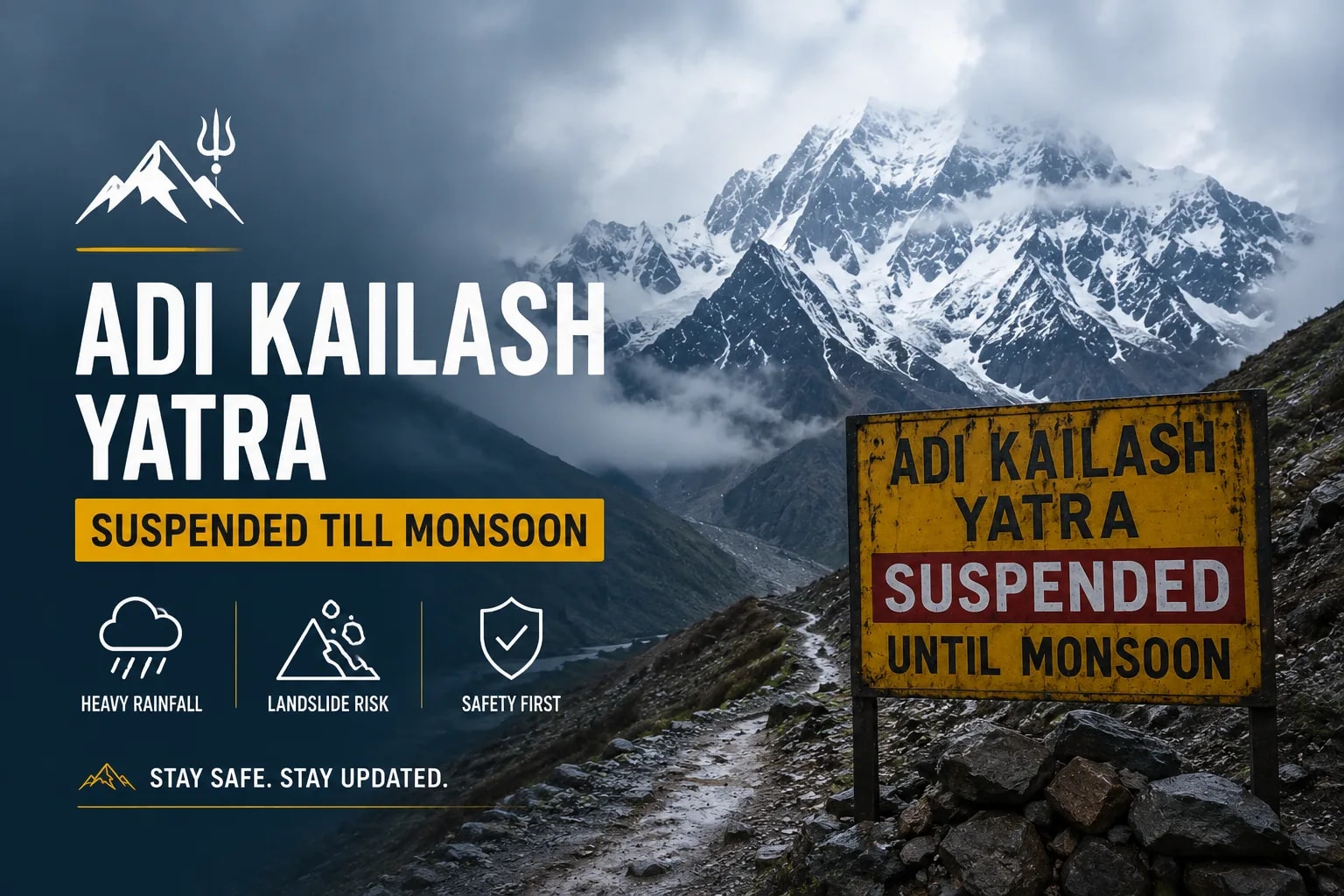
The Adi Kailash Yatra has officially been put on hold by the local administration in Pithoragarh, and this is not a rumour spreading on social media. It is a confirmed order backed by district officials who are directly monitoring the ground situation. For anyone tracking Adi Kailash Yatra news, this is the most important update right now — no new permits are being issued and pilgrims already on the route are being advised to pause their journey until conditions are safer.
Why Has the Adi Kailash Yatra Been Suspended?
The Adi Kailash Yatra has been suspended because of heavy and continuous rainfall in the Kumaon region of Uttarakhand, especially in Pithoragarh district. During the monsoon, the area receives intense rainfall, which increases the risk of landslides, road blockages, and flash floods.
This is not a temporary delay caused by light rain. The weather has made several parts of the yatra route unsafe for travelers. Roads can become slippery, rocks may fall from hillsides, and some stretches can get blocked without warning.
To protect the safety of pilgrims, the district administration has temporarily stopped the yatra and suspended the issuance of Inner Line Permits (ILPs). This decision has been taken as a preventive measure based on weather forecasts and reports from local authorities, ensuring that no one is put at unnecessary risk until conditions improve.
From Which Date Has the Suspension Been Implemented?
The Pithoragarh district administration implemented the suspension on 2 July 2026, following continuous heavy rainfall and worsening weather conditions in the higher Himalayan region. On the same day, officials also stopped issuing new Inner Line Permits (ILPs) for the Adi Kailash and Om Parvat Yatra until further orders.
The decision was not taken because of a single day of rain. Before announcing the suspension, the administration reviewed weather forecasts, rainfall reports, road conditions, and the increasing risk of landslides and road blockages. Since the safety of pilgrims was the top priority, authorities decided to temporarily halt the yatra until conditions improve.
If you had planned your Adi Kailash Yatra after 2 July 2026, you should postpone your trip and regularly check updates from the Pithoragarh District Administration or our upcoming batches date and updates. The yatra will resume only after the administration confirms that the roads are safe and weather conditions are suitable for travel.






Which Government Authorities Issued the Order?
The suspension order was issued by the Pithoragarh District Administration in coordination with the Uttarakhand Government, local disaster management authorities, police, and other agencies responsible for managing the Adi Kailash route. Since the yatra passes through a sensitive border area near the India–China border, the decision was taken jointly to ensure the safety of all pilgrims.
Is the Suspension Temporary or for the Entire Season?
The suspension is temporary and has been imposed only for the monsoon season. It is not a cancellation of the entire Adi Kailash Yatra. Every year, heavy rainfall during July and August increases the risk of landslides and road damage, making travel unsafe.
The yatra is expected to resume once the weather improves and the administration confirms that the roads are safe for pilgrims. In most years, this happens after the monsoon weakens, usually around September, although the exact reopening date depends on weather conditions and official safety assessments.
Why the Administration Stopped the Adi Kailash Yatra
Stopping an entire pilgrimage route is not a small decision, especially in a region where the local economy depends heavily on yatra season tourism. The administration wouldn't take this step unless the risk was genuinely serious. Understanding the real reasons helps you see this isn't bureaucratic overcaution — it's a response to actual, on-ground danger.
Heavy Rainfall Across Pithoragarh District
Pithoragarh district has been receiving continuous heavy rainfall, especially in the higher Himalayan regions where the Adi Kailash Yatra takes place. Prolonged rain has made the hillsides unstable, increasing the risk of landslides, falling rocks, and flash floods.
In mountainous areas like Kumaon, the danger comes not from a single day of rain but from several days of continuous rainfall. As the soil becomes saturated, slopes become weak and can collapse without warning. Considering these unsafe conditions, the administration decided to temporarily suspend the yatra until the weather improves and the route becomes safe for pilgrims.
Increased Risk of Landslides Along the Route
The Adi Kailash route runs through narrow mountain roads carved into steep hillsides, and these are naturally prone to landslides during monsoon. When soil is already saturated from days of rain, even a small trigger — another spell of rain, a truck's vibration, or loose debris — can bring down rocks and mud onto the road. This is the single biggest safety concern driving the suspension.
For beginner trekkers especially, it's important to understand that landslide risk isn't something you can simply "watch out for" on the go. Unlike a slippery trail step you can see and avoid, a landslide can happen without warning, often in seconds, burying stretches of road that were completely clear an hour earlier. This unpredictability is exactly why experienced guides treat monsoon-season landslide zones as a hard no-go, not a manageable risk.
Road Damage and Blocked Highways
Continuous heavy rainfall has damaged several sections of the Adi Kailash Yatra route. In many places, roads have been blocked by landslides, falling rocks, and mud, making travel unsafe for vehicles and pilgrims.
Since most parts of the route have only one road connecting the remote villages, even a single landslide can completely stop traffic. Repairing these roads takes time and depends on improved weather conditions.
Safety of Pilgrims as the Top Priority
The main reason for suspending the Adi Kailash Yatra is to ensure the safety of pilgrims. During the monsoon, heavy rainfall can trigger sudden landslides, flash floods, and road blockages, making travel through the remote Himalayan region extremely risky.
The Adi Kailash route passes through high-altitude border areas where medical and emergency services are limited. In case of an accident or road closure, rescue operations can be difficult and time-consuming. To prevent any loss of life or inconvenience to pilgrims, the administration has temporarily halted the yatra until weather and road conditions become safe again.
Inner Line Permit (ILP) Suspension
The Inner Line Permit (ILP) is mandatory for all pilgrims visiting Adi Kailash and Om Parvat because the route passes through a sensitive area near the India–China border. Without a valid ILP, travelers are not allowed to enter beyond designated security checkpoints.
Since the yatra has been temporarily suspended, the administration has also stopped issuing new Inner Line Permits until further notice.
Why Has the Inner Line Permit Been Stopped?
The Pithoragarh District Administration has suspended the issuance of new Inner Line Permits (ILPs) to prevent more pilgrims from entering the region during unsafe weather conditions. Continuous heavy rainfall has increased the risk of landslides, road blockages, and flash floods, making travel dangerous.
By temporarily stopping new permits, the administration can better manage the situation, reduce the number of people on the route, and ensure that no pilgrims are exposed to unnecessary risks. New ILPs will be issued again only after the weather improves and the roads are declared safe for travel.
What Happens to Existing Permit Holders?
If you already hold a valid Inner Line Permit, it doesn't mean you can travel freely right now — pilgrims currently in the region or holding permits are being advised to stay put or turn back from safer points, depending on where they are on the route. Your permit remains valid, but actual movement is being managed day-to-day based on road conditions.
In practice, this means local police and checkpoint staff are making real-time calls on who can move forward and who needs to wait, based on conditions reported just hours earlier. If you're already holding a permit and planning to travel soon, call ahead to the checkpoint or your operator rather than simply showing up and hoping the road is clear.
When Will New Permits Be Issued Again?
New Inner Line Permits (ILPs) will be issued only after the weather improves and the roads are declared safe by the Pithoragarh District Administration. There is no official reopening date yet, as the decision depends on rainfall, road conditions, and safety assessments. Pilgrims are advised to check official updates regularly before planning their journey.
Areas Most Affected by Heavy Rain
Heavy rainfall has not affected the entire Adi Kailash Yatra route equally. Some sections have experienced severe landslides and road blockages, while others are being closely monitored. The most affected areas are located along the route from Dharchula to Jolingkong and Om Parvat, where continuous rain has made travel unsafe.
Dharchula Region
Dharchula, the main gateway to the Adi Kailash and Om Parvat Yatra, has been one of the worst-affected areas due to continuous heavy rainfall. Since almost all pilgrims pass through this town, any disruption here directly affects the entire yatra.
Heavy rain has increased the risk of landslides, road blockages, and falling rocks on the roads around Dharchula. As a result, the district administration is closely monitoring the situation and has advised pilgrims to avoid travelling until weather and road conditions improve. Since Dharchula is also the place where Inner Line Permits (ILPs) are verified before entering the border region, the suspension of the yatra has significantly reduced movement beyond this point.
Tawaghat and Sobla Road
The Tawaghat–Sobla road is one of the most landslide-prone sections of the Adi Kailash Yatra route. Continuous heavy rainfall has triggered landslides and falling rocks in several places, making this stretch unsafe for vehicles and pilgrims.
Since this road is the main link between Dharchula and the higher Himalayan villages, any blockage can completely stop the yatra. The Border Roads Organisation (BRO) and local authorities are monitoring the situation and clearing debris wherever possible.
Gunji Village
Gunji, an important halt point on the way to Adi Kailash and Om Parvat, has also been affected by the ongoing weather conditions. As a village that many pilgrims pass through or rest at, disruptions here directly impact the pace and safety of the overall journey.
Nabi and Kuti Villages
Nabi and Kuti are remote high-altitude villages on the Adi Kailash Yatra route. Continuous heavy rainfall has made these areas more vulnerable to landslides, road blockages, and sudden weather changes.
As these villages are located in the higher Himalayas, even a small landslide can disrupt road connectivity.
Jolingkong (Adi Kailash Base)
Jolingkong, the base point from where pilgrims get their closest view of Adi Kailash peak, sits at a high altitude where weather can change within hours. Heavy rain here doesn't just mean muddy trails — it can mean sudden fog, reduced visibility, and slippery final stretches, all adding to the risk.
This is also the point where many first-time pilgrims underestimate how different high-altitude weather feels compared to lower stretches of the journey. A clear, sunny morning at Dharchula can turn into thick fog and drizzle by the time you reach Jolingkong, simply because of the altitude gain. That unpredictability is a major reason this final stretch gets extra scrutiny during monsoon.
Om Parvat Route via Nabidhang
The Om Parvat viewpoint route via Nabidhang is equally sensitive to the same weather system, since it branches off from largely the same road network. If the Adi Kailash route is unsafe, the Om Parvat route is almost always affected too, which is why both yatras have been suspended together.
Current Road Conditions for Adi Kailash Yatra
Heavy monsoon rainfall has affected several sections of the Adi Kailash Yatra route, making travel unsafe. Landslides, falling rocks, and damaged roads have disrupted connectivity in many areas between Dharchula and Jolingkong. As a result, the administration has temporarily suspended the yatra until road conditions improve.
Roads Closed Due to Landslides
Several parts of the Adi Kailash route are currently blocked due to landslides, mudslides, and falling rocks. In some places, debris has completely covered the road, making it impossible for vehicles to pass safely.
To protect pilgrims, authorities have stopped movement on these affected stretches until the roads are cleared and declared safe.
Border Roads Organisation (BRO) Restoration Work
The Border Roads Organisation (BRO) is working to remove landslide debris and repair damaged roads along the Adi Kailash route. However, continuous rainfall is making restoration work challenging, as fresh landslides can occur during ongoing rain.
BRO teams are monitoring the situation and carrying out repairs whenever weather conditions allow.
Expected Time to Restore Road Connectivity
At present, no official date has been announced for the complete restoration of road connectivity. The reopening of the route depends on improved weather conditions, successful road repairs, and safety inspections by the authorities.
Pilgrims should avoid relying on unofficial reports or estimated reopening dates. Instead, they should regularly check updates from the Pithoragarh District Administration and the Border Roads Organisation (BRO) before planning their journey.
Weather Conditions in the Adi Kailash Region
The weather in the Adi Kailash region can change very quickly, especially during the monsoon season. Heavy rainfall, strong winds, and poor visibility are common in the higher Himalayas, making travel difficult and increasing the risk of landslides. This is why weather conditions play a major role in deciding whether the yatra can continue safely.
IMD Heavy Rainfall Alert
The India Meteorological Department (IMD) has issued heavy rainfall alerts for Pithoragarh and other parts of Uttarakhand. These alerts warn of intense rain, which can lead to landslides, flash floods, and road blockages in the mountainous region.
Based on these weather warnings, the district administration decided to temporarily suspend the Adi Kailash Yatra to ensure the safety of pilgrims.
Monsoon Pattern in Kumaon Himalayas
The Kumaon Himalayas receive the highest rainfall between late June and August. During this period, the weather can change suddenly, with heavy rain falling within a few hours. Such conditions can quickly trigger landslides and make mountain roads unsafe.
Because of these unpredictable weather patterns, authorities closely monitor the situation before allowing pilgrims to travel.
Why July and August Are High-Risk Months
July and August are the peak monsoon months in the Region and are considered the most risky time for the Adi Kailash Yatra. Continuous rainfall weakens mountain slopes, increasing the chances of landslides and road closures.
When Will Adi Kailash Yatra Reopen?
The Adi Kailash Yatra has been temporarily suspended due to the monsoon, and many pilgrims are now waiting to know when the journey will resume. While there is no official reopening date yet, the yatra is expected to restart only after the weather improves and the route is declared safe by the authorities.
Expected Reopening After the Monsoon
If weather conditions improve as expected, the Adi Kailash Yatra is likely to resume after the monsoon season, usually in September. However, this is only an expected timeline based on previous years and not an official confirmation.
At Northern Himalayas, we recommend planning your yatra for mid or late September or October, when the weather is generally more stable, roads are safer, and the chances of weather-related disruptions are much lower.
Factors That Will Decide the Reopening
The yatra will reopen only after the authorities confirm that it is safe for pilgrims. Before lifting the suspension, officials will review:
-
Weather conditions and rainfall
-
Road repairs and landslide clearance
-
Safety reports from the Border Roads Organisation (BRO)
-
Recommendations from the district administration and disaster management teams
Only after these conditions are met will new Inner Line Permits (ILPs) be issued and the yatra resume.
Official Sources for Latest Updates
For the latest information, always rely on official government announcements from the Pithoragarh District Administration, the Uttarakhand Government, and the India Meteorological Department (IMD). These authorities provide verified updates on weather conditions, road status, Inner Line Permits (ILPs), and the reopening of the Adi Kailash Yatra.
If you're planning your journey with Northern Himalayas, keep an eye on our upcoming Adi Kailash Yatra batches. As soon as the administration officially resumes the yatra, we will open bookings for the next available departures. We recommend booking your seat in advance, as permits are limited and batches often fill up quickly once the yatra restarts.
What Should Pilgrims Do If They Have Already Booked the Yatra?
If you have already booked your Adi Kailash Yatra, there is no need to panic. Since the suspension has been ordered by the government for safety reasons, the best approach is to stay updated and coordinate with your tour operator. Here are the steps you should follow.
Contact Your Tour Operator
The first thing you should do is contact your tour operator to get the latest information about your departure. They can inform you whether your trip will be postponed, rescheduled, or cancelled based on the latest government guidelines.
If you have booked your Adi Kailash Yatra with Northern Himalayas, our team will personally contact all affected travelers and provide regular updates. You can also reach out to us anytime for information about your booking, permit status, and the next available departure dates.
Rescheduling Your Trip
Most tour operators are allowing pilgrims to reschedule their yatra instead of cancelling it. This lets you shift your booking to the next available batch after the yatra officially resumes.
At Northern Himalayas, we recommend rescheduling your trip to September or October, when the weather is generally safer and road conditions are more stable.
Refund Policy
Refund policies vary from one tour operator to another. Some operators may offer a full refund, while others may provide a partial refund or adjust the booking amount for a future departure.
If you have booked with Northern Himalayas, please contact our support team to understand the refund or rescheduling options available for your booking.
Hotel and Transport Bookings
If you have booked hotels, taxis, or flights separately, contact the respective service providers as soon as possible. Request a date change or cancellation according to their policy to avoid unnecessary charges.
Before making any changes, always confirm the latest status of the Adi Kailash Yatra with your tour operator or the district administration. This will help you plan your journey more efficiently once the yatra resumes.
Travel Advisory for Future Pilgrims
Even after the yatra reopens, monsoon-related risk in this region doesn't disappear overnight. Here's how to plan smarter for future trips, whether this year or in years to come.
Avoid Traveling During Peak Monsoon
As a general rule, avoid planning this yatra during July and August unless you have no other option. Even in years without a formal suspension, monsoon travel here carries real risk that off-season or post-monsoon travel simply doesn't.
If you have flexibility in your annual leave or travel plans, shifting your Adi Kailash trip to September or even early October, once the monsoon has clearly passed, will almost always give you a smoother, less stressful experience than trying to squeeze it into the risky monsoon window.
Monitor Weather Forecasts
Don't just check the weather once while booking — track forecasts in the days leading up to your actual departure, since Himalayan weather can change quickly. A clear forecast a month out means very little a week before your trip.
A good habit here is checking forecasts at three points: when you book, one week before departure, and the night before you actually leave for the hills. This staged approach catches sudden changes that a single early check would completely miss, giving you a real chance to adjust plans if things take a turn.
Check Road Status Before Departure
Always confirm current road status with your operator or local authorities just before leaving, rather than relying on information from when you first booked. Roads that were fine two weeks ago can become unsafe within days during monsoon.
Carry Essential Documents
Keep your Inner Line Permit, ID proof, and any medical documents easily accessible and in a waterproof pouch. In a region with checkpoints and unpredictable weather, having your paperwork organised saves real time and stress.
Follow Local Administration Advisories
Whatever the local administration advises, whether it's a temporary halt at a checkpoint or a full pause, follow it without argument. These decisions are based on real-time, ground-level information you simply don't have access to as a traveller.
Official Sources to Track Adi Kailash Yatra Updates
Before planning your Adi Kailash Yatra, always rely on official sources for the latest information instead of social media posts or unverified news. For accurate updates on road conditions, Inner Line Permit (ILP) status, weather alerts, and the reopening of the yatra, regularly check announcements from the Pithoragarh District Administration, the Uttarakhand Government, the India Meteorological Department (IMD), and the Border Roads Organisation (BRO). These authorities provide verified information about route conditions, landslide restoration work, and travel advisories.
If you are planning your journey with Northern Himalayas, you can also contact our team for the latest updates on upcoming batches, permit availability, and tour bookings. We continuously monitor official announcements and keep our travelers informed so they can plan their Adi Kailash Yatra with confidence.
Frequently Asked Questions
Is Adi Kailash Yatra closed now?
Yes. The Adi Kailash Yatra is currently temporarily suspended due to heavy monsoon rainfall in Pithoragarh district. The administration has also stopped issuing new Inner Line Permits (ILPs) until weather and road conditions improve.
Why has the Adi Kailash Yatra been suspended?
The yatra has been suspended because of continuous heavy rainfall, which has increased the risk of landslides, road blockages, falling rocks, and flash floods along the route. The decision has been taken to ensure the safety of pilgrims.
When will the yatra reopen?
There is no official reopening date yet. The yatra is expected to resume after the monsoon, most likely in September, once the roads are repaired and the authorities declare the route safe.
Can I still apply for an Inner Line Permit?
No. New Inner Line Permits (ILPs) are temporarily suspended until further notice. The permit process will restart only after the Pithoragarh District Administration officially reopens the yatra.
Is Om Parvat also closed?
Yes. Since Om Parvat shares the same access route as Adi Kailash, the pilgrimage to Om Parvat has also been temporarily suspended due to the ongoing monsoon conditions.
Will I get a refund if my trip is cancelled?
Refund and rescheduling policies depend on your tour operator's terms and conditions. Most operators offer rescheduling or travel credits for future batches instead of immediate cancellations.
Can I travel after the monsoon?
Yes. September and October are generally considered the best months for the Adi Kailash Yatra. During this period, the weather is more stable, roads are safer, and mountain views are much clearer.
Which month is safest for Adi Kailash Yatra?
September is widely considered the safest and most recommended month for the Adi Kailash Yatra. The monsoon has usually ended, road conditions improve, and the chances of weather-related disruptions are much lower.
Where can I check official updates?
For the latest updates, check the Pithoragarh District Administration, Uttarakhand Government, India Meteorological Department (IMD), and Border Roads Organisation (BRO). If you are travelling with Northern Himalayas, our team also shares timely updates on upcoming batches and yatra status.
Is the road completely closed?
Several sections of the route, especially between Dharchula, Tawaghat, and Sobla, have been affected by landslides and road damage. BRO teams are carrying out restoration work, and the route will reopen only after it is declared safe.
When Did the Suspension Order Come into Effect?
The suspension came into effect on 2 July 2026, when the Pithoragarh District Administration temporarily halted the yatra due to continuous heavy rainfall and increasing landslide risks.
Why New Inner Line Permits Are Not Being Issued?
The administration has temporarily stopped issuing new Inner Line Permits (ILPs) to prevent more pilgrims from entering the affected region. New permits will be issued only after the weather improves and the roads are declared safe for travel.