Planning the Adi Kailash Yatra in 2026? The biggest confusion most travellers face is simple—when does the yatra actually open, and what’s the best time to go? Add to that permits, weather, route conditions, and costs, and things get overwhelming quickly.
This guide breaks it all down in a practical, no-nonsense way—from expected opening dates to real travel insights—so you can plan your Adi Kailash journey with clarity and confidence.
Adi Kailash Yatra 2026 Opening & Closing Dates (Latest Update)
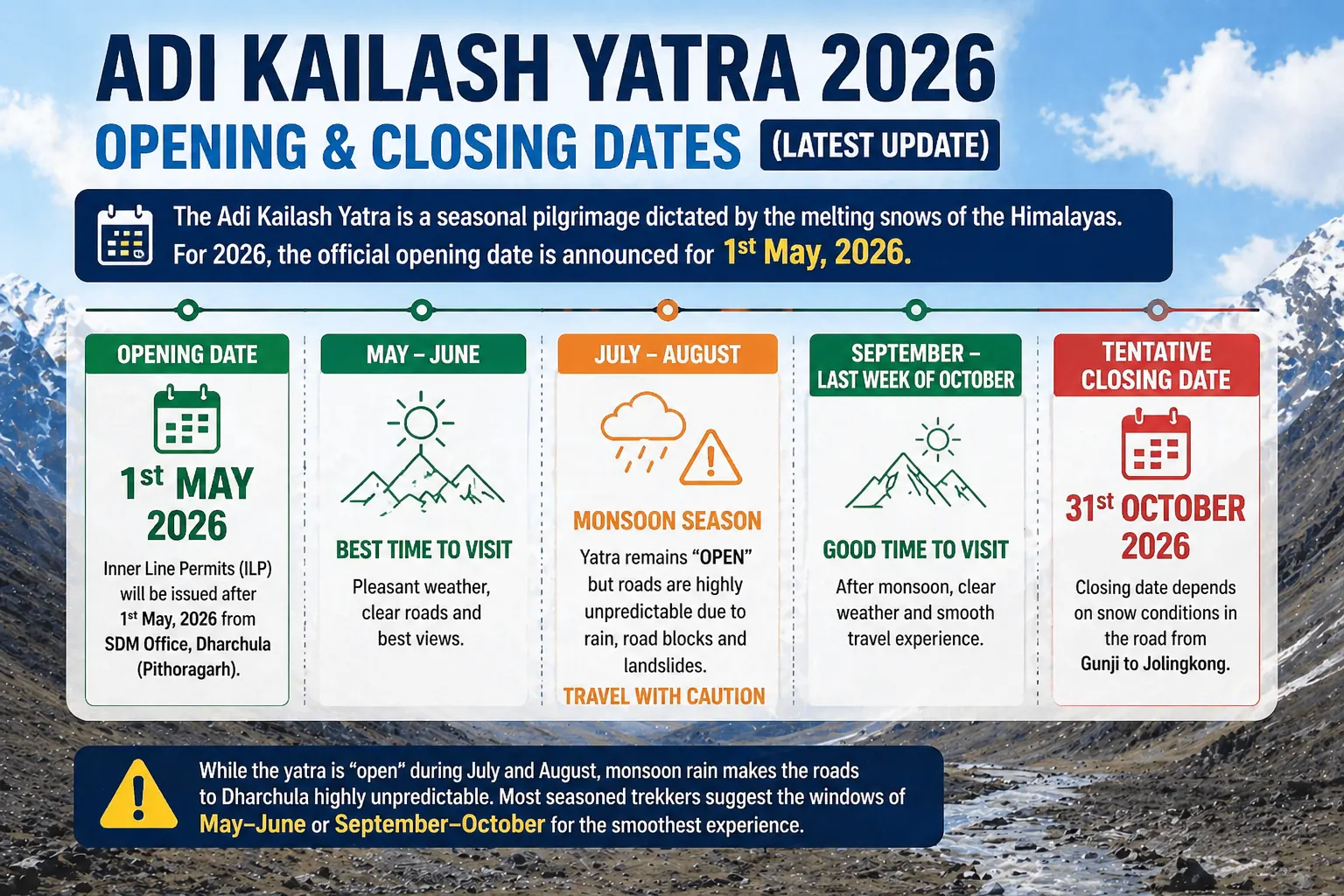
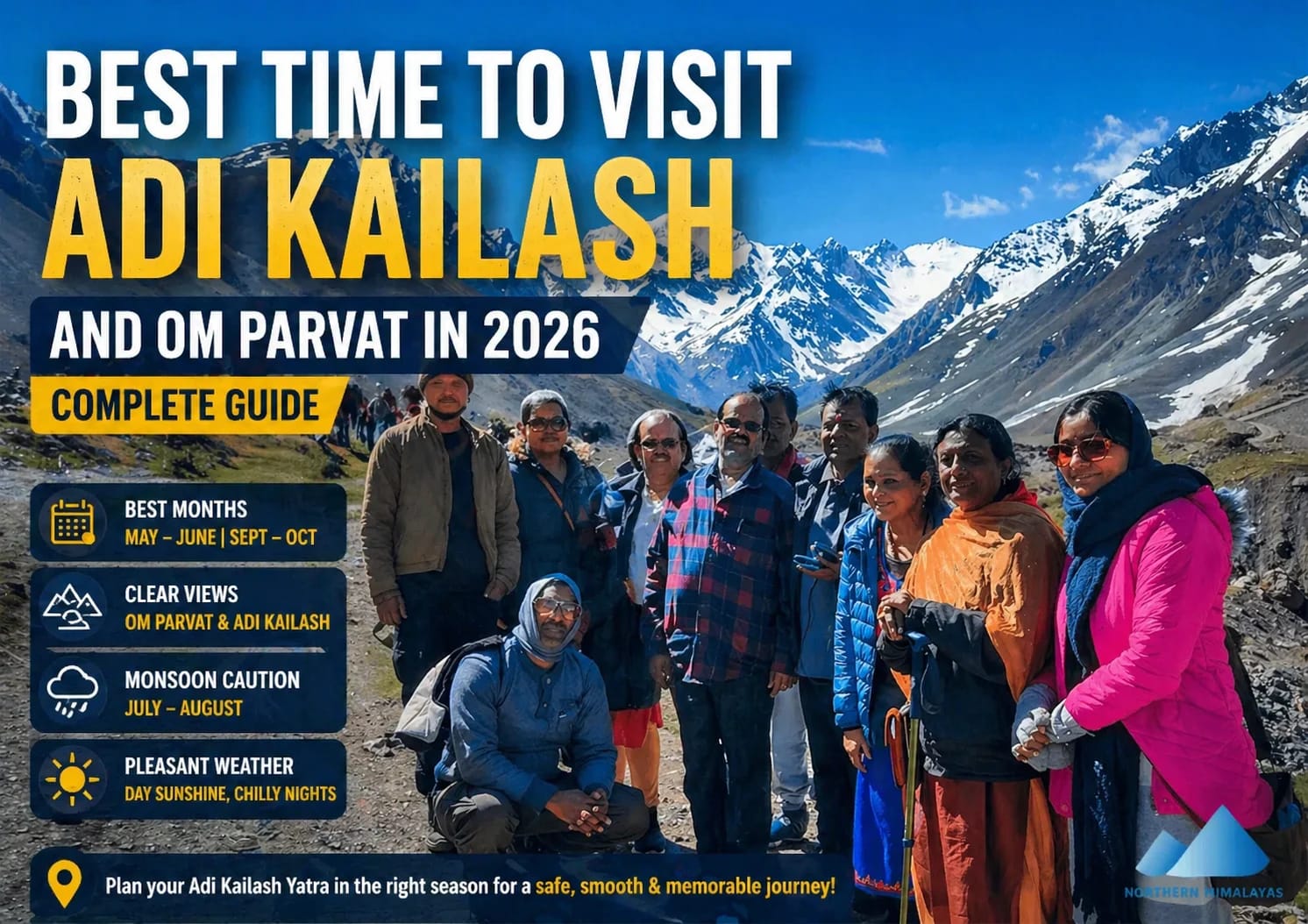
The Adi Kailash Yatra is a seasonal pilgrimage dictated by the melting snows of the Himalayas. For 2026, the official opening date is announced for 1st May, 2026 ( The Inner line permits ILP will be issued after 1st may 2026 from SDM office Dharchula ( Pithoragarh). This marks the time when the Border Roads Organization (BRO) typically finishes clearing the winter snow from the high passes near gunji to Jolingkong.
The yatra remains operational through the summer duration between May to June last and monsoon in duration July to august its shut down due to higher chances of road blocks and landslides, After ending of monsoon season again the Adi kailash yatra resume upto last week of October. The tentative closing date for the 2026 season is October 31, 2026.
Also the closing date is depends upon the snow conditions in road Gunji to Jolingkong.
It is important to note that while the yatra is "open" during July and August, the monsoon rain makes the roads to Dharchula highly unpredictable. Most seasoned trekkers suggest the windows of May–June or September–October for the smoothest experience.
Why the Adi Kailash Om Parvat Yatra is a Must-Visit Spiritual Destination
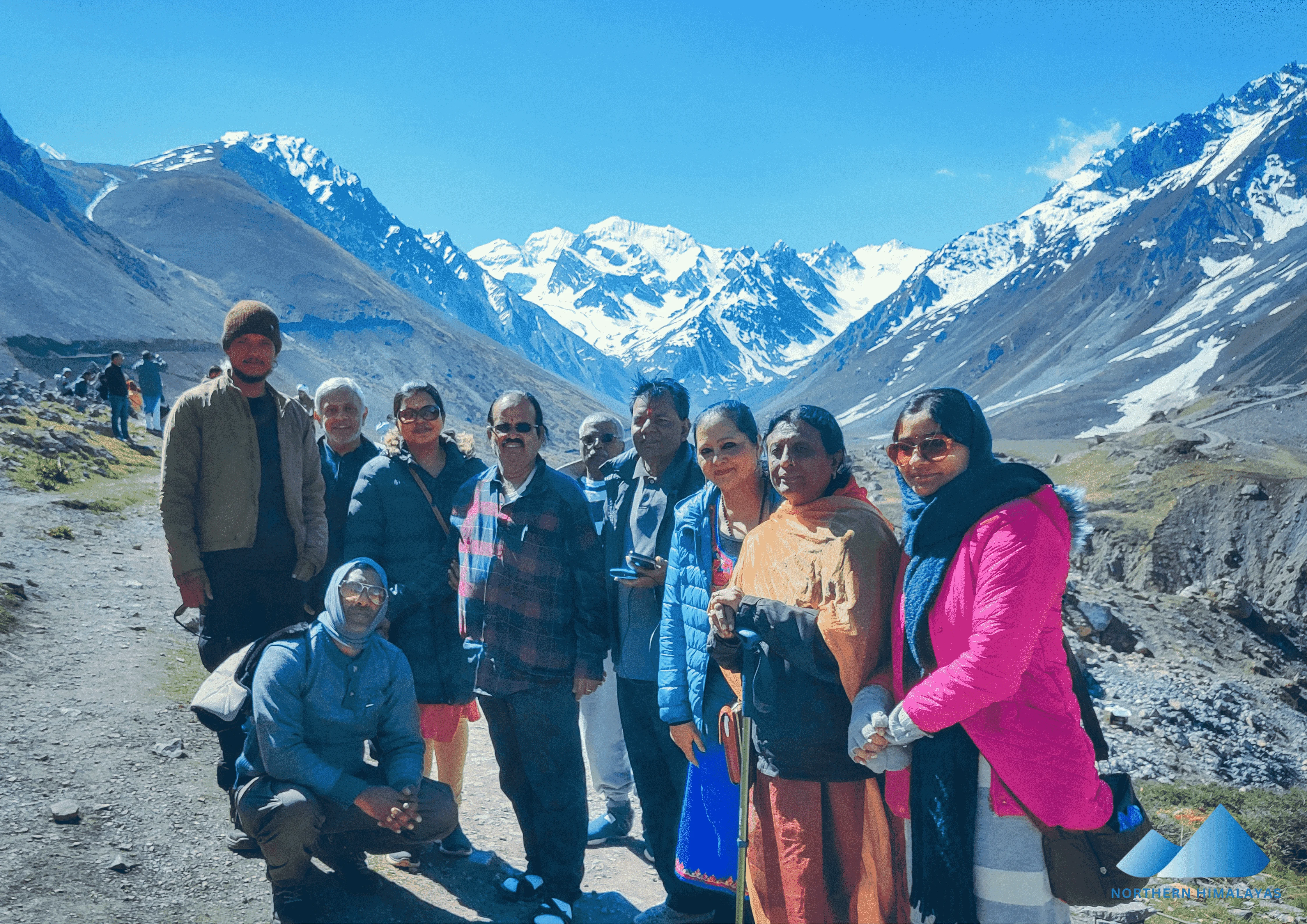
While Mount Kailash in Tibet remains restricted for many, adi kailash offers an equally powerful spiritual alternative within Indian borders. It is one of the "Panch Kailash" peaks and is considered the earthly abode of Lord Shiva and Mata Parvati.
The highlight of this journey is witnessing Om Parvat. At an altitude of 5,590 meters, the snow falls on this mountain in such a way that it naturally forms the "ॐ" (Om) symbol. Unlike other peaks where you might need a vivid imagination, the formation on Om Parvat is startlingly clear. This yatra isn't just a physical challenge; it’s a rare opportunity to see "the divine signature" on the Himalayan canvas.
Adi Kailash Om Parvat Yatra Itinerary
The modern adi kailash trek has changed significantly. Previously a 200km walk, it is now largely a Jeep-based journey with short, manageable treks.
-
Day 1-2: Arrival at Kathgodam and drive to Pithoragarh/Dharchula.
-
Day 3: Dharchula to Gunji (The High-Altitude Hub). This involves crossing the Inner Line check-posts.
-
Day 4: Gunji to Jolingkong (4,770m). This is the base for Adi Kailash darshan and Parvati Sarovar.
-
Day 5: Gunji to Nabhidhang. This is the vantage point for adi kailash om parvat yatra views.
-
Day 6-8: Return journey via Dharchula to Kathgodam.
Delhi to Adi Kailash Distance: How to Reach the Base Camp
The total delhi to adi kailash distance is approximately 620 km to the base camp at Dharchula. The journey is usually broken into stages:
-
Delhi to Kathgodam: (280 km) Best covered by an overnight train (Ranikhet Express) or a 6-hour drive.
-
Kathgodam to Dharchula: (300 km) A 10–12 hour mountain drive passing through Almora or Pithoragarh.
-
Dharchula to Gunji/Jolingkong: (approx. 100 km) This is the restricted zone where only local 4x4 Campers/Jeeps are allowed.
Best Time to Visit Adi Kailash (Season-Wise Weather Guide)
Timing is everything in the Kumaon region.
-
Pre-Monsoon (May to June): The most popular time. Adi kailash weather is pleasant during the day (15°C) but cold at night (-2°C). Skies are generally clear for photography.
-
Monsoon (July to August): The landscape is lush green, but landslides on the route to Dharchula are common. Only recommended for those with flexible schedules.
-
Post-Monsoon (September to October): Perhaps the best visibility. The dust has settled, and the peaks appear sharp against deep blue skies.
Adi Kailash Weather Conditions: What to Expect Month-by-Month
-
May: Crisp air, residual snow on the trails. Expect sub-zero temperatures at Jolingkong.
-
June: The "sweet spot." Daytime is sunny and perfect for the trek to Parvati Kund.
-
July/August: Humid at lower altitudes (Dharchula); misty and rainy at higher altitudes. Adi kailash om parvat might be hidden in clouds for days.
-
September: Chilly winds start. The monsoon retreat leaves the atmosphere incredibly transparent.
-
October: Winter begins to set in. Expect heavy frost and very cold nights at Gunji.
Adi Kailash vs Kailash Mansarovar: Key Differences
Many people confuse the two, but they are distinct journeys:
-
Location: Mount Kailash is in Tibet (China); Adi Kailash is in Uttarakhand (India).
-
Access: Kailash Mansarovar requires a Chinese Visa and a complex lottery system. Adi Kailash requires only an Inner Line Permit for Indian citizens.
-
Connectivity: You can now reach very close to Adi Kailash via road, whereas the Tibetan yatra involves more extensive trekking or high-cost helicopter hops.
Permits and Documentation: Essential Requirements for the Indo-Tibetan Border
Because adi kailash is located near the sensitive tri-junction of India, Nepal, and China, security is tight.
-
Inner Line Permit (ILP): Mandatory for all pilgrims. This is issued by the SDM office in Dharchula.
-
Police Verification: You need a character certificate from your local police station or a valid passport.
-
Physical Fitness Certificate: Must be signed by a registered medical practitioner (MBBS) within 30 days of the trip.
-
Documents: Carry at least 10 passport-size photos and 5 copies of your Aadhaar Card.
Adi Kailash Tour Package Cost and Inclusions
A standard adi kailash tour package in 2026 ranges from ₹285,000 to ₹55,000 per person.
-
Inclusions: Transport from Kathgodam, Inner Line Permit assistance, stay in KMVN (Kumaon Mandal Vikas Nigam) guest houses or homestays, all vegetarian meals, and oxygen support.
-
Exclusions: Personal expenses, porter charges for personal bags, and emergency evacuation.
Why trekkers prefer Northern himalayas for adi kailash yatra package
When booking your adi kailash yatra, choosing an operator like Northern Himalayas is preferred for their local "ground-zero" expertise. They manage the permit hurdles at Dharchula seamlessly—which can take days for solo travelers.They provide good accommodation in Gunji/ Nabi. Their packages prioritize safety with high-altitude medical kits and experienced Local guides who understand the shifting adi kailash weather patterns better than anyone else.
Adi Kailash Trek Difficulty Level: Is It Suitable for Beginners?
The adi kailash trek is rated as Easy to Moderate in 2026. Why? Because the "trek" part has been reduced to just 3–5 km of walking near Jolingkong and Nabhidhang.
-
For Beginners: It is very doable if you have a basic fitness level.
-
The Real Challenge: It’s not the walking; it’s the altitude. Reaching nearly 15,000 feet requires slow movement and proper acclimatization.
Accommodation, Food & Facilities During the Yatra
Don't expect luxury. You are in a remote border zone.
-
Stay: You will stay in local homestays in villages like Nabi and Gunji. Stays are clean but basic with shared toilets.
-
Food: Nutritious, simple vegetarian meals (Dal, Rice, Roti, Sabzi). Expect a lot of Ginger tea to help with the altitude.
-
Facilities: Electricity is not available in entire region of Gunji/Nabi, Only limited Solar power is available for Rooms lights and phone charging. Hot water is a luxury provided in buckets.
Important Packing List for Adi Kailash Yatra
-
Clothing: 3-layer system (Thermal, Fleece, Down Jacket).
-
Footwear: Broken-in trekking shoes with good grip.
-
Rain Gear: A sturdy poncho (essential for Kumaon).
-
Skincare: High SPF sunscreen and lip balm (the mountain sun is harsh).
-
Misc: A power bank (solar charging is slow) and a personal water bottle.
Health, Safety & Altitude Sickness Tips
Acute Mountain Sickness (AMS) is the biggest risk on the adi kailash yatra.
-
Hydrate: Drink 4–5 liters of water daily.
-
Acclimatize: Do not skip the night stay at Gunji.
-
Medication: Carry Diamox (after consulting your doctor) and avoid alcohol/smoking entirely.
-
Listen to your body: If you have a splitting headache that won't go away, descend immediately.
Network Connectivity, ATM & Essentials Availability
-
Connectivity: BSNL is the king here. Jio works in some patches, but don't count on it.
-
ATMs: The last reliable ATM is in Dharchula. Carry at least ₹10,000–₹15,000 in cash for personal needs.
-
Shopping: Buy your final snacks and dry fruits in Dharchula; nothing is available beyond Gunji.
Tips to Plan a Smooth Adi Kailash Om Parvat Yatra
-
Book Early: Permits and KMVN stays fill up fast for the May-June window.
-
Arrive a day early in Dharchula: Use this day to finalize your physical permits and get used to the mountain air.
-
Pack Light: You only need your essentials for the days beyond Dharchula. Leave your extra luggage at the hotel in Dharchula.
-
Be Flexible: Weather in the Kali Valley can change in minutes. Always keep a buffer day in your itinerary.
Frequently Asked Questions (FAQs) about Adi Kailash Yatra
1. Can we see Mount Kailash from Adi Kailash?
No, Mount Kailash is in Tibet. However, from the Lipulekh Pass (near the route), one can sometimes get a distant view of Mount Kailash if the weather and permits allow.
2. Is there an age limit for the yatra?
Most operators suggest a limit of 10 to 70 years. However, medical fitness is the more important criteria.
3. Can I do Adi Kailash by helicopter?
Yes, in 2026, helicopter services are available from Pithoragarh for "darshan-only" trips, though they are weather-dependent.
4. How long does the yatra take?
The standard yatra from Kathgodam to Kathgodam takes 6 to 7 days.
5. Is the road to Adi Kailash paved?
Most of the road to Dharchula is paved. Beyond Dharchula, it is a mix of gravel and dirt roads (BRO tracks) suitable for 4x4 vehicles.