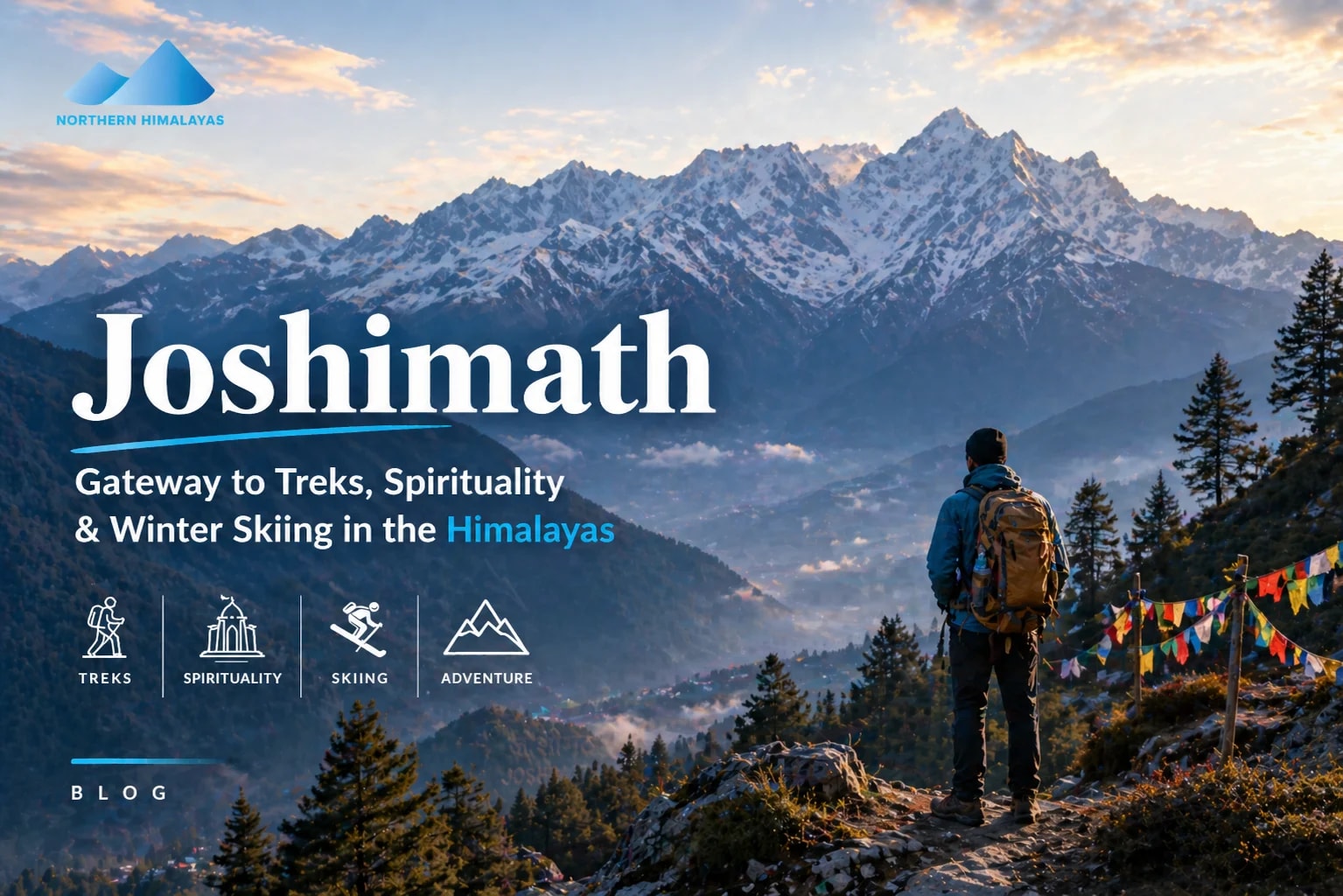
Why Joshimath is Important in Uttarakhand for Himalayan Treks and Winter Skiing ?
Joshimath is arguably the most strategic town in the entire Garhwal region. Historically known as Jyotirmath, it is one of the four cardinal mathas (monasteries) established by Adi Shankaracharya in the 8th century. But for the modern adventurer, its importance is purely geographical. It acts as the "Grand Junction" of the Himalayas.
Located at an altitude of 6,150 feet, it serves as the winter seat of Lord Badri when the Badrinath Temple becomes inaccessible due to snow. This religious significance ensures that the infrastructure—roads, electricity, and telecommunications—remains functional even in harsh conditions. For trekkers, it is the last major town where you can find high-quality gear rentals, specialized medical clinics, and a wide variety of supplies before you head into the high-altitude wilderness.
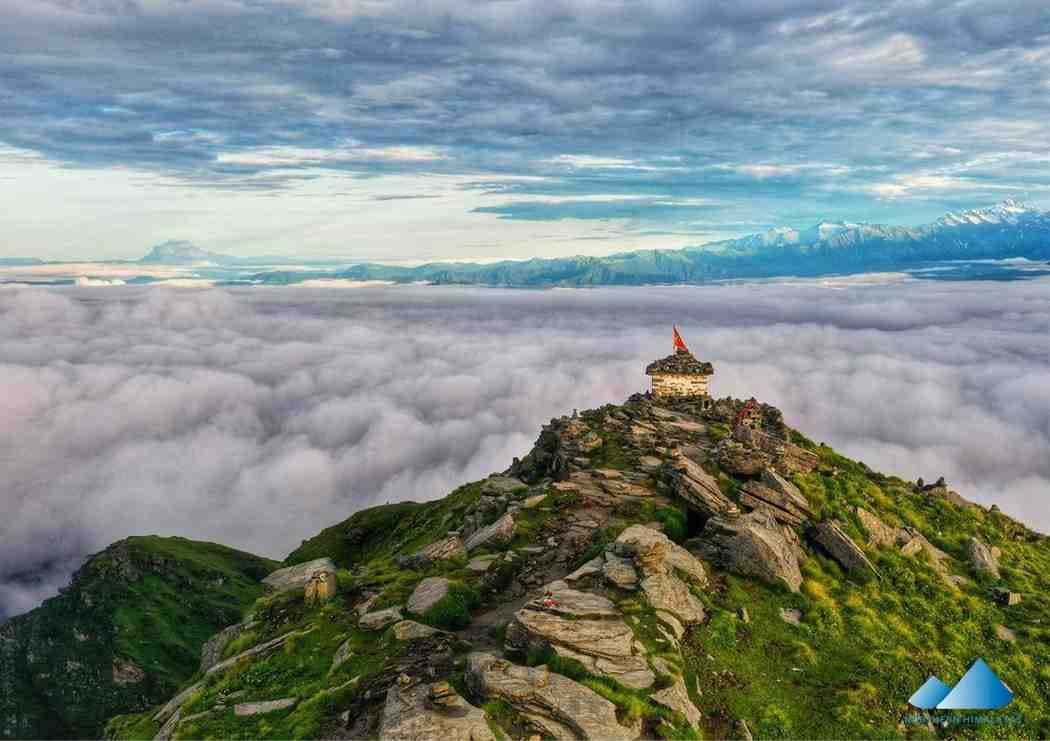
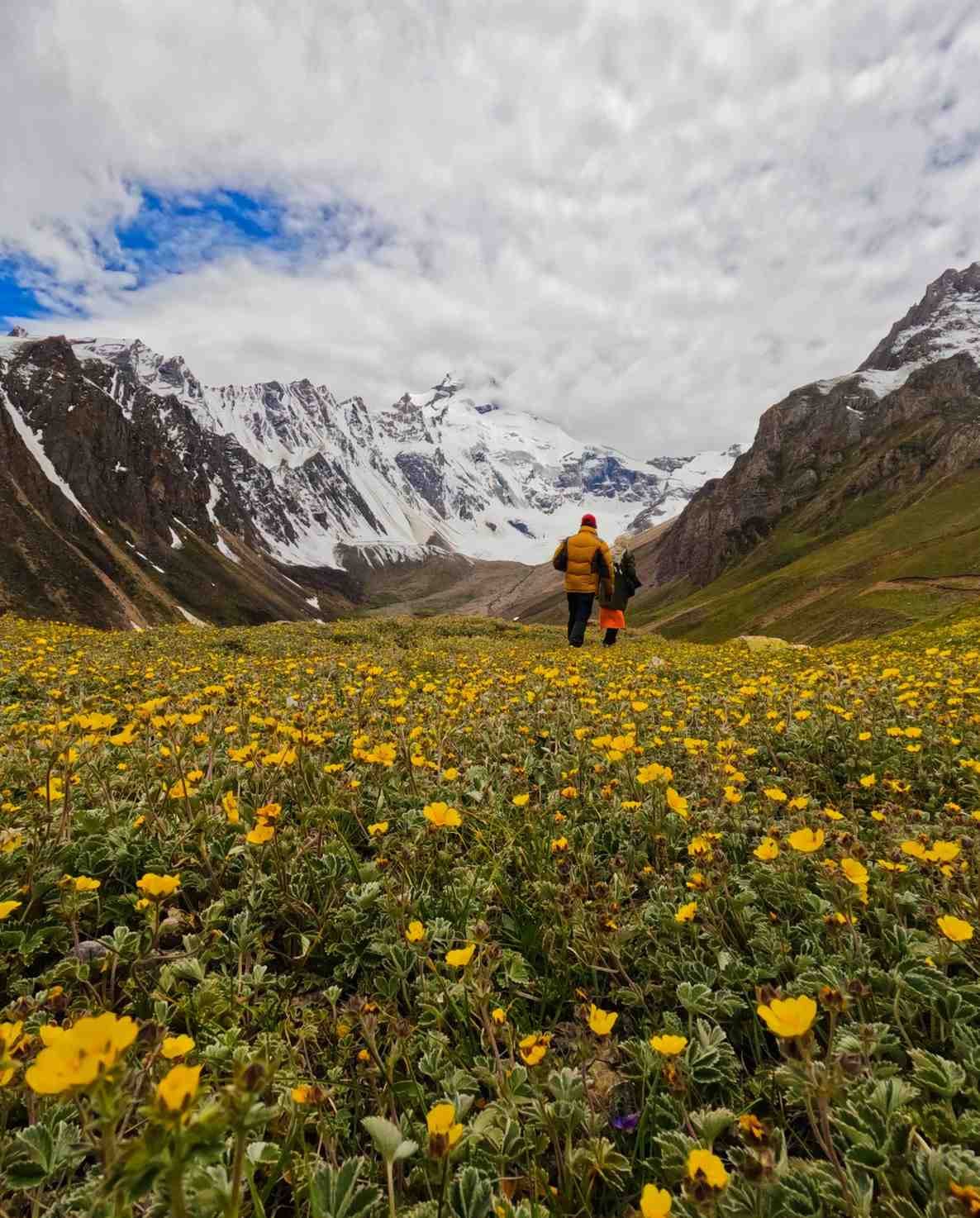
Without Joshimath, logistics for treks like the Valley of Flowers, Hemkund Sahib, Gorshan buygal trek, kuari pass, pangarchulla, satopanth lake, Chenab valley, Dharansi pass trek, Kagbhusandi trek and panpatiya col trek would collapse. It is the town where you finalize your permits, meet your mountain guides, and allow your body to undergo its first stage of acclimatization in himalayas. If you are heading anywhere in the Chamoli district, your journey essentially begins here.
Spiritual and Cultural Significance
The air in Joshimath carries a distinct vibration of ancient history and deep-rooted faith. To understand this town is to understand the legacy of Adi Guru Shankaracharya, the 8th-century philosopher who revived Hinduism in India. He chose this specific spot to establish the Jyotirmath, the northern cardinal institution of his four monasteries.
Joshimath is also popular for its Unique mutliple traditional Pooja ceremony and local Fair like the Timundiya mela, Ramman Festival.
The Timundiya Mela is a unique annual ritual in Joshimath (Chamoli district, Uttarakhand) linked to the opening of the Badrinath shrine. Held at the Narasingh Temple about one week before the Badrinath Dham’s winter doors open, it honors the local guardian spirit “Timundiya Veer.” The event’s roots lie in a regional myth of a demon subdued by Goddess Durga; since then Timundiya is worshiped as a veer devta (warrior deity) protecting the area.
Ramman festival - The Ramman Festival is a unique, UNESCO-recognized (2009) ritual theatre and folk festival celebrated annually in April in the Saloor-Dungra village of Chamoli district, Nearby Joshimath, Uttarakhand. Dedicated to the village guardian deity, Bhumiyal Devta, it combines masked dances, local legends, and a distinct regional version of the Ramayana sung to over 324 beats Every year in late April, the twin villages of Saloor-Dungra in the state of Uttarakhand (northern India) are marked by Ramman, a religious festival in honour of the tutelary god, Bhumiyal Devta, a local divinity whose temple houses most of the festivities. This event is made up of highly complex rituals: the recitation of a version of the epic of Rama and various legends, and the performance of songs and masked dances. The festival is organized by villagers, and each caste and occupational group has a distinct role. For example, youth and the elders perform, the Brahmans lead the prayers and perform the rituals, and the Bhandaris – representing locals of the Kshatriya caste – are alone entitled to wear one of the most sacred masks, that of the half-man, half-lion Hindu deity, Narasimha. The family that hosts Bhumiyal Devta during the year must adhere to a strict daily routine. Combining theatre, music, historical reconstructions, and traditional oral and written tales, the Ramman is a multiform cultural event that reflects the environmental, spiritual and cultural concept of the community, recounting its founding myths and strengthening its sense of self-worth. In order to ensure that it remains viable, the community’s priorities are to promote its transmission and to obtain its recognition beyond the geographical area in which it is practised.
Culturally, Joshimath is a living museum. The Narsingh Temple, dedicated to the fourth avatar of Lord Vishnu, is the town's spiritual epicenter. There is a fascinating local prophecy involving the idol: it is said that one arm of the deity is thinning over time, and the day it falls, the road to Badrinath will be blocked, signaling the end of the current age and the shift of the deity to Bhavishya Badri (the Future Badrinath).
For a trekker, this spirituality provides a unique sense of grounding. Standing under the Kalpavriksha, a mulberry tree believed to be over 1,200 years old, one realizes that the trails they are about to walk have been trodden by sages for millennia. The town isn't just a place to check your gear; it's a place to seek blessings before entering the formidable peaks of the Nanda Devi Biosphere.
Geological Concerns (Land Subsidence)
We cannot talk about Joshimath in 2026 without addressing the elephant in the room: land subsidence. In early 2023, the town made global headlines as deep cracks appeared in houses and roads, leading to large-scale evacuations. Geologically, Joshimath is built on an ancient landslide deposit, not solid bedrock, making it naturally unstable.
As of April 2026, the situation has stabilized due to strict government interventions, but it remains a "fragile zone." Scientific monitoring is ongoing, and several "Red Zones" (particularly in the Singhdhar and Manohar Bagh wards) remain restricted for heavy construction. For trekkers and tourists, this means that while the town is open and functional, you must stay informed.
What this means for your 2026 trip:
-
Safe Transit: The NH-7 (Badrinath Highway) remains the lifeline and is maintained with high priority. Travel through the town to Govindghat or Auli is perfectly safe.
-
Accommodation Check: Most hotels in the "buffer zones" are safe. However, always book with reputable operators who ensure their partner stays in geologically stable areas.
-
Respect Restrictions: If certain local paths are cordoned off by the Border Roads Organization (BRO) or local authorities, do not attempt to cross them for "adventure." These restrictions are there to prevent slope destabilization.
What Makes joshimath Different from Other Himalayan Base Camps
Most base camps are tiny hamlets with limited resources, but Joshimath is a bustling mountain city with a soul. Unlike Ghangaria or Lohajung, which are purely seasonal, Joshimath is alive year-round. This gives it a unique cultural depth that most trekking hubs lack.
What truly sets it apart is its dual identity as a spiritual center and a premier adventure hub. You will see orange-clad sadhus walking alongside trekkers carrying high-tech carbon fiber poles. It is also the gateway to Auli, one of India’s top skiing destinations. The presence of the Indian Army’s "Brigade of the Guards" and the ITBP adds a layer of disciplined security and well-maintained infrastructure that you won't find in remote base camps.
Top Places to Visit in Joshimath and Nearby Attractions
If you have a buffer day in Joshimath, do not spend it just sitting in your hotel room. The town and its surroundings offer some of the most culturally significant sites in Uttarakhand.
-
Shankaracharya Math: The sacred monastery where you can visit the cave where Adi Shankaracharya meditated.
-
Auli via the Ropeway: Joshimath hosts one of the longest cable cars in Asia. A 20-minute ride takes you to the meadows of Auli (10,000 ft), offering a panoramic view of Nanda Devi.
-
Tapovan Hot Springs: Located about 14 km away, these natural sulphur springs are known for their medicinal properties.
-
Vishnuprayag: The confluence of the Alaknanda and Dhauliganga rivers is just a short drive away.
-
Narsingh Temple
A spiritually important temple believed to be connected to Badrinath’s winter seat. -
Kalpavriksha Tree
An ancient tree believed to be over 1,000 years old. Quiet spot, often missed by tourists. -
Auli (16 km)
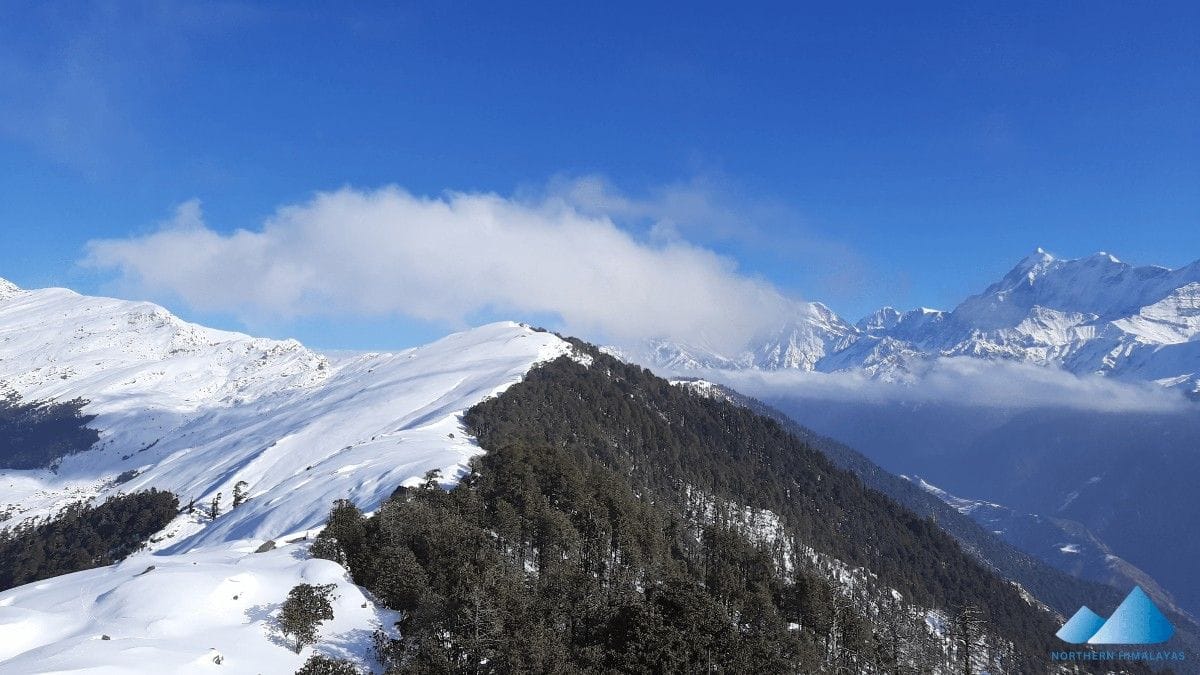
Auli is the most famous nearby destination. Known for skiing in winter and meadows in summer, it offers clear views of Nanda Devi and surrounding peaks.
Popular treks starting form joshimath
Joshimath is the "Zero Point" for several world-class trekking routes.
-
Valley of Flowers & Hemkund Sahib: The quintessential monsoon trek.
-
Kuari Pass (The Curzon Trail): Offers a spectacular "wall" view of the Greater Himalayas.
-
Pangarchulla Peak: A challenging summit climb branching off from the Kuari Pass trail.
-
Bagini Glacier: A high-altitude trek for intermediate to advanced trekkers.
-
Chenab Valley Trek: An offbeat alternative to the Valley of Flowers.
6. Auli Gorson Bugyal Trek: Easy trek, perfect for beginners
How to Reach Joshimath from Delhi, Rishikesh, and Dehradun
Reaching Joshimath is straightforward but time-consuming.
From Delhi:
-
Distance: ~500 km
-
Time: 12–15 hours (depending on road conditions)
Route:
Delhi → Haridwar → Rishikesh → Devprayag → Rudraprayag → Karnaprayag → Joshimath
Options:
-
Bus: Overnight buses to Rishikesh/Haridwar, then shared taxi
-
Train: Haridwar or Rishikesh railway station
-
Flight: Jolly Grant Airport (Dehradun), then 10–12 hour drive
Pro tip: Always start early from Rishikesh (before 6 AM). Mountain roads after noon become unpredictable.
Best Time to Visit Joshimath for Travel and Trekking
-
Summer (April to June): Perfect for sightseeing and pilgrims. Pleasant weather (15°C to 25°C).
-
Monsoon (July to August): Peak time for the Valley of Flowers trek. Lush greenery but high landslide risk.
-
Post-Monsoon (September to October): The clearest skies. Best for photography and Kuari Pass.
-
Winter (December to February): Gateway to Auli for skiing. Expect snowfall and temperatures down to -5°C.
If your focus is trekking, May–June and September–October are the safest windows.
Road Conditions and Travel Experience While Approaching joshimath
As of 2026, the "All-Weather Road" project has significantly improved the highway. However, the monsoon still brings the risk of "shooting stones" near Helang.
Travel Tips:
-
Night Travel Ban: Note that in 2026, vehicles are strictly banned on mountain routes after 10:00 PM for safety.
-
Early Starts: Leave Rishikesh by 5:00 AM to beat the fog and the "Gate System" traffic.
-
Vehicle Check: Ensure your vehicle is technically fit; oversized vehicles face restrictions on narrow stretches.
Weather, Altitude, and Travel Conditions in Joshimath
At 6,150 feet, Joshimath is the perfect acclimatization stop. The air is thinner than in the plains, so a 24-hour stay here helps your body adjust before you hit 10,000+ feet.
Temperature range:
-
Summer: 10°C to 25°C
-
Winter: -2°C to 10°C
Weather patterns:
-
Sudden rain showers
-
Fog affecting visibility
-
Cold nights even in summer
In 2026, travel conditions are heavily regulated. All pilgrims and trekkers must complete a mandatory online registration via the Uttarakhand tourism app. This helps the government monitor crowd density in the fragile Himalayan terrain.
Where to Stay in Joshimath: Budget to Premium Options
-
Budget (₹800–₹1,500): Basic lodges near the Narsingh Temple.
-
Mid-Range (₹2,500–₹4,500): Most popular for trekkers; offer hot water and balcony views.
-
GMVN (Government Stays): Two properties with ample parking and reliable, basic service.
Tips:
-
Book in advance during peak season
-
Check for parking if self-driving
-
Don’t expect luxury—focus on functionality
Food, Network Connectivity, and Travel Facilities in Joshimath
-
Food: Try local Kafuli or Mandua ki Roti. Many "German Bakeries" offer international menus.
-
Network: 4G/5G works perfectly on Airtel, Jio, and BSNL.
-
ATMs: Several available, but they run out of cash during peak season. Carry at least ₹5,000–₹8,000 in cash.
Responsible Trekking: Leave No Trace Principles for the joshimath
-
No Single-Use Plastic: Carry your own water bottle.
-
Respect the Silence: Joshimath is a spiritual town; avoid loud music.
-
Local Economy: Buy your supplies locally to support mountain communities.
Why most of the trekkers prefer Northern himalays for trek packages
Planning a trek from Joshimath can be daunting due to the complex permits and road uncertainties. This is why most travelers choose Northern Himalayas. They provide:
-
Real-time Safety Updates: Immediate info on road blocks or geological safety.
-
Verified Accommodations: They only partner with hotels in geologically stable zones.
-
Small Batches: Ensuring personalized attention and better safety protocols.
10 Most Asked Questions About joshimath, Uttarakhand
-
Is Joshimath safe in 2026?
Yes, the highway and tourist areas are safe and monitored. -
How far is Govindghat?
About 20 km (45-minute drive). -
Are there ATMs?
Yes, but withdraw your "trekking cash" early. -
Does 5G work?
Yes, in the main market area. -
Can I visit Auli without staying there?
Yes, it’s a perfect day trip from Joshimath. -
What is the "prophecy" of Narsingh Temple?
It involves the deity’s arm thinning, signaling a shift to Bhavishya Badri. - Do i need parmit for town?
No, only for specific treks beyond it -
Is there a medical hospital?
No, only for specific treks beyond it. -
Can i rent a bike?
Yes,but driving on thses hills requires expert skills. - Is there night ban on driving?
Yes,no vehicle movement between 10:00 PM to 4:00 AM.