Choosing the best time to visit Rudranath Temple is not just about good weather. It directly affects trail safety, visibility, energy levels, and your overall experience. Go at the wrong time, and you’ll deal with slippery trails, landslides, or even blocked routes.
In this detailed guide, you’ll understand season-wise conditions, opening dates, trekking difficulty, weather behavior, and practical planning tips—so you can plan your Rudranath trek with clarity and confidence.
Best Time to Visit Rudranath Temple (Season Overview)
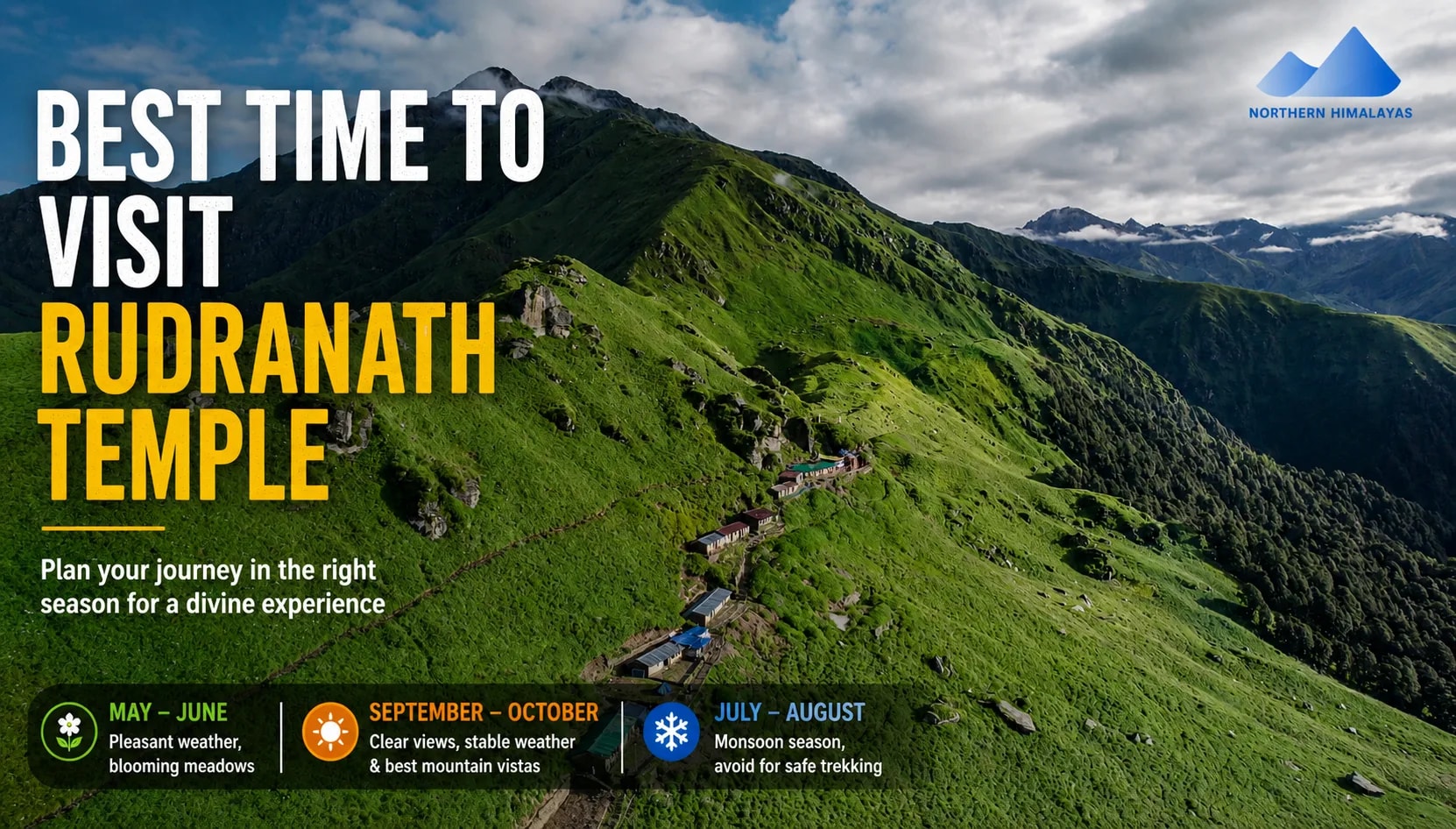
The best time to visit Rudranath temple is generally split into two distinct windows: the pre-monsoon "Spring-Summer" (May to June) and the post-monsoon "Autumn" (September to October).
During the summer months, the Rudranath trek is characterized by vibrant greenery and melting snow patches. This is when the majority of pilgrims visit, as the weather is relatively stable during the day. However, if your primary goal is high-definition photography of the Nanda Devi and Trishul massifs, the post-monsoon window is unrivaled. The rains wash the atmosphere clean of dust and haze, offering a sharp, cinematic clarity that you simply won't find in May.
For beginners, May and June are ideal because the daylight hours are longer, providing a safety buffer if you find the 20km rudranath trek distance takes longer than expected. For intermediate trekkers looking for solitude and crisp mountain air, October is the hidden gem, though it requires significantly better cold-weather gear as the mercury begins to dip below freezing at the higher meadows of Panar and Pitradhar.
Rudranath Temple Opening & Closing Dates 2026
The calendar of the rudranath temple trek is governed by tradition and the harsh Himalayan winter. For the 2026 season, the Rudranath Temple opening date is officially set for May 18, 2026. This date follows the declaration made at the Gopinath Temple in Gopeshwar on Basant Panchami. The "Doli" (palanquin) of the deity begins its journey from Gopeshwar a few days prior, and the temple gates open amidst vedic chants and local festivities.
On the other side of the calendar, the Rudranath Temple closing date 2026 is expected to be October 17, 2026. This closure marks the start of the winter migration, where the symbolic image of Lord Shiva is brought down to the Gopinath Temple for the winter months. Attempting the trek after the closing date is highly dangerous; the temporary shacks that provide food and water at Panar and Lwiti close down, leaving you completely self-reliant in sub-zero temperatures.
Knowing these dates is crucial because the SDM office at Dharchula and the forest check-post at Sagar Village will not issue permits outside of this window. Always align your travel plans with these official markers to ensure you have access to the trail and the safety of local dharamshalas.
How to Reach Rudranath Temple: Travel Options from Rishikesh and Dehradun, delhi
Reaching Rudranath temple is a multi-step journey involving road travel and trekking.
-
From Delhi: The most common route is taking the overnight Nanda Devi Express train to Rishikesh or a Volvo bus to Haridwar. From Delhi, the total journey to the base camp takes roughly 12–14 hours of road travel.
-
From Rishikesh/Haridwar: This is the real starting point of your mountain drive. You will travel approximately 210 km along the Alaknanda River. You'll pass through the "Prayags" (Devprayag, Rudraprayag, Karnaprayag). Most trekkers break their journey at Gopeshwar, which is the nearest major town.
-
From Dehradun: If you fly into Jolly Grant Airport, you can hire a private taxi directly to Gopeshwar. This route is slightly faster but more expensive.
-
The Final Stretch: From Gopeshwar, it is a 5km drive to Saggar Village. Shared taxis run frequently from the Gopeshwar stand (₹30 per seat), or you can hire an auto for roughly ₹250. Saggar is where the road ends and your rudranath trek starts.
Rudranath Trek Difficulty Level: Is it Suitable for Beginners?
Let’s be honest: Rudranath temple trek is widely considered the toughest of the Panch Kedar. While Tungnath temple trek is a gentle 4km walk, the rudranath trek distance is a 20km one-way trip with a massive vertical gain.
-
For Beginners: It is "Suitable" but "Challenging." If this is your first trek, you must start a cardio routine 4 weeks in advance. The stretch from Saggar to Panar involves a relentless uphill climb known as "Khadi Chadhai." Beginners often struggle with knee strain and lung capacity here.
-
The Terrain: The trail is well-defined but stony. You'll cross dense temperate forests, steep meadows (Bugyals), and rocky ridges.
-
The Altitude: You will be sleeping at Panar (11,000+ ft), which puts you at risk for AMS (Acute Mountain Sickness). It is not a trek for those with severe heart or lung conditions. However, for a beginner with a strong will and a slow pace, it is the ultimate "graduation" trek into the world of high-altitude Himalayan hiking.
Visiting Rudranath in Summer (May–June): Ideal Trekking Season
Summer is considered the most reliable and beginner-friendly time for the Rudranath trek.
-
The Trail Experience: The forest sections are alive with the sounds of birds, and the rhododendrons are in their late bloom. The meadows (Bugyals) are a lush, vibrant green.
-
Temperature: Day temperatures are a pleasant 15°C to 20°C. You can trek in a simple t-shirt. However, as soon as the sun goes down at Panar, it drops to 5°C.
-
Logistics: All the "Chais" (tea stalls) and shacks are fully operational. You don't need to carry excessive food or heavy camping gear because the local dharamshalas are open.
-
Why Choose Summer: The longer days (sunlight until 7:00 PM) give you a massive safety margin. If you start slow from Saggar, you have plenty of time to reach Panar before dark.
Post-Monsoon Season (September–October): Best Time for Clear Views
For photographers and solitude seekers, this is the gold-standard window. Once the monsoon clouds retreat in early September, the atmosphere becomes incredibly transparent.
-
Visibility: This is when you see the "Alpenglow" on Nanda Devi. The views of the peaks from Pitradhar are so sharp they look like postcards.
-
The Landscape: The meadows begin to turn from green to a golden-brown hue, giving the landscape a very different, rugged aesthetic.
-
Crowds: The number of pilgrims drops significantly compared to May, leaving the trails quiet and serene.
-
Expert Tip: Carry a high-quality down jacket. While the sun is warm, the wind at Pitradhar in October can be biting. This is the best time to visit rudranath temple if you want to avoid the "mela" feel and connect deeply with the mountains.
Rudranath Temple Closing Time (Mid-October to November)
As October progresses, the "Closing Time" protocols begin. The Rudranath Trek time during this window is a race against the first major snowfall.
-
Atmosphere: There is a sense of urgency in the air. Local shopkeepers begin moving their supplies back down to Saggar.
-
Weather: Nights at the temple can drop to -5°C. Water in the buckets outside often freezes solid.
-
The Doli Return: If you stay until the very end, you might witness the emotional ceremony where the Lord's idol is packed for its journey to Gopeshwar.
-
Safety Warning: By late October, the risks of getting stranded due to a sudden blizzard increase. We recommend finishing your trek by the third week of October unless you are an experienced mountaineer with sub-zero camping gear.
When to Avoid Rudranath Trek (Monsoon & Winter Risks)
There are two times when the rudranath temple trek becomes a liability rather than an adventure.
-
The Monsoon (July–August): While the rudranath trek in monsoon is famously beautiful (the "Valley of Flowers" of the Kumaon/Garhwal border), it is dangerous. The trail from Saggar is clay-rich in spots and becomes a slip-and-slide. Leeches are a major nuisance in the forest sections. Most importantly, the drive from Rishikesh to Gopeshwar is prone to landslides, often leaving you stranded on the road for days.
-
The Winter (December–March): The temple is closed. The trail above Panar is buried under 5–10 feet of snow. Without a professional expedition team, attempting this is life-threatening. There are no facilities, no water, and the temperatures are lethal. Stick to the official rudranath trek itinerary windows.
Rudranath Trek Duration, Route & Starting Point (Sagar Village)
The rudranath trek route is famous for its linear, punishing ascent.
-
Starting Point: Saggar Village (also spelled Sagar). It is a quiet hamlet where the road ends. You must register at the forest check-post here.
-
The Route: Saggar → Pung Bugyal (5km) → Lwiti Bugyal (9km) → Panar Bugyal (12km) → Pitradhar (16km) → Rudranath temple (20km).
-
Duration: A standard rudranath trek itinerary is 4 days.
-
Day 1: Saggar to Lyuti ( Panar) (9km steep climb).
-
Day 2: Lyuti (panar) to Rudranath (11km ridge walk & descent).
-
Day 3: Rudranath back to Saggar village ( 20km)
-
Day 4: Panar to Saggar and drive to Gopeshwar.
-
Route Map Note: Always keep a rudranath trek map or offline GPS. While the trail is marked, the mist near Pitradhar can be disorienting.
Rudranath Weather Conditions: Temperature & Seasonal Changes
Understanding rudranath weather is about preparing for the "Wind Chill Factor."
-
Spring/Summer: Day 15°C | Night 5°C. Expect clear mornings and occasional afternoon thunderstorms.
-
Monsoon: Day 18°C | Night 10°C. Extremely high humidity. 100% cloud cover is common.
-
Autumn: Day 10°C | Night -2°C to 2°C. Very dry air. High UV radiation—sunburn is a real risk even if it feels cold.
-
Vertical Variation: Remember that for every 1,000 meters you climb from Saggar, the temperature drops by roughly 6.5°C. When Saggar is a warm 25°C, Rudranath could easily be a chilly 10°C.
Rudranath Trek Cost and Package Overview (note- Northern Himalayas offer best package)
Budgeting for this trek depends on whether you are going solo or with an expert team. The rudranath trek cost generally varies between ₹9,000 to ₹14,000 per person for a 4-day trip starting from Rishikesh/Dehradun.
-
What's Included: standard rudranath trek package options typically cover transport from Rishikesh, forest permits, certified guides, mules for common luggage, and all meals.
-
Why Packages? Since the trail is within a sanctuary, managing permits can be a headache for solo travelers.
-
Top Choice: If you are looking for reliability, Northern Himalayas offer the best rudranath trek package options. They are known for their experienced local guides who understand the nuances of the Saggar-Panar route, and they provide decent, high-energy meals that are essential given how remote the trail is. Booking a package ensures that even if you struggle with the altitude, you have a support system to manage logistics or emergencies.
Packing & Preparation Tips Based on Season
Your gear preparation should change based on season.
-
For Summer (May–June): Focus on breathability. Quick-dry t-shirts, a light fleece, and high-quality sun protection (SPF 50+). A rain poncho is a must-have for the sudden pre-monsoon showers.
-
For Autumn (Sept–Oct): Focus on insulation. You need a 3-layer system: Thermals, a heavy fleece or down jacket, and a windcheater. The wind at Pitradhar can strip away body heat in minutes.
-
Footwear: Regardless of the season, you need trekking boots with deep lugs. The rudranath trek involves descending on steep stone steps, which are murder on the knees without proper ankle support and grip.
-
Hydration: Carry a 2L water bottle. There are natural "Dharas" (springs) along the way, but they are spaced out between Lwiti and Panar.
Important Travel Tips Before Planning Your Rudranath trek
These small details matter more than you think:
-
Start trekking early in the day
-
Carry enough cash
-
Inform family (network unavailable)
-
Respect local traditions and mountains
On-ground advice
-
Walk at a steady pace
-
Take regular breaks
-
Stay hydrated
👉 The goal is to enjoy the journey, not rush it.
Safety Tips and Altitude Sickness (AMS) Awareness
Safety on the rudranath trek is 90% preparation.
-
Acclimatization: If you feel a persistent headache at Panar, do not push to Pitradhar. Descend 500m and see if you feel better.
-
The "Vertical Climb" Rule: Do not rush. Walk at a pace where you can still hold a conversation. If you are gasping for air, you are going too fast.
-
Medicines: Carry Diamox (after consulting your doctor), but remember it is not a cure for AMS—only a preventative. The only cure is descent.
-
Emergency Contact: Keep the forest department and local police numbers handy. Ensure someone in Saggar knows your expected return time.
Frequently Asked Questions (FAQs) about Rudranath Trek
1. How many km is the Rudranath trek?
The rudranath trek is approximately 20 km one-way from Saggar village. The total round trip is about 40 km. Most people cover this in 4 days.
2. Can I visit Kalpeshwar and Rudranath together?
Yes, the kalpeshwar to rudranath trek (or vice versa) is a famous extension. It connects the two Kedars through a high-altitude forest traverse, usually taking an additional 2–3 days.
3. Is there electricity at Rudranath?
No. There is no grid electricity. Some shacks have solar lights for the evening, but you must carry a high-capacity power bank for your devices.
4. Is the Rudranath trek safe for solo female travelers?
Yes, the route is safe and locals are helpful. However, due to the difficulty and wildlife (bears/leopards), it is recommended to join a group or hire a guide from a trusted agency like Northern Himalayas.
5. What is the best time to visit Rudranath Temple?
The best time is May–June and September–October. These months offer stable weather, safe trekking conditions, and clear views of the Himalayas.
6. Is Rudranath trek suitable for beginners?
Yes, but only with proper preparation. It is a moderate to challenging trek requiring good fitness.
7. Is Rudranath trek safe during monsoon?
No. Heavy rainfall, landslides, and slippery trails make it unsafe.
8. How many days are required for the trek?
Typically 3–4 days for trekking, plus travel time.