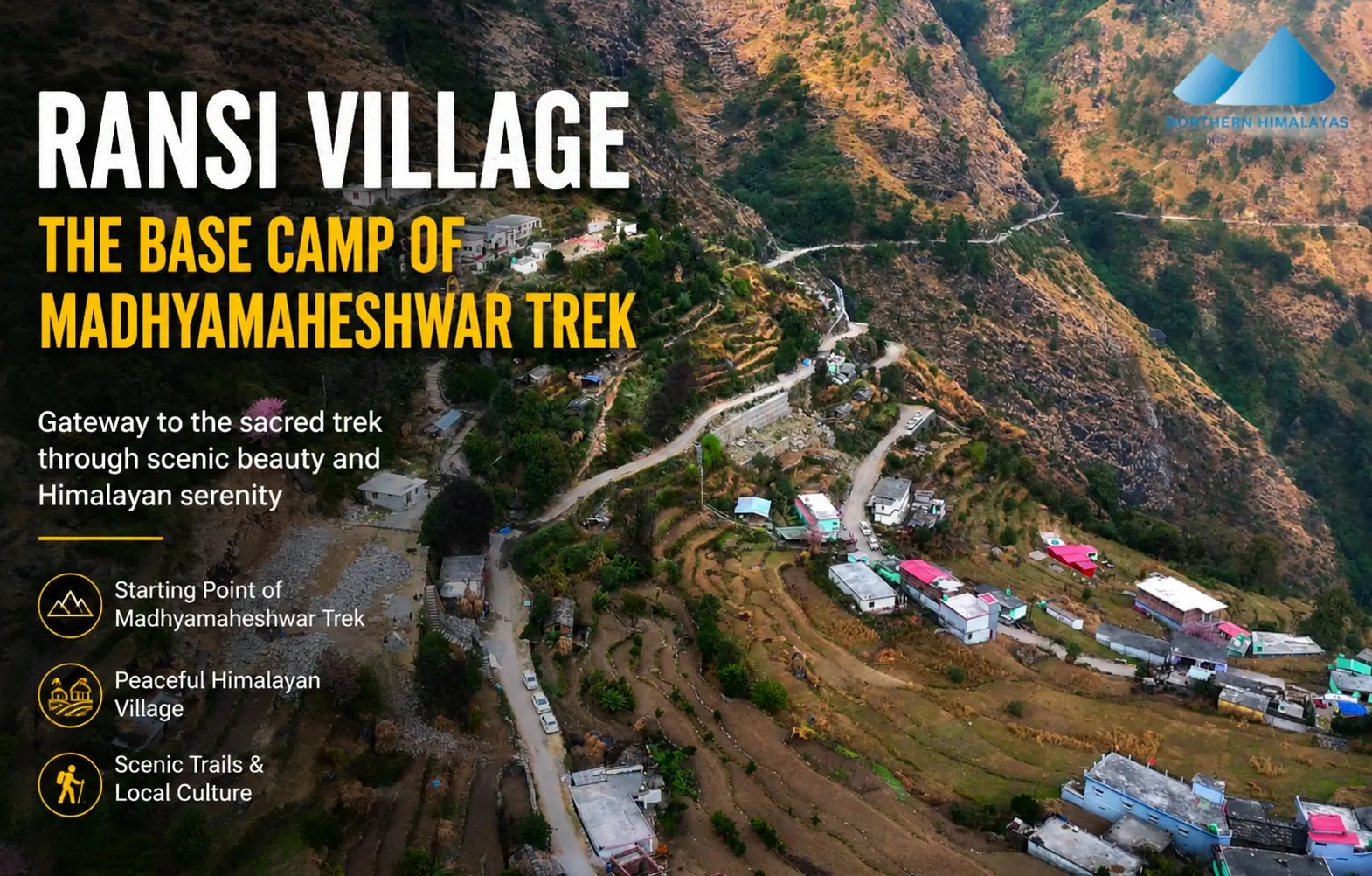
If you’re planning the Madhyamaheshwar trek, understanding Ransi Village is crucial. From how to reach, where to stay, what the route feels like, to real ground conditions—this guide covers everything you actually need before stepping onto the trail.
Where is Ransi Village Uttarakhand? Location, Altitude & Overview
Ransi Village is situated in the Ukhimath block of the Rudraprayag district, perched at an altitude of approximately 1,950 meters (6,397 feet). It serves as the primary base camp for Madhyamaheshwar trek, marking the spot where motorable roads transition into ancient stone-paved trails.
The village is nestled within the lush boundaries of the Kedarnath Wildlife Sanctuary. Because of its moderate elevation compared to the higher shrines, Ransi enjoys a temperate climate that keeps it accessible for most of the year. It is a traditional Himalayan hamlet, where the economy revolves around agriculture, livestock, and increasingly, the pilgrims who pass through its gates toward the "Middle Kedar."
Why Ransi Village is Important:
Ransi holds a strategic and spiritual weight that far exceeds its small size. Its importance can be summarized in three key aspects:
-
The Last Motorable Point: Is Ransi the last motorable village? Yes. It is the final road-head for the Madhyamaheshwar circuit. Beyond this point, your only options are your own two feet or a sturdy mountain mule.
-
The Gateway to Panch Kedar: As the Madhyamaheshwar trek starting point, it is the lifeblood of the local pilgrimage economy. Without the hospitality and logistics of Ransi, the trek to the second Kedar would be nearly impossible for most.
-
A Cultural Preserver: Unlike busier towns like Ukhimath, Ransi has preserved the authentic architecture and slow-paced lifestyle of the Garhwal region, making it a living museum of mountain heritage.
Ransi to Madhyamaheshwar Trek Distance, Route & Key Details
The trek from Ransi is legendary for its beauty and its "vertical" challenges. Here is the breakdown:
-
Ransi to Madmaheshwar trek distance: The trail is roughly 16 km one-way.
-
The Route: You begin with a gentle descent to the bridge at Gaundhar (6 km), followed by a short stretch to Bantoli. From Bantoli, the real test begins—an 8 km relentless ascent through Nanu toward the temple.
-
Key Highlights: The trail takes you through dense temperate forests where the Himalayan Monal is frequently spotted. The confluence of the Madmaheshwar Ganga and Markandeya Ganga rivers at Bantoli is a sight to behold.
-
Expert Tip: Most trekkers prefer professional packages for this route. Many choose specialized operators like Northern Himalayas or Roopkund Heaven because they handle permit management and provide local guides who ensure beginners don't burn out during the steep 8 km climb.
Life in Ransi Village: Garhwali Culture, Homes & Local Lifestyle
Life in Ransi Village Rudraprayag is dictated by the seasons and the sun. The Garhwali culture in Ransi Village is deeply rooted in the "Pahadi" way of life—resilient, hospitable, and deeply religious.
-
Traditional Architecture: Most homes are built using locally sourced stone and timber, with roofs made of heavy slate tiles to withstand the winter snow.
-
Agriculture: You will see locals working in terrace fields, growing Mandua (Finger Millet), Jhangora (Barnyard Millet), and seasonal vegetables.
-
Community: The village revolves around the local temple dedicated to Rakeshwari Devi. Festivals here are vibrant, featuring traditional folk dances like the Pandav Nritya, which reenacts scenes from the Mahabharata.
How to Reach Ransi Village from Delhi, Rishikesh, Haridwar & Dehradun, delhi
Reaching this remote corner of Uttarakhand requires a bit of planning, as the distance from Ukhimath to Ransi Village is about 30 km, but the roads are winding.
-
How to reach Ransi village from Delhi: Take an overnight bus or train to Rishikesh/Haridwar. From there, you can hire a private taxi or take a shared "Maxx" to Ukhimath.
-
Rishikesh to Ransi Village distance: It is approximately 215 km, which usually takes 8-10 hours of driving.
-
Ukhimath to Ransi Village distance: This final 30 km stretch takes about 1.5 to 2 hours due to the narrow, steep roads.
-
Public Transport: There are daily buses from Rishikesh and Haridwar to Ukhimath. From Ukhimath, local shared taxis are your best bet to reach Ransi.
Weather in Ransi Village: What to Expect Throughout the Year
The best time to visit Ransi Village depends on whether you are looking for lush greenery or snow.
-
Summer (May – June): Pleasant weather (15°C to 25°C). Ideal for those starting their trek.
-
Monsoon (July – August): The valley turns a deep, emerald green, but the roads are prone to landslides.
-
Autumn (September – October): The most popular time. The skies are crystal clear, offering sharp views of the snow-capped peaks.
-
Winter (December – February): Experience Ransi Village snow in winter. While the temple above is closed, the village itself looks like a white wonderland, though temperatures can drop to 0°C.
Near by famous locations to visit
Ransi is not just a base camp—it’s surrounded by beautiful and spiritual places.
-
Rakeshwari Devi Temple: Located right in the village, this ancient temple is a masterpiece of local architecture.
-
Ukhimath: Visit the winter seat of Lord Kedarnath and Madhyamaheshwar.
-
Deoria Tal: A short drive and a 3 km trek from Sari village (near Ukhimath) leads to a stunning lake reflecting the Chaukhamba peaks.
-
Kalimath: One of the 108 Shakti Peethas, located in a nearby valley, dedicated to Goddess Kali.
Homestays in Ransi Village Uttarakhand: Where to Stay & What to Expect
Are there hotels in Ransi Village? Not in the conventional sense. You won't find luxury resorts, but the homestays in Ransi Village offer something better: warmth and authenticity.
-
What to Expect: Basic rooms with clean beds and thick blankets. Most homestays have shared bathrooms, though some newer ones offer attached facilities.
-
The Food: You will likely eat in the family's kitchen. Expect fresh Dal-Chawal, Mandua Roti, and locally grown greens.
-
Pricing: Homestays typically range from ₹800 to ₹1,500 per night, including meals. It is the best way to support the local economy directly.
Road Conditions & Travel Experience to Ransi Village
The road to Ransi is an adventure in itself. From Rishikesh to Rudraprayag, the roads are generally wide and well-maintained. However, once you cross Ukhimath and head toward Mansuna and Ransi, the roads become narrow and winding.
During the monsoon, these roads can be challenging due to falling rocks, but for the rest of the year, they offer some of the most scenic drives in the Himalayas. The travel experience is a mix of thrill and awe as you pass through small hamlets and cross the bridges over roaring mountain streams.
Why do trekkers prefer Northern Himalayas for Madhyamaheshwar packages?
Trekkers often prefer specialized operators like Northern Himalayas for the Madhyamaheshwar trek package because navigating the high-altitude terrain of the Kedarnath Wildlife Sanctuary requires significant logistical expertise.
The preference for such professional packages is based on several key factors:
-
Permit Management: Obtaining the necessary forest permits in regions like Gopeshwar can be a complex and bureaucratic process; these operators handle all paperwork in advance to save travelers time.
-
Safety Gear: High-quality equipment, such as -10 degree sleeping bags and professional tents, is difficult for individuals to transport from cities. Professional packages include this gear along with critical safety items like oxygen cylinders and oximeters.
-
Experienced Staff: The guides provided are typically local experts who have navigated these trails hundreds of times, ensuring beginners maintain a safe pace to avoid burnout.
-
Hassle-free Logistics: Operators manage everything from railway station pickups at Rishikesh to providing hot meals at cold campsites, allowing trekkers to focus on the spiritual experience rather than survival logistics.
Frequently Asked Questions (FAQs) about Ransi Village
1. Can I visit Ransi without trekking?
Yes! Can I visit Ransi without trekking? Absolutely. Many travelers go to Ransi just to experience the village life, visit the Rakeshwari Devi Temple, and enjoy the views without ever stepping onto the Madhyamaheshwar trail.
2. Is there mobile network in Ransi?
Yes, Jio and BSNL generally work well in Ransi Village. However, once you start the trek toward Madhyamaheshwar, the signal becomes very spotty or disappears entirely.
3. Is Ransi safe for solo travelers?
Ransi is incredibly safe. The locals are known for their helpful nature. However, it is always wise to reach the village before sunset, as mountain roads can be tricky to navigate in the dark.
4. Why do trekkers prefer Northern Himalayas for Madhyamaheshwar packages?
Navigating the high-altitude sanctuary requires logistical expertise. Agencies like Northern Himalayas manage forest permits, provide high-quality safety gear like oxygen cylinders, and employ local guides who know the terrain intimately. This allows trekkers to focus on the spiritual journey while the experts handle the "Hassle-free Logistics."
5. Is Ransi the last motorable village?
Yes, Ransi is the last point accessible by road before the Madhyamaheshwar trek begins.
6. Are there hotels in Ransi Village?
No proper hotels. Only homestays and small guesthouses are available.
7. What is the distance from Ukhimath to Ransi Village?
It’s around 20–25 km by road, depending on the route.
8. What is the best time to visit Ransi Village?
May–June and September–October are the best months due to stable weather and clear conditions.