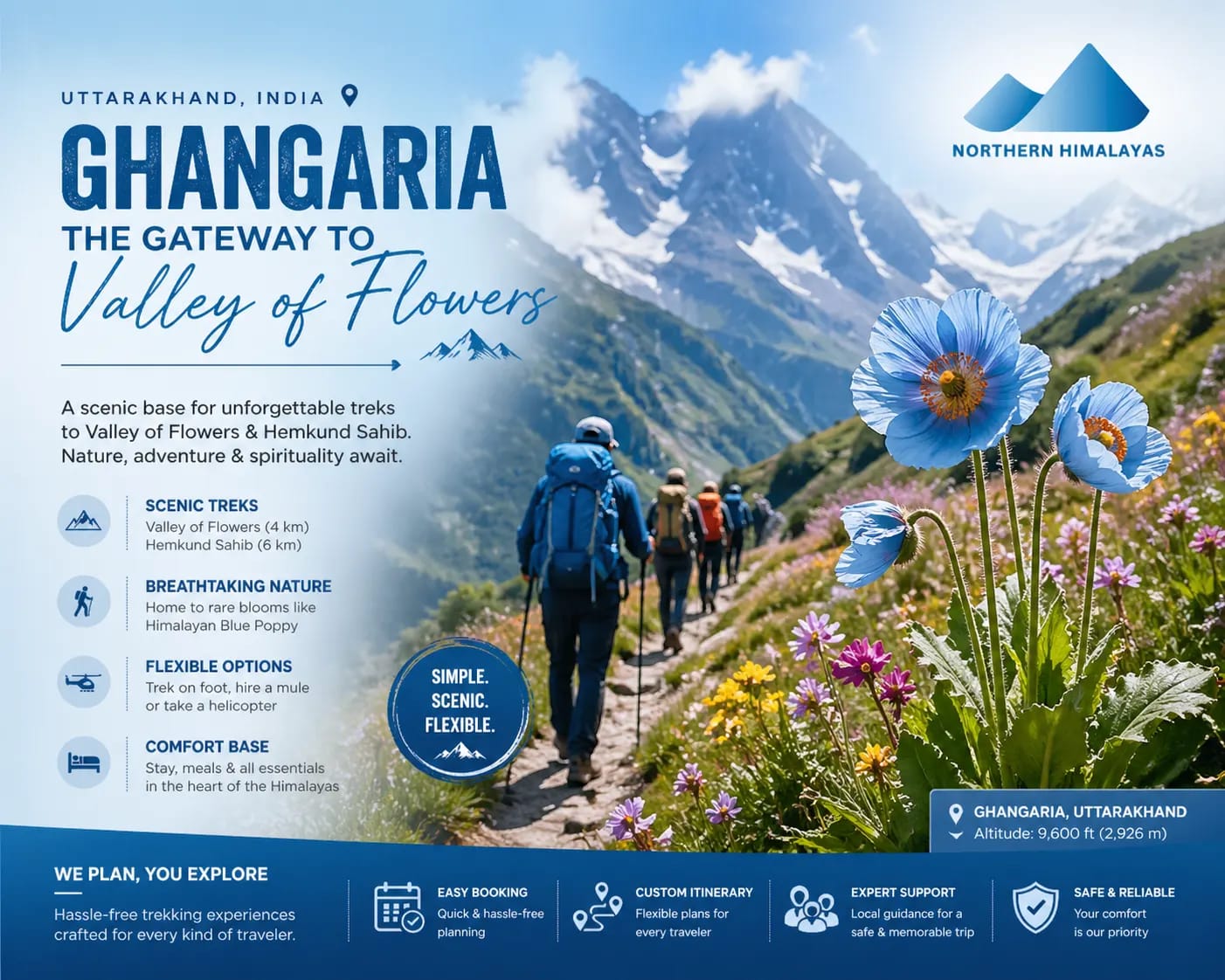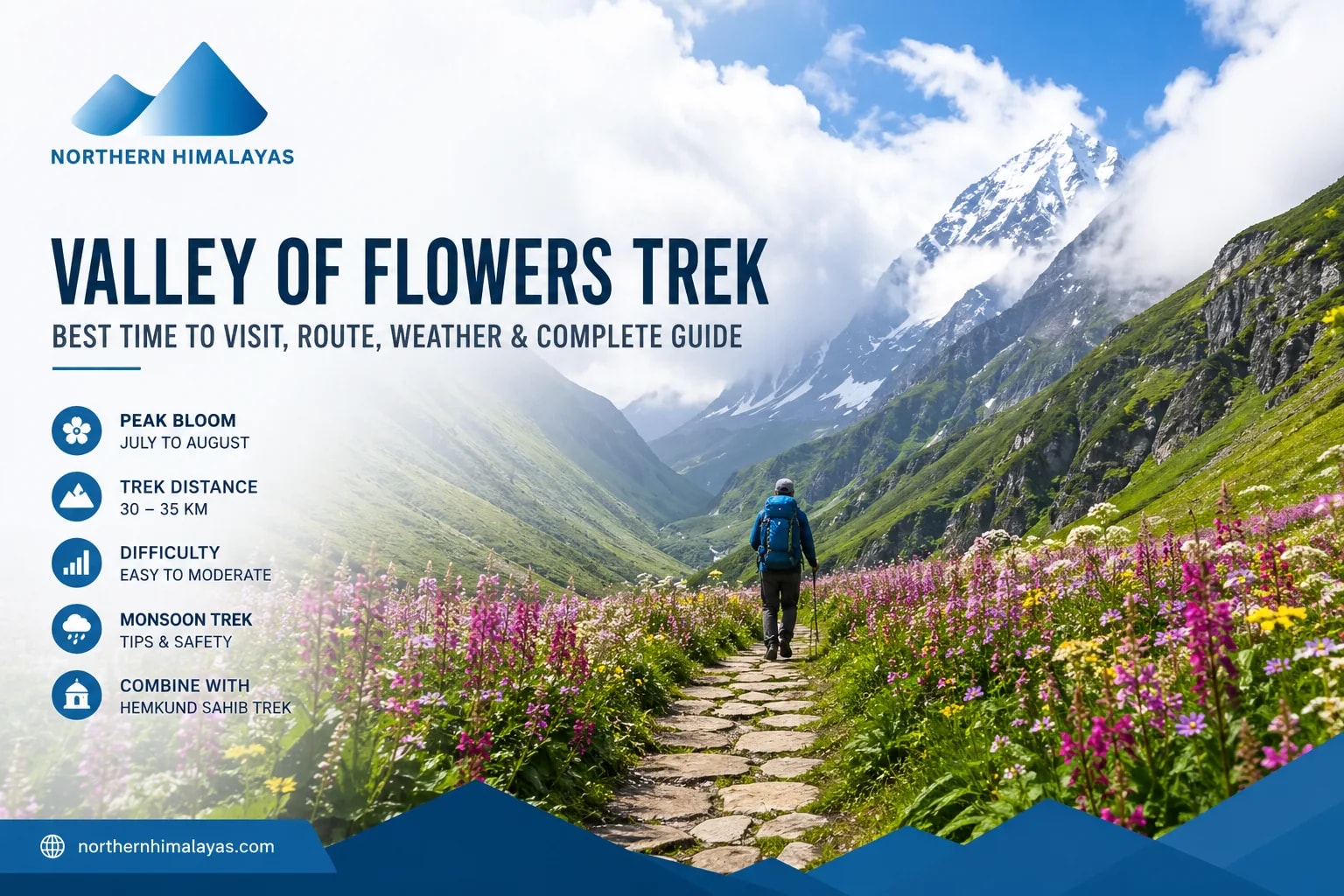
Planning the valley of flowers trek often starts with one simple question: “When will I actually see the flowers?”
You’ve probably seen those viral photos—endless carpets of pink, purple, and yellow—but here’s the truth most people realize too late: the valley doesn’t look like that all season.
Many trekkers visit at the wrong time and end up walking through mostly green landscapes with very few blooms. That’s not because the trek isn’t beautiful—it’s because timing is everything in Valley of Flowers Uttarakhand.
This guide breaks down the real bloom cycle, weather conditions during monsoon, crowd levels, and how to plan your trek step-by-step. Whether you’re a beginner or someone combining it with the Hemkund Sahib trek, you’ll know exactly when to go based on your goal—not guesswork.
Valley of Flowers Trek Overview: What to Expect on the Trail
The Unique Landscape of a UNESCO World Heritage Site
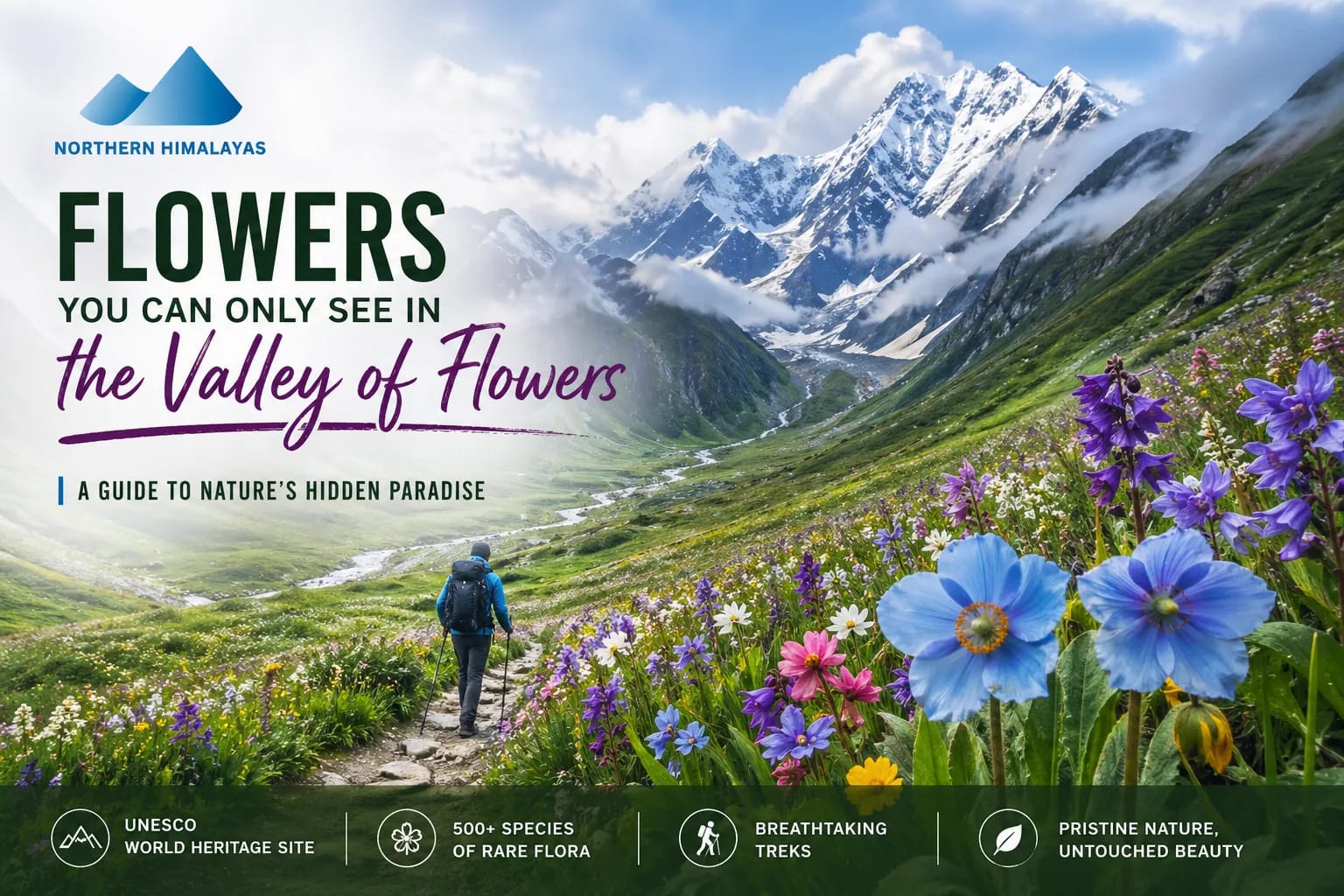
Valley of Flowers is a UNESCO World Heritage Site for a reason—it hosts over 500+ species of alpine flowers, many of which are rare and seasonal.
What makes it different from other treks:
-
No camping inside the valley.
-
Limited entry hours (7 AM to 4 PM).
-
Strict rules against plucking flowers.
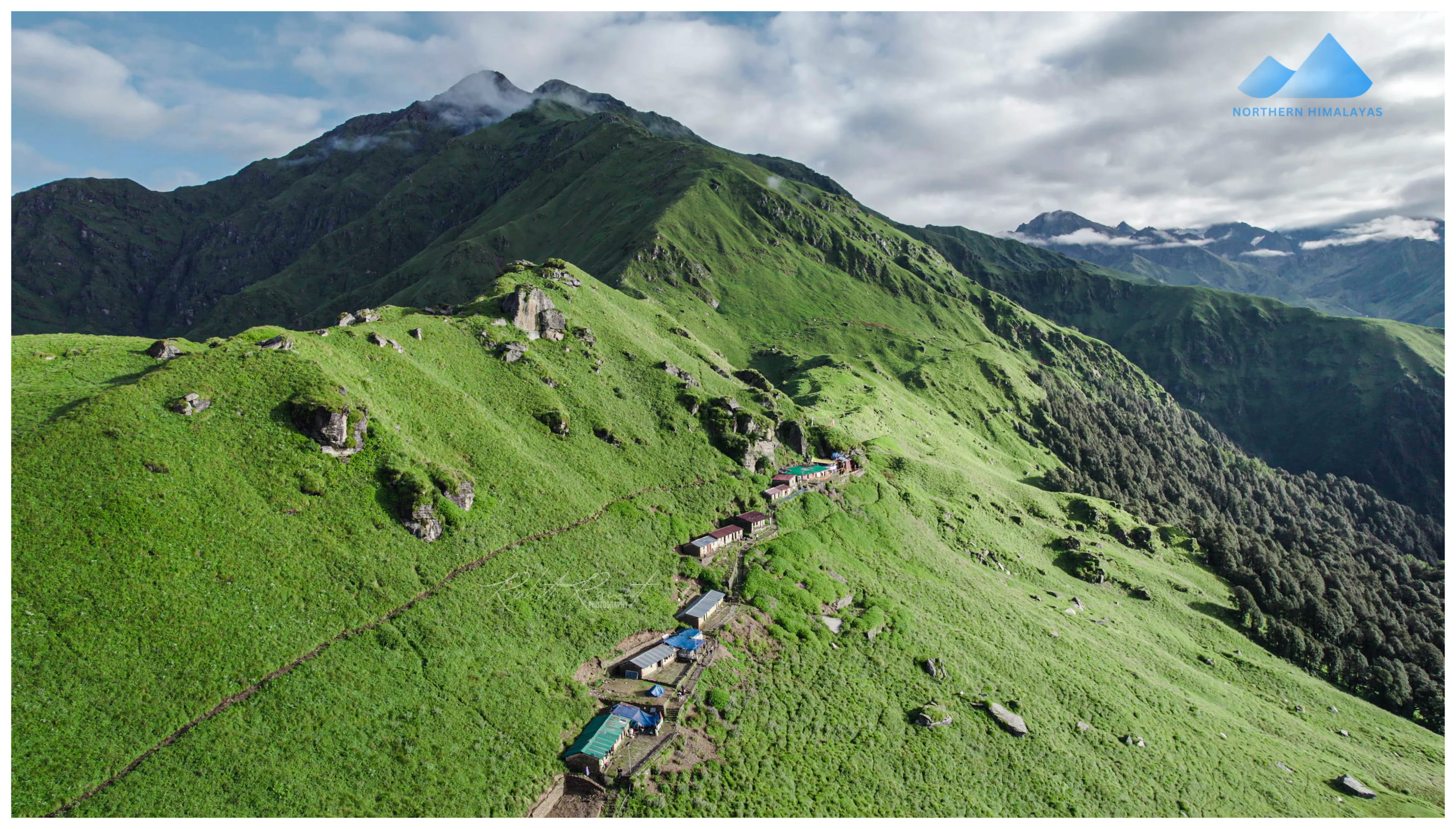
The valley sits at around 3,500 meters (11,500 ft) and stretches over several kilometers. Unlike forest-heavy treks, this one opens into a wide glacial valley surrounded by peaks.
On the ground, it feels very different from photos:
-
You walk along a defined trail—not through random flower patches.
-
Flowers grow in clusters across sections, not everywhere at once.
-
Mist and clouds frequently roll in, changing visibility.
This is not a “perfect postcard all the time” destination—it’s dynamic and changes hour by hour.
Trek Route, Distance, and Altitude Details
The trek starts from Pulna Govindghat, but the real walking begins from Pulna village.
Route breakdown:
-
Rishikesh → Joshimath (road journey).
-
Joshimath → Govindghat → Pulna (short drive).
-
Pulna → Ghangaria (~9 km trek).
-
Ghangaria → Valley (~4 km one way).
Total trekking distance:
👉 Around 30–35 km (round trip).
Altitude progression:
-
Govindghat: ~6,000 ft.
-
Ghangaria: ~10,000 ft.
-
Valley: ~11,500 ft.
What makes it challenging:
-
Long walking hours (5–7 hours/day).
-
Continuous gradual ascent.
-
Daily up-down trek from Ghangaria.
Many beginners underestimate this because the trail is well-defined—but stamina is still required.
Difficulty Level and Who This Trek is Suitable For
The valley of flowers trek is considered beginner-friendly—but that doesn’t mean easy.
Ground reality:
-
No technical sections.
-
Well-paved trail.
-
But long walking hours (5–7 hours/day).
Who it suits:
-
First-time trekkers with basic fitness.
-
Families with prior hill travel experience.
-
Photographers and nature lovers.
Who should reconsider:
-
People with knee issues (long descents).
-
Those not comfortable with rain and wet conditions.
-
Anyone expecting luxury trekking.
What Makes Valley of Flowers Uttarakhand Unique
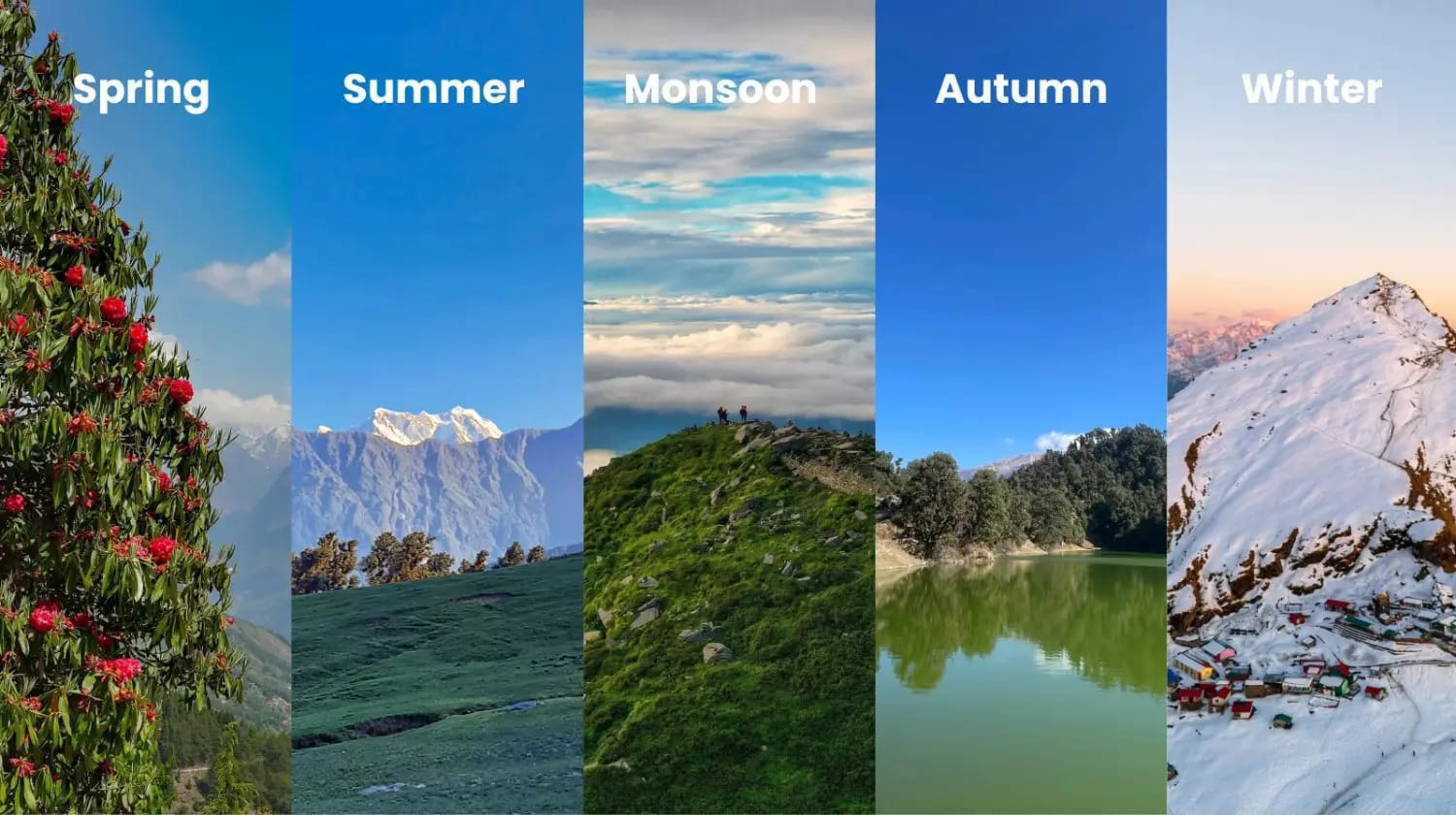
The uniqueness lies in its changing bloom cycle.
Unlike static landscapes:
-
Flowers change every 2–3 weeks.
-
Different colors dominate at different times.
-
No two visits are exactly the same.
You might see:
-
Blue poppies in one section.
-
Pink balsams in another.
-
Yellow daisies elsewhere.
This constantly evolving ecosystem is why timing matters more here than any other trek in India.
What is the Best Time to Visit Valley of Flowers for Peak Bloom?
Early July: The Awakening of the Primulas
Early July is when the valley starts waking up.
What you’ll notice:
-
Fresh green grass after snowmelt.
-
Early bloomers like primulas.
-
Less dense flower coverage.
Advantages:
-
Fewer crowds.
-
Fresh, vibrant atmosphere.
-
Easier trekking conditions compared to peak monsoon.
Limitations:
-
Not full bloom yet.
-
Colors are still limited.
Best for:
👉 Trekkers who prefer peaceful trails over peak visuals
August: The Window for Peak Floral Density
August is the best time to visit valley of flowers for peak bloom.
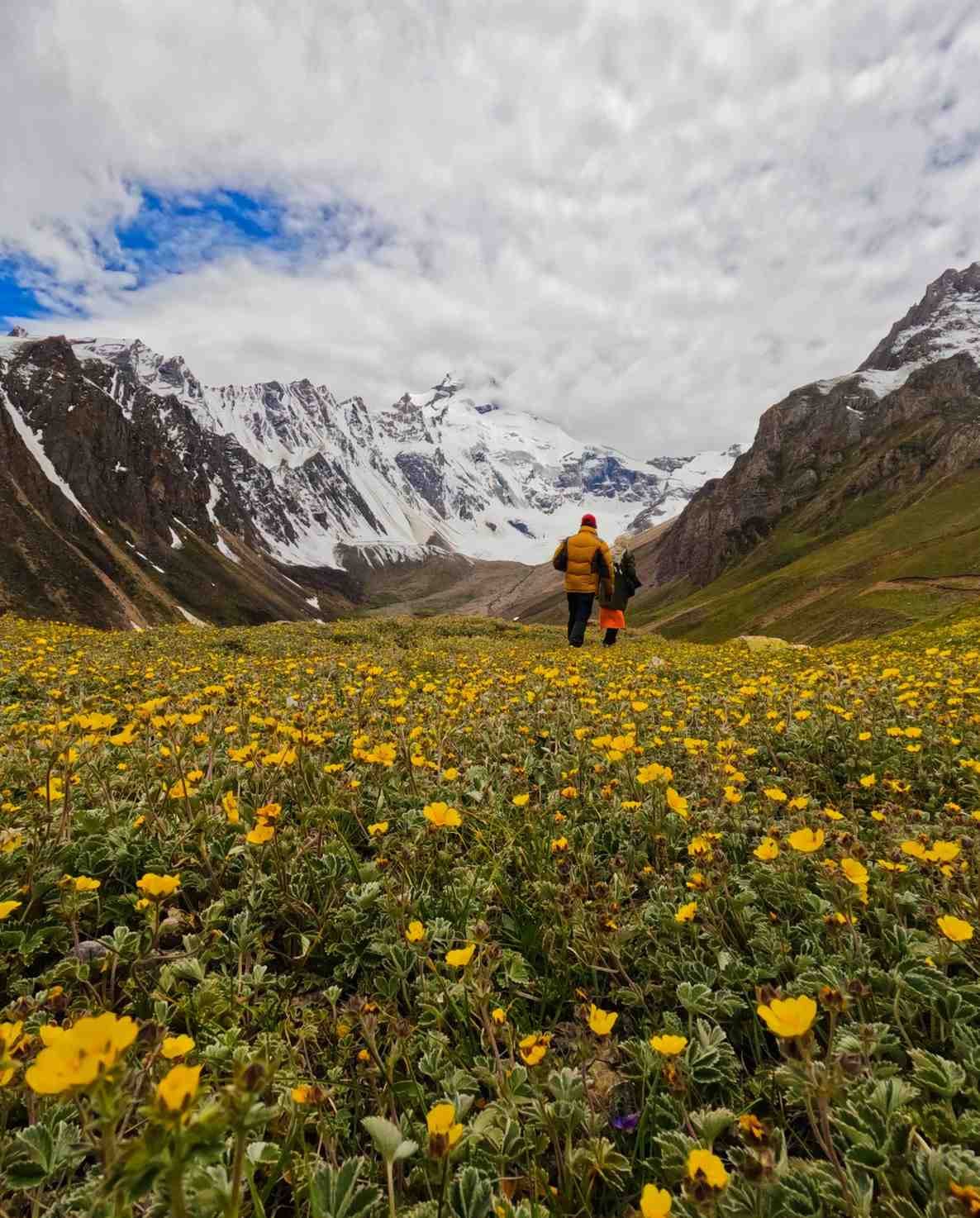
This is when the valley looks like what you see in photos.
What happens:
-
Maximum variety of flowers.
-
Full color spread across valley.
-
Thick vegetation and greenery.
Real experience:
-
Entire slopes covered in pink, purple, yellow.
-
Waterfalls at peak flow.
-
Mist creates dramatic visuals.
Challenges:
-
Heavy rainfall.
-
Slippery trails.
-
Crowded paths.
Still, if your goal is:
👉 “I want to see the valley in its best form” → August is unbeatable
September: The Transition to Autumnal Hues
September brings a shift.
What changes:
-
Flower density decreases.
-
Valley turns golden-brown.
-
Skies become clearer.
Pros:
-
Clear Himalayan views.
-
Less rain.
-
Better trekking comfort.
Cons:
-
Fewer flowers.
Best for:
👉 Photographers who prioritize mountain views over flowers
Trekking in the Monsoon: Weather Conditions and Trail Safety
Rainfall Patterns and Daily Weather Reality
The valley of flowers trek runs during monsoon, so rain is part of the experience.
Typical pattern:
-
Morning: Clear or light clouds.
-
Afternoon: Rainfall.
-
Evening: Misty conditions.
What this means for trekkers:
-
You will get wet at some point.
-
Clothes may not dry fully.
-
Visibility changes frequently.
Trail Conditions: Slippery Paths, Landslides, and River Crossings
Monsoon directly impacts trail conditions.
Common challenges:
-
Muddy, slippery stones.
-
Water flowing across paths.
-
Occasional landslides.
The stretch to Ghangaria:
-
Crowded with mules.
-
Can get messy during rain.
Risk areas:
-
Narrow paths near river.
-
Loose rocks after rainfall.
Safety Tips for Monsoon Trekking in Valley of Flowers
Practical safety approach:
-
Start early (avoid afternoon rain).
-
Use trekking poles for balance.
-
Wear proper grip shoes (not sports shoes).
-
Keep backpack waterproofed.
Most important:
👉 Walk slow and steady—rushing causes slips
Combining the Valley of Flowers with the Hemkund Sahib Trek
Most trekkers use Ghangaria as a base to visit both the Valley of Flowers and the holy shrine of Hemkund Sahib. While the Valley is a botanical feast, Hemkund Sahib is a test of physical and spiritual endurance. Combining these two offers a complete Himalayan experience—the beauty of the meadows and the ruggedness of high-altitude glacial lakes.
The Spiritual Significance of Hemkund Sahib
Hemkund Sahib is the highest Gurudwara in the world, situated at 15,200 ft. It is dedicated to Guru Gobind Singh, the tenth Sikh Guru, who is said to have meditated here in a previous life. The Gurudwara is situated next to a crystal-clear glacial lake, the Hemkund (Lake of Ice).
Even if you are not religious, the atmosphere at the top is incredibly peaceful. Seeing pilgrims, some quite elderly, making the arduous climb with "Waheguru" on their lips provides a different kind of motivation. The "Brahma Kamal" (the celestial lotus) grows in abundance on the rocky slopes leading to the lake, adding a sense of divine beauty to the harsh terrain.
Hemkund Sahib Trek Difficulty and Altitude Challenge
-
The trek to Hemkund is only 6 km from Ghangaria, but you gain about 5,600 ft of altitude in that short distance. This is a steep, relentless zigzag climb. The air becomes significantly thinner as you cross the 13,000 ft mark.
-
Many trekkers who were fine in the Valley struggle on the way to Hemkund. It is common to feel a slight headache or nausea. The key is to take very small steps—what we call the "Himalayan Shuffle." Don't try to compete with the mules or the locals. Take frequent breaks and use oxygen if necessary, though most fit individuals can manage the climb with patience.
Best Time to Do Both Treks Together
The best time to combine both is between mid-July and late August. This ensures that the Valley is in bloom and the snow on the path to Hemkund has melted enough to make the climb safe. In June, the lake at Hemkund is often still frozen, and the path may have snow walls. By July, the flowers around the lake, including the blue poppies and Brahma Kamals, are at their peak. Trekking both back-to-back requires two days—Day 1 for the Valley (easier) and Day 2 for Hemkund (harder). This sequence helps with acclimatization.
How to Plan Your Itinerary Efficiently
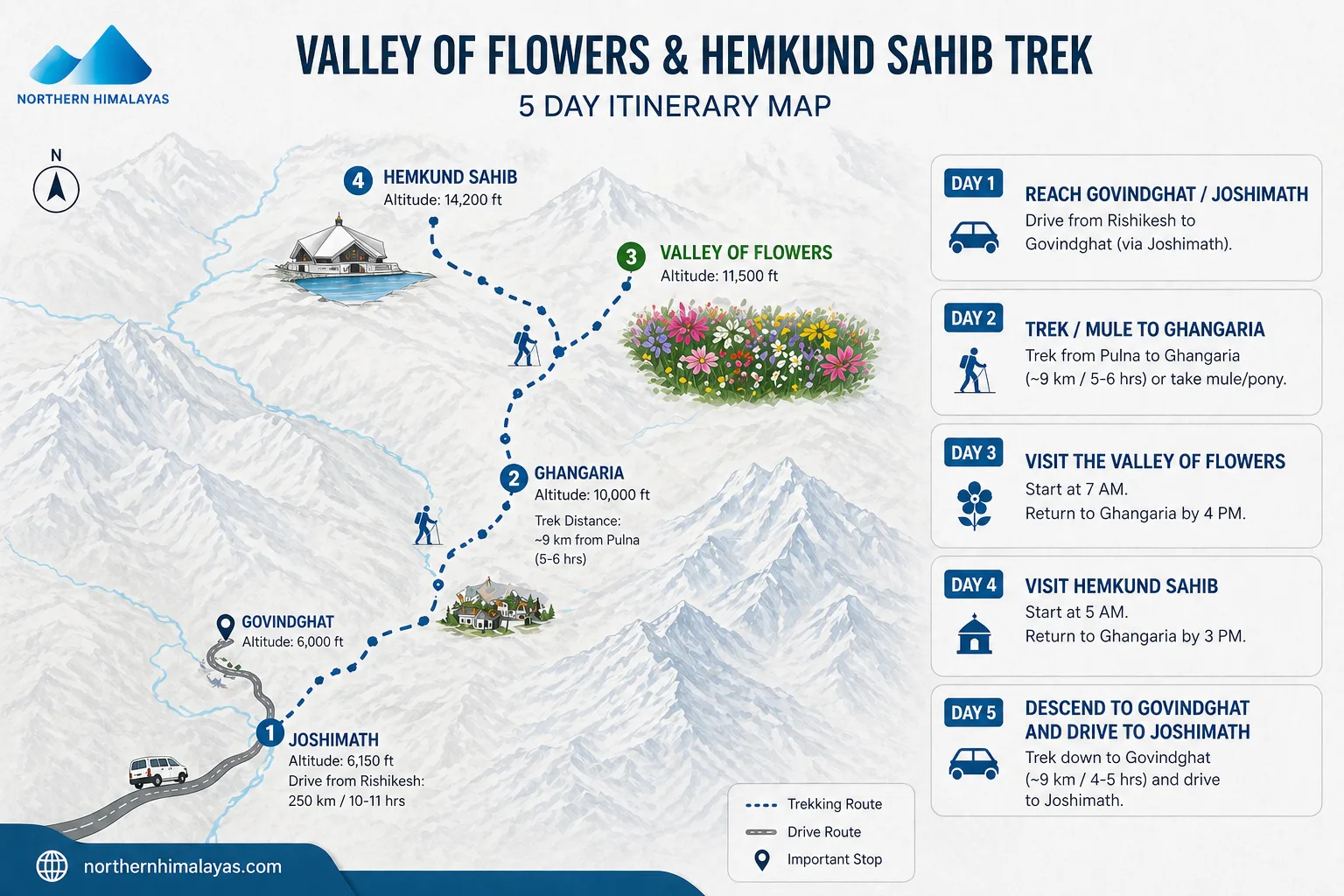
A standard efficient itinerary looks like this:
-
Day 1: Reach Govindghat/Joshimath.
-
Day 2: Trek/Mule to Ghangaria.
-
Day 3: Visit the Valley of Flowers (Start at 7 AM, return by 4 PM).
-
Day 4: Visit Hemkund Sahib (Start at 5 AM, return by 3 PM).
-
Day 5: Descend to Govindghat and drive to Joshimath.
This plan gives your body a "rest" day in the Valley before the high-altitude push to Hemkund. Always visit the Valley first to enjoy the flowers while your legs are relatively fresh.
How to Reach Valley of Flowers: Travel Route and Base Camp Details
Reaching this remote corner of Uttarakhand is an adventure in itself. You will be traveling through some of the most dramatic mountain roads in India, following the Alaknanda River upstream through the famous "Panch Prayags" (five holy confluences).
Route from Rishikesh/Haridwar to Govindghat
Your journey starts from Rishikesh or Haridwar. It is a long, 10-12 hour drive covering about 270 km. The route follows the Badrinath highway, passing through Devprayag, Srinagar, Rudraprayag, and Karnaprayag.
In 2026, the roads have improved due to the Char Dham All-Weather Road project, but monsoon delays are still a reality. It is best to start early (5:00 AM) to avoid the afternoon traffic and potential landslide zones. You will likely spend the night at Govindghat or a few kilometers further at Joshimath, which has better hotel options.
Trek from Govindghat to Ghangaria
From Govindghat, you can take a shared taxi for 4 km to Pulna, where the actual trekking path begins. From Pulna, Ghangaria is 9 km away. The path is well-defined and broad.
For those who find the 13 km climb too much, there are three alternatives:
-
Ponies/Mules: Available at Govindghat/Pulna.
-
Porters/Palkis: For those who cannot ride a mule.
-
Helicopter: A 5-minute flight from Govindghat to Ghangaria (weather permitting). The trek to Ghangaria is the "gateway" to your adventure. The roar of the Lakshman Ganga river keeps you company throughout this stretch.
Entry Permits and Timings for Valley of Flowers National Park
The entry gate to the Valley opens at 7:00 AM every morning. The last entry allowed is at 2:00 PM, and everyone must exit the valley by 5:00 PM. The permit for Indians is approximately ₹150 and for foreigners ₹600, valid for three days. You need to carry a valid ID proof.
The forest checkpost is located 3 km from Ghangaria. Here, you will be briefed on the rules: no plucking flowers, no littering, and no shouting. The plastic you carry (bottles, wrappers) is often tagged, and you must bring it back to ensure you aren't leaving waste in the park.
Crowd Levels and Trekking Conditions by Month
The Valley of Flowers trek has become increasingly popular. In 2026, managing your expectations regarding crowds is as important as checking the weather. The experience of the valley can change drastically depending on how many people are sharing the trail with you.
June vs July vs August vs September Crowd Comparison
-
June: Crowds are mostly pilgrims for Hemkund Sahib. The Valley itself is quiet.
-
July: Trekkers start arriving. Crowds are moderate.
-
August: This is the busiest month. Expect heavy crowds on the trails, especially near Ghangaria. Hotels can be fully booked weeks in advance.
-
September: The crowds begin to thin as the flowers fade. It becomes much more peaceful. If you are a photographer looking for "solitary" shots of the valley, mid-July or early September is better than the peak of August.
Weekdays vs Weekends: What to Expect
Like any major destination near Delhi/NCR, the weekends see a surge in "weekend warriors." Friday, Saturday, and Sunday see a 40% increase in footfall at the entry gate. This can lead to bottlenecks on the narrow paths inside the valley. If your schedule allows, try to visit the Valley on a Tuesday or Wednesday. You will find more peace, better service at the guest houses in Ghangaria, and shorter queues for everything from permits to food.
How Crowd Impacts Your Trek Experience
Large crowds can sometimes detract from the "wilderness" feel. In Ghangaria, the noise levels can be high. On the trail to Hemkund, the smell and waste of the mules can be more noticeable when the traffic is high. However, the crowd also brings a sense of security and a shared camaraderie. If you prefer solitude, trek further deep into the valley toward the Tipra Kharak glacier; most tourists turn back after the first 2-3 km of the meadow, leaving the deeper parts of the valley remarkably quiet.
Essential Packing List for a Monsoon Trek in the Himalayas
Packing for a monsoon trek is a balancing act between being waterproof and staying light. If you pack too much, the steep climbs will exhaust you; if you pack too little, you'll be miserable in wet clothes.
Moisture-Wicking Clothing vs. Cotton
The #1 rule of Himalayan trekking: No Cotton. Cotton absorbs water, becomes heavy, and takes forever to dry. It can even lead to hypothermia in cold, wet conditions. Instead, opt for:
-
Polyester/Nylon blends: These wick sweat away and dry quickly.
-
Synthetic Thermals: For the cold nights in Ghangaria.
-
Quick-Dry Trekking Pants: Avoid jeans at all costs.
Must-Have Waterproof Gear and Clothing
-
High-Quality Poncho: This is better than a jacket. It covers your head, body, and bag.
-
Waterproof Backpack Cover: Even if your bag is "water-resistant," it will leak in a 4-hour drizzle without a cover.
-
Dry Bags/Ziplocks: Put your electronics and spare socks in separate ziplock bags inside your backpack. Double-bagging is the only way to ensure your dry clothes stay dry.
Footwear and Backpack Essentials
-
Boots: Look for brands with Vibram or similar high-traction soles. Waterproofing (Gore-Tex) is helpful but not foolproof.
-
Socks: Carry 4-5 pairs of synthetic or woolen socks. Wet feet lead to blisters. Change into dry socks the moment you reach Ghangaria.
-
Backpack: A 30-40 liter bag is sufficient if you are leaving your main luggage at Govindghat. It must have a good waist strap to take the load off your shoulders.
Medical Kit and High-Altitude Essentials
The thin air and physical strain require a basic medical kit:
-
Diamox: For altitude sickness (Consult your doctor first).
-
Knee Caps: Essential for the steep descent from Hemkund.
-
Painkillers and Anti-inflammatories: For muscle soreness.
-
ORS/Electrolytes: To keep your mineral levels up.
-
Band-aids and Compeed: For blisters.
Common Packing Mistakes to Avoid
-
Overpacking: You don't need a different outfit for every day. Two sets of trekking clothes are enough.
-
Heavy Umbrellas: They are useless in the wind and occupy one of your hands.
-
New Shoes: Never wear brand new boots on the trek. Break them in for at least 2 weeks before you leave home.
-
Too Many Gadgets: Power is limited in Ghangaria. Carry one good power bank and limit your phone usage.
Valley of flowers trek package with northern himalayas
Planning a monsoon trek on your own can be stressful, especially when dealing with road closures, permit queues, and the high demand for accommodation in Ghangaria. Northern Himalayas specializes in organizing high-safety, high-comfort expeditions to the Valley of Flowers.
Why booking with Northern Himalayas:
-
Expert Guides: Our guides are local experts who know every flower and every safe shortcut.
-
Safety First: We provide pulse oximeters and oxygen cylinders as standard equipment.
-
Logistical Ease: We handle the permits, the entrie transportation from Rishikesh, and the best available stays in Ghangaria, so you can focus on the photography and the experience.
-
Small Groups: We believe in sustainable trekking. Our groups are small enough to ensure personalized attention and a lower environmental footprint.
-
Cost range: ₹8,000–₹14,000
conclusion
The Valley of Flowers trek is a rare opportunity to witness nature at its most prolific and poetic. It is a journey that demands respect for the weather and the altitude, but it rewards you with sights that are found nowhere else on the planet. From the first Primula of July to the golden seed-heads of September, the valley is a living, breathing masterpiece of the Himalayas.
By preparing your body, choosing the right gear, and understanding the nuances of monsoon trekking, you can turn a challenging climb into a life-changing experience. Whether you seek the spiritual solace of Hemkund Sahib or the botanical wonder of the meadow, this trail will stay with you long after the mud has washed off your boots. The valley is waiting—it’s time to walk among the clouds.
FAQs:
1. Is Valley of Flowers safe for solo female trekkers?
Yes, it is one of the safest treks in India. The trail is well-populated, the locals are respectful, and the presence of pilgrims for Hemkund Sahib ensures a high level of security. However, it is always recommended to join a reputable group like Northern Himalayas for added safety during monsoon travels.
2. Can we see the Brahma Kamal in the Valley of Flowers?
While Brahma Kamals are occasionally found in the higher reaches of the valley, they are much more common on the rocky slopes surrounding the Hemkund Sahib lake. The high altitude (above 14,000 ft) is their natural habitat.
3. Do I need to carry oxygen for Hemkund Sahib?
Most people do not need supplemental oxygen if they climb slowly. However, if you have a history of respiratory issues or are feeling very breathless, portable oxygen cans (available at Ghangaria) can provide temporary relief.
4. Are there ATMs and mobile networks on the trek?
There are no ATMs beyond Joshimath, so carry enough cash. Mobile networks (mostly BSNL and Jio) work sporadically in Ghangaria, but do not expect any network inside the Valley or at Hemkund Sahib.
5. Is a guide mandatory for the Valley of Flowers?
While not legally mandatory for Indians, having a guide is highly recommended. They help identify rare flowers, navigate slippery sections, and manage logistics if a landslide blocks the path back.