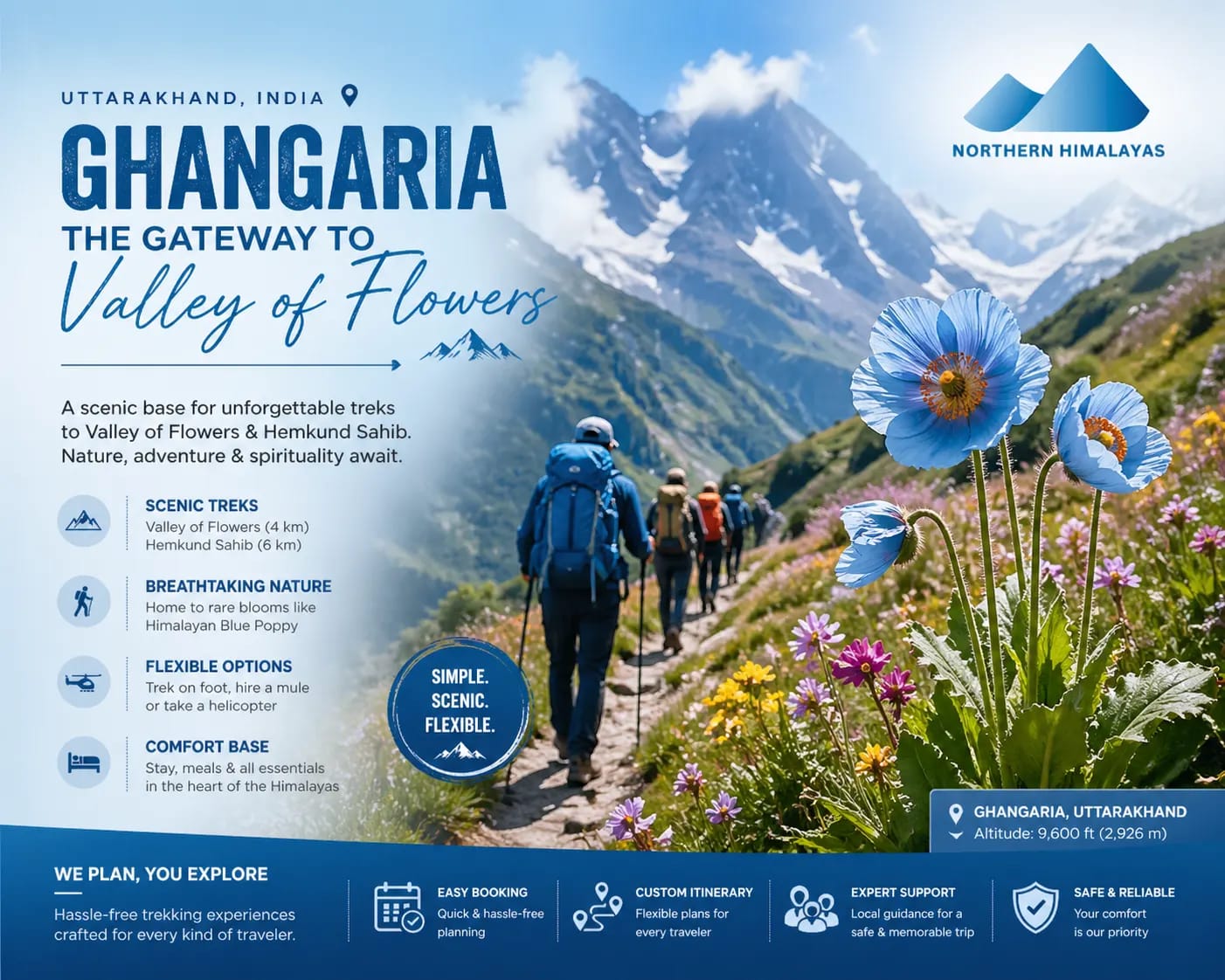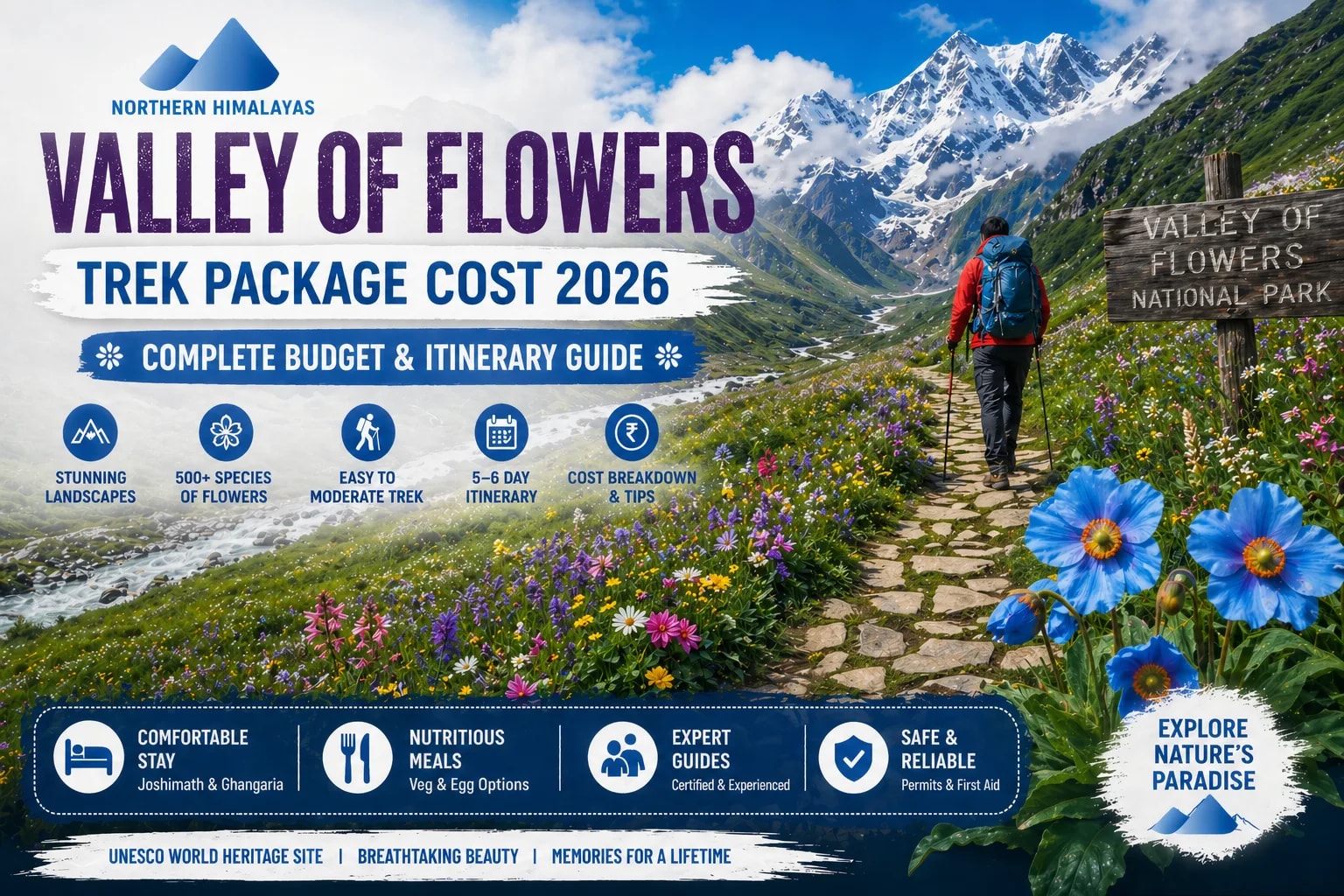
Valley of Flowers Trek Overview
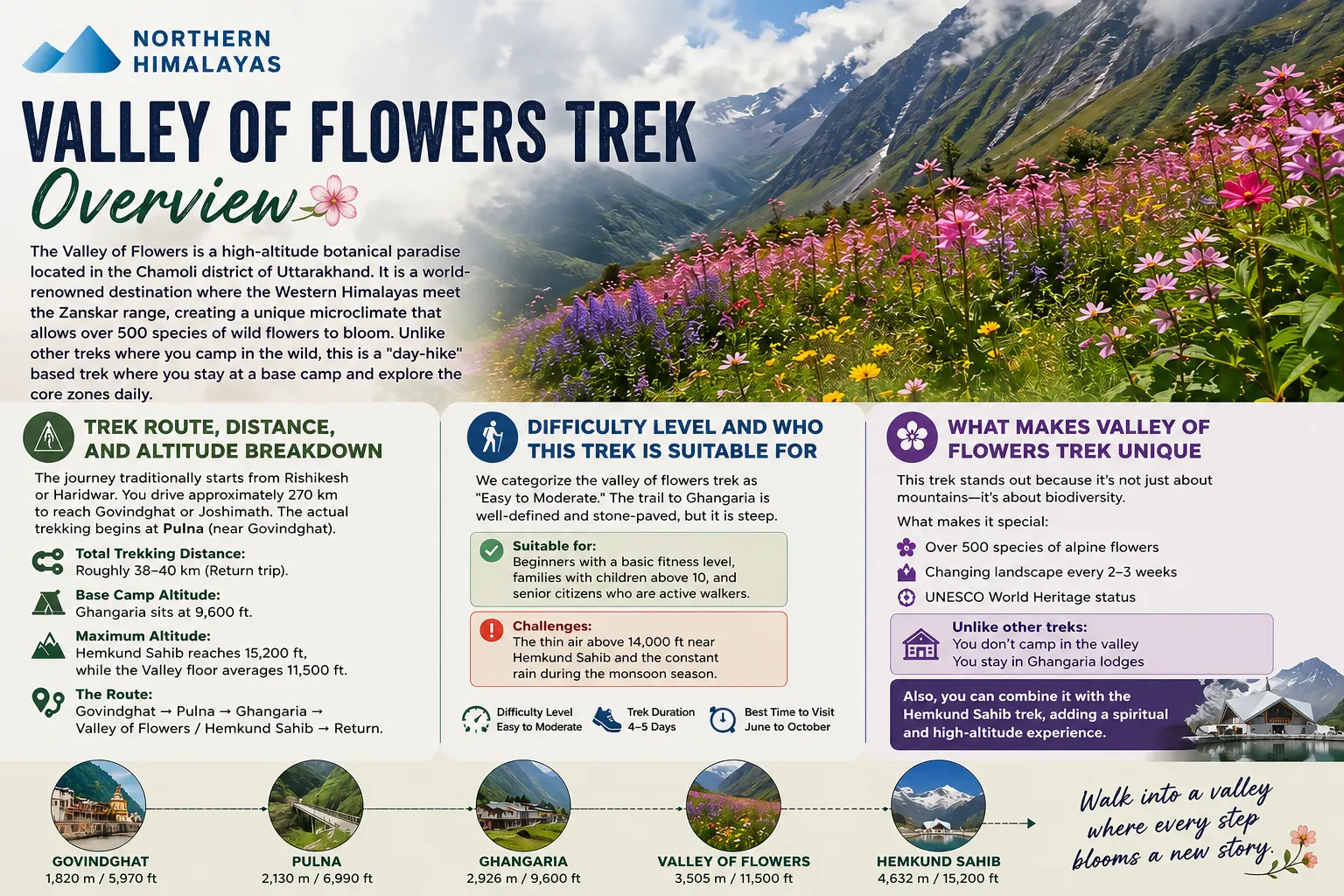
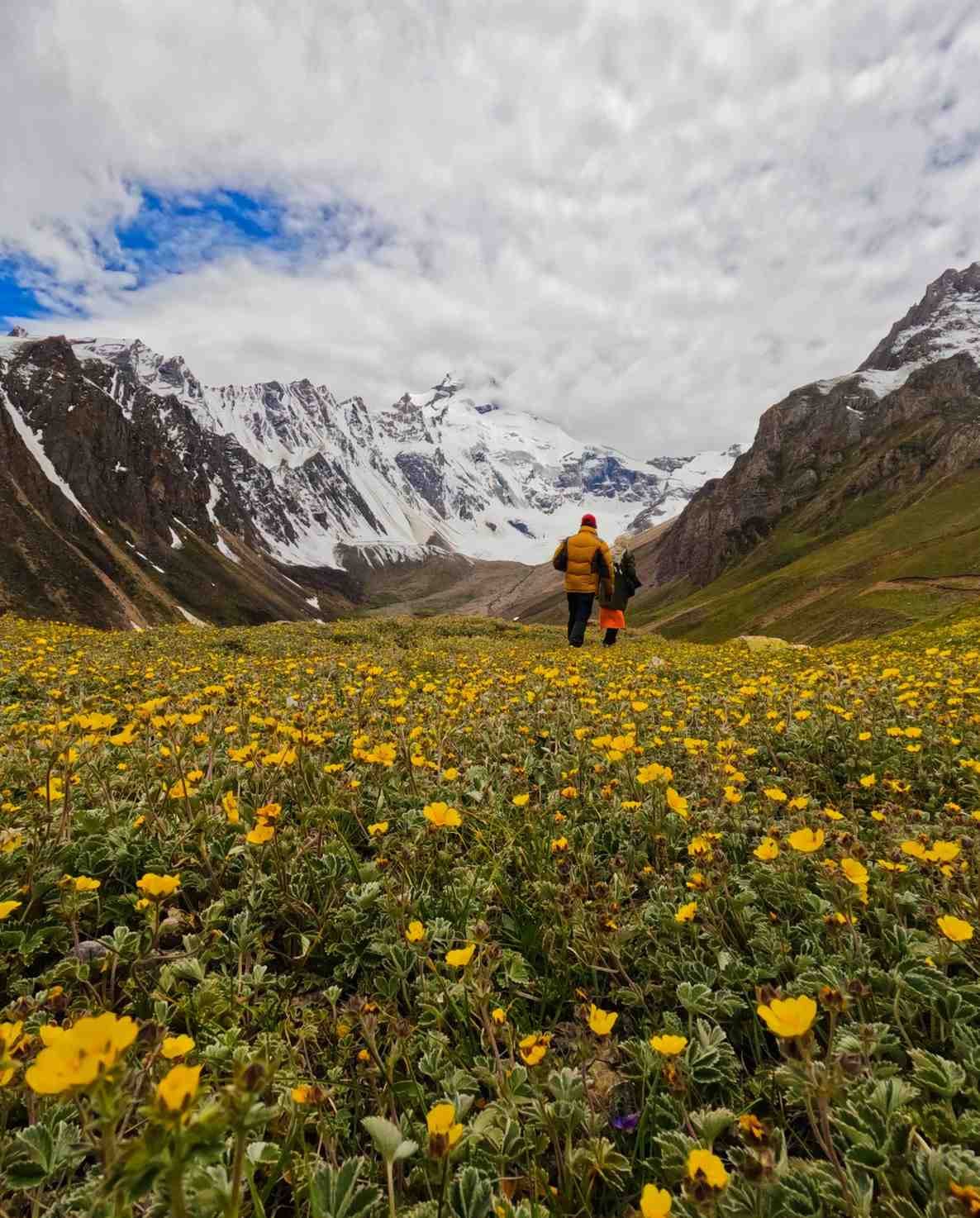
The Valley of Flowers is a high-altitude botanical paradise located in the Chamoli district of Uttarakhand. It is a world-renowned destination where the Western Himalayas meet the Zanskar range, creating a unique microclimate that allows over 500 species of wild flowers to bloom. Unlike other treks where you camp in the wild, this is a "day-hike" based trek where you stay at a base camp and explore the core zones daily.
Trek Route, Distance, and Altitude Breakdown
The journey traditionally starts from Rishikesh or Haridwar. You drive approximately 270 km to reach Govindghat or Joshimath. The actual trekking begins at Pulna (near Govindghat).
-
Total Trekking Distance: Roughly 38–40 km (Return trip).
-
Base Camp Altitude: Ghangaria sits at 9,600 ft.
-
Maximum Altitude: Hemkund Sahib reaches 15,200 ft, while the Valley floor averages 11,500 ft.
-
The Route: Govindghat → Pulna → Ghangaria → Valley of Flowers / Hemkund Sahib → Return.
Difficulty Level and Who This Trek is Suitable For
We categorize the valley of flowers trek as "Easy to Moderate." The trail to Ghangaria is well-defined and stone-paved, but it is steep.
-
Suitable for: Beginners with a basic fitness level, families with children above 10, and senior citizens who are active walkers.
-
Challenges: The thin air above 14,000 ft near Hemkund Sahib and the constant rain during the monsoon season.
What Makes Valley of Flowers Trek Unique
This trek stands out because it’s not just about mountains—it’s about biodiversity.
What makes it special:
-
Over 500 species of alpine flowers
-
Changing landscape every 2–3 weeks
-
UNESCO World Heritage status
Unlike other treks:
-
You don’t camp in the valley
-
You stay in Ghangaria lodges
Also, you can combine it with the hemkund sahib trek, adding a spiritual and high-altitude experience.
What is the Average Valley of Flowers Trek Package Cost in 2026?
Budgeting for 2026 requires looking at the rising costs of fuel and mountain logistics. While prices vary between operators, there is a standard market rate that ensures safety and decent comfort.
Price Range for Budget, Standard, and Premium Packages
-
Budget (Self-Planned): If you manage everything yourself, expect to spend ₹8,000 – ₹10,000. This includes basic dorms and local bus travel.
-
Standard Package (Group Treks): Most reliable companies charge between ₹11,500 and ₹15,500. This is the "sweet spot" that includes transport from Rishikesh, decent guest houses, and all meals.
-
Premium Packages: These can go up to ₹25,000+, including helicopter transfers from Govindghat to Ghangaria and luxury stays in Joshimath.
Cost Breakdown: Stay, Food, Transport, and Guide
Where does your money actually go?
-
Transport (25%): The 10-hour drive from Rishikesh is expensive due to mountain fuel rates and permit taxes.
-
Accommodation (30%): Ghangaria is a remote village; everything from bedsheets to gas cylinders is brought up by mules, making stays costlier than in the plains.
-
Food (20%): Expect simple, nutritious vegetarian meals. High-protein food is essential at this altitude.
-
Staff & Permits (25%): This covers your certified trek leader, local guides, and the Forest Department entry fees.
Factors That Affect Trek Package Pricing
Pricing isn't fixed because mountain logistics are volatile.
-
Group Size: Larger groups (20+) are cheaper, but smaller groups (8-12) offer more safety.
-
Batch Timing: August (Peak Bloom) often sees a slight hike in accommodation prices due to high demand.
-
Offloading: Carrying your own bag saves money, while hiring a mule for your backpack adds ₹1,000 – ₹1,200 per day.
What’s Included and Excluded in a Valley of Flowers Trek Package?
Transparency is key when booking. A "cheap" package often turns out to be expensive when you realize half the essentials are missing.
Inclusions: Accommodation, Meals, Guide, and Permits
A standard Northern Himalayas package typically includes:
-
Accommodation (5 Nights):
-
2 Nights at Joshimath (Hotel/Guesthouse).
-
3 Nights at Ghangaria (Guesthouse/Homestay/Camping).
-
Meals:
-
From Day 1 Dinner → Day 5 Dinner (Vegetarian + Eggs).
-
Permits & Fees:
-
All necessary permits and entry fees included.
-
Medical Support:
-
First aid medical kit available during the trek.
-
Qualified Team:
-
Mountaineering certified Trek Leader, local guide & full support staff.
-
Transportation:
-
Rishikesh ↔ Rishikesh by Dzire / Bolero / Tempo Traveller (based on group size).
-
Note: AC cost not included in transportation.
Exclusions: Travel, Personal Expenses, and Add-ons
You should keep extra cash for:
-
Personal expenses (shopping, snacks, beverages, etc.).
-
Food during transit (Rishikesh ↔ Joshimath).
-
Travel insurance (recommended).
-
Emergency evacuation charges, loss, theft, porterage, tips, or laundry.
-
Mules/porters for carrying personal luggage (available at extra cost).
-
Any costs arising due to:
-
Natural calamities, bad weather, roadblocks, landslides, alternate route drives, or any forced circumstances beyond our control.
Understanding Package Terms to Avoid Confusion
Always ask if the "Buffer Day" cost is included. If a landslide blocks the road and you stay an extra night, who pays? Most packages do not include buffer day expenses. Also, clarify the "Rishikesh to Rishikesh" vs. "Govindghat to Govindghat" pricing—the latter will seem 40% cheaper but excludes the most expensive transport leg.
Detailed 5–6 Day Itinerary for Valley of Flowers Trek
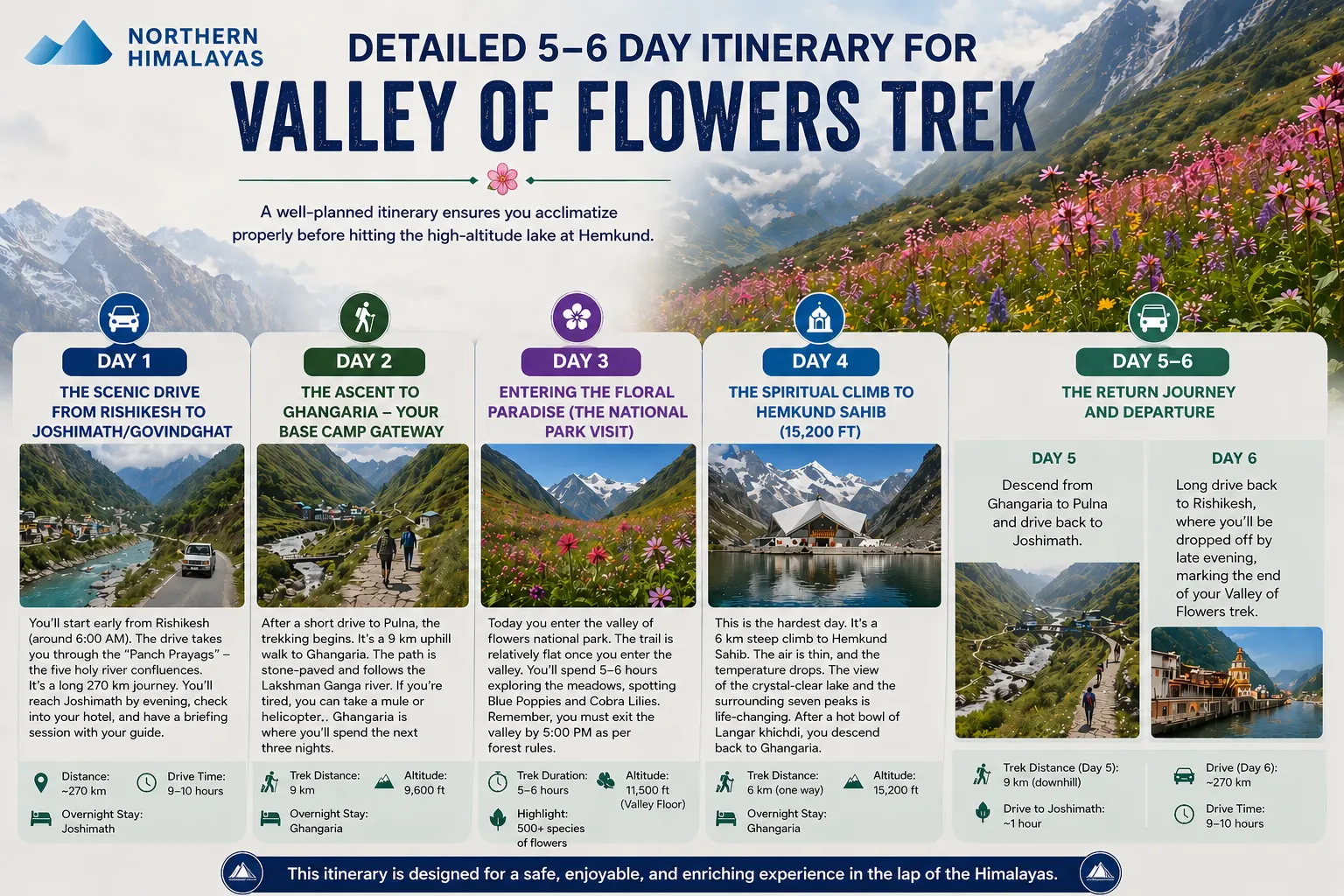
A well-planned itinerary ensures you acclimatize properly before hitting the high-altitude lake at Hemkund.
Day 1: The Scenic Drive from Rishikesh to Joshimath/Govindghat
You'll start early from Rishikesh (around 6:00 AM). The drive takes you through the "Panch Prayags"—the five holy river confluences. It’s a long 270 km journey. You’ll reach Joshimath by evening, check into your hotel, and have a briefing session with your guide.
Day 2: The Ascent to Ghangaria – Your Base Camp Gateway
After a short drive to Pulna, the trekking begins. It’s a 9 km uphill walk to Ghangaria. The path is stone-paved and follows the Lakshman Ganga river. If you're tired, you can take a mule or the helicopter. Ghangaria is where you'll spend the next three nights.
Day 3: Entering the Floral Paradise (The National Park Visit)
Today you enter the valley of flowers national park. The trail is relatively flat once you enter the valley. You'll spend 5–6 hours exploring the meadows, spotting Blue Poppies and Cobra Lilies. Remember, you must exit the valley by 5:00 PM as per forest rules.
Day 4: The Spiritual Climb to Hemkund Sahib (15,200 ft)
This is the hardest day. It’s a 6 km steep climb to Hemkund Sahib. The air is thin, and the temperature drops. The view of the crystal-clear lake and the surrounding seven peaks is life-changing. After a hot bowl of Langar khichdi, you descend back to Ghangaria.
Day 5-6: The Return Journey and Departure
On Day 5, you descend from Ghangaria to Pulna and drive back to Joshimath. Day 6 is the long drive back to Rishikesh, where you’ll be dropped off by late evening, marking the end of your valley of flowers trek.
Best Time to Visit Valley of Flowers
The valley is only open from June 1st to September 30th. Each month offers a different soul.
Why July and August are Peak Months
If you want to see the maximum variety of flowers, July and August are the best time to visit. This is when the rare Blue Poppy and Brahma Kamal bloom. Yes, it rains, and yes, you’ll be wet, but the sight of the valley draped in mist and vibrant colors is unmatched.
Clear Skies and Golden Meadows in September
In September, the rains recede. The valley turns a golden-yellow hue. While the flower count is lower, the mountain views are spectacular. The clouds clear up, giving you a 360-degree view of the Himalayan giants that are usually hidden in August.
How to Reach Valley of Flowers: (by bus, car, train, air)
Uttarakhand’s connectivity has improved significantly, but the final leg remains a mountain road adventure.
Flying into Jolly Grant Airport (Dehradun)
The nearest airport is Dehradun (DED). From here, it’s a 45-minute drive to Rishikesh. Many trekkers arrive a day early in Rishikesh to soak in the Ganga Aarti before starting the trek.
Reaching via Train: The Rishikesh and Haridwar Junctions
Haridwar and Rishikesh are well-connected to Delhi and Mumbai via express trains. The New Rishikesh (Yog Nagari) station is modern and very close to the starting points of most trekking groups.
Local Road Connectivity: Shared Taxis and Public Bus Services
If you are on a budget, take a state transport bus from Rishikesh to Joshimath. They leave as early as 4:00 AM. Shared taxis (Max/Bolero) are also available at the Rishikesh Natraj Chowk and are a faster, though slightly pricier, option.
Essential Packing List and Fitness Preparation for Beginners
A beginner can easily do this trek, but only if they prepare for the monsoon and the altitude.
Monsoon Essentials:
Do not bring umbrellas; they are useless in mountain winds. Invest in a high-quality poncho that covers you and your backpack. Carry only quick-dry synthetic t-shirts. Cotton is your enemy here—it won't dry for days if it gets wet.
Cardio and Strength Training:
-
Weeks 1-2: Brisk walking for 5 km and basic stretching.
-
Weeks 3-4: Stair climbing (5–10 flights) and lunges to strengthen your knees for the descent.
-
Cardio: Try to achieve a 4 km run in 30 minutes.
Acclimatization Tips for the Hemkund Sahib Altitude
Hemkund Sahib is at 15,200 ft—that's a serious altitude. Drink 4 liters of water daily. Avoid sleeping during the day in Ghangaria. If you feel a persistent headache, inform your guide immediately; it could be the start of AMS (Acute Mountain Sickness).
Permits, Entry Fees, and Local Expenses You Should Know
The Valley of Flowers is a National Park, and entry is regulated by the Uttarakhand Forest Department.
Forest Department Charges for Indian vs Foreign Nationals
-
Indian Nationals: ₹150 for a 3-day permit.
-
Foreign Nationals: ₹600 for a 3-day permit.
-
Keep your original ID (Aadhar/Passport) ready at the Ghangaria check-post.
Camera Fees and Rules for Documentary Filmmaking
Basic mobile and DSLR photography is free for personal use. However, if you are using professional cinema cameras or drones, you need prior permission from the Chief Wildlife Warden in Dehradun, and fees can be substantial (running into thousands per day). Usually drones are not allowed due to Nearby mana border area.
Common Hidden Costs and Budget Mistakes Trekkers Make
The "Package Price" is never the "Total Price." Here’s where your budget might leak.
Extra Charges for Mule, Porter, and Offloading
Many beginners realize on Day 2 that they can't carry their 10 kg backpack. Hiring a mule at the last minute can cost more than pre-booking. Budget at least ₹3,000 extra if you plan to offload your luggage for the whole trek.
Last-Minute Hotel Price Surges
If you reach Govindghat without a booking during a long weekend in August, you might pay 3x the normal price. Always book through an operator or call hotels at least 15 days in advance.
Food and Cafe Expenses Outside the Trek Package
Ghangaria has small cafes selling Maggi, Omelets, and Coffee. A plate of Maggi can cost ₹80–₹100. These small expenses add up quickly over 4 days.
Safety, Weather, and Terrain Challenges You Must Be Prepared For
Monsoon Risks: Landslides and Slippery Trails
The road to Joshimath is prone to landslides. A professional operator will always have a plan B. The trail itself becomes slippery; ensure your boots have deep lugs and a good grip.
Altitude and Oxygen Considerations
Northern Himalayas teams carry portable oxygen cylinders. While most don't need it, having it available provides immense peace of mind, especially during the final 2 km climb to Hemkund lake.
Emergency Situations and Response Planning
In case of a serious medical emergency, helicopters are the only way out. Ensure your trekking company has a clear protocol for emergency evacuations and communication with the base.
Why Booking with Northern Himalayas Offers the Best Value for Money
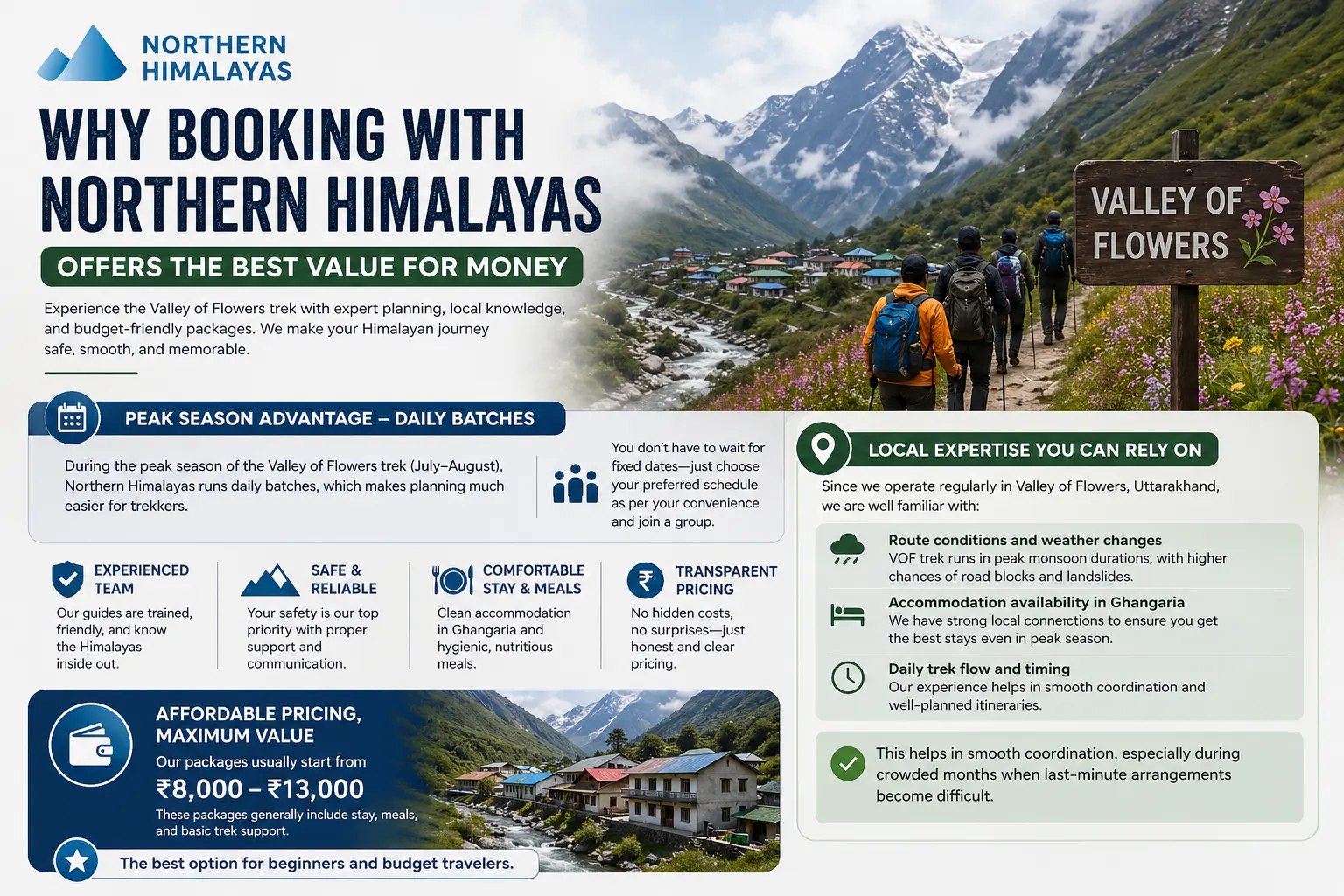
During the peak season of the valley of flowers trek (July–August), local operators like Northern Himalayas run daily batches, which makes planning much easier for trekkers. You don’t have to wait for fixed dates—just choose your preferred schedule as per your convenience and join a group.
Since they operate regularly in Valley of Flowers Uttarakhand, they are well familiar with:
Route conditions and weather changes because this VOF trek runs in peak monsoon durations, their are higher chances of road block and landslides.
Accommodation availability in Ghangaria
Daily trek flow and timing
This helps in smooth coordination, especially during crowded months when last-minute arrangements become difficult.
Another advantage is their affordable pricing:
Their Packages usually start from ₹8,000–₹13,000. These packages generally include stay, meals, and basic trek support, making them the best option for beginners and budget travelers.
Frequently Asked Questions
1. Is Valley of Flowers trek safe for solo female travelers?
Absolutely. The trail is busy with pilgrims and trekkers, and the local community is very respectful. Booking with a reputable group like Northern Himalayas adds an extra layer of safety.
2. Can I do this trek in sneakers?
Highly discouraged. You need waterproof trekking shoes with good ankle support and grip. Sneakers will slip on wet stones and get soaked in minutes.
3. Is there electricity and mobile network in Ghangaria?
Electricity is available but can be erratic. BSNL, airtel and Jio work occasionally, but don't count on it for work calls. Carry a power bank.
4. How much extra cash should I carry?
Carry at least ₹5,000–₹7,000 in cash. ATMs in Joshimath often run out of money, and there are no ATMs in Ghangaria.
5. Is the helicopter ride worth it?
If you have knee issues or want to save energy for the Valley itself, the 5-minute flight is a great investment. It saves you a 9 km steep walk.
6. Can beginners do the valley of flowers trek?
Yes, with basic fitness and preparation.
7. Is a package necessary?
Not mandatory, but helpful for logistics and cost control.
8. What is the best time to visit?
Mid-July to mid-August for peak bloom.
9. Is Hemkund Sahib difficult?
Yes, it’s steep and requires stamina.
10. How much total budget should I plan?
Packages usually start from ₹8,000–₹13,000. These packages generally include stay, meals, and basic trek support, making them the best option for beginners and budget travelers.