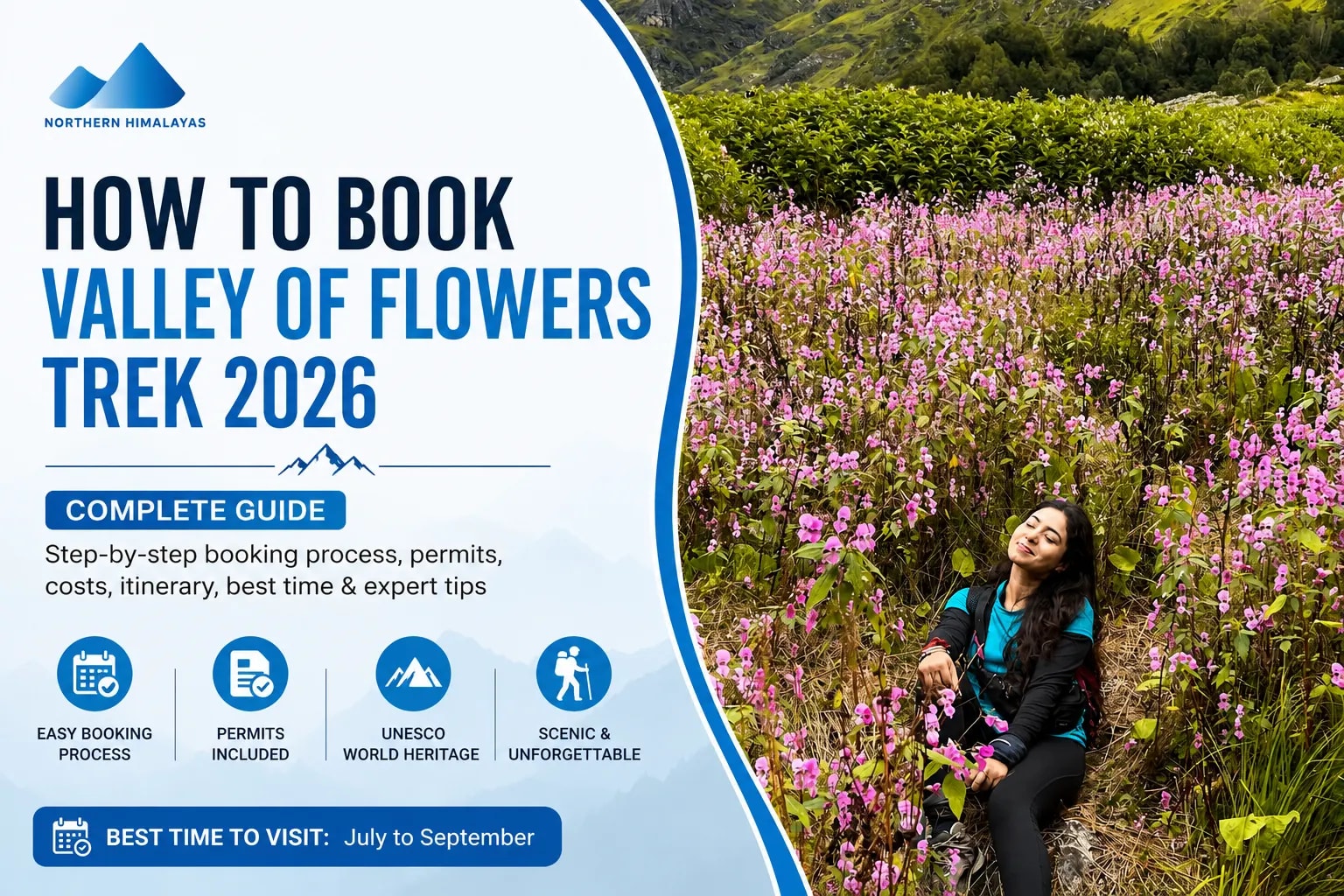
The valley of flowers trek is often described as a walk through a living canvas. Imagine standing in a high-altitude Himalayan meadow where over 500 species of wild blossoms—including the rare Blue Poppy and Brahma Kamal—paint the landscape in hues of pink, blue, and yellow.
This guide covers everything you need to know to secure your spot for the 2026 season. We will dive into the step-by-step booking process, hidden costs, seasonal secrets, and how to balance the dual challenge of the valley of flowers and the holy hemkund sahib trek. Whether you are a solo traveler or looking for a valley of flowers trek package, this is your roadmap to the floral heart of Uttarakhand.
Why the Valley of Flowers Trek is a Must-Visit in 2026
The Valley of Flowers trek is not just another Himalayan trail—it’s a rare experience inside a UNESCO World Heritage Site, where nature feels untouched and alive in every direction. What truly sets it apart is the unique mix of over 500 species of alpine flowers, a relatively easy-to-moderate trekking route, and the spiritual extension to Hemkund Sahib, all combined into one journey. You don’t simply arrive here; you gradually walk into it—starting through dense forest paths, crossing streams, and then suddenly stepping into a vast, colorful valley that feels almost unreal.
Planning this trek in 2026 makes even more sense now, thanks to better road connectivity in Uttarakhand, improved facilities in Ghangaria, and controlled entry systems that prevent overcrowding and protect the ecosystem. It’s especially ideal for first-time trekkers, nature lovers, and photographers who want a high-altitude Himalayan experience without extreme difficulty.
Why you need to book this trek in advance
Because the Valley of Flowers trek is strictly seasonal—open only from June to September—the demand during this short window becomes extremely high. To protect the fragile ecosystem, the forest department enforces daily visitor limits, which means entry isn’t guaranteed if you arrive without planning.
Booking in advance ensures you secure decent accommodation in Ghangaria, the only base for the trek, where options fill up quickly during peak season. Last-minute travelers often struggle with poor-quality stays, overpriced rooms, or in worst cases, get turned back because the daily entry quota is already full.
Why we prefer Northern Himalayas for Valley of Flowers Trek Package
During the peak season of the valley of flowers trek (July–August), local operators like Northern Himalayas run daily batches, which makes planning much easier for trekkers. You don’t have to wait for fixed dates—just choose your preferred schedule as per your convenience and join a group.
Since they operate regularly in Valley of Flowers Uttarakhand, they are well familiar with:
Route conditions and weather changes because this VOF trek runs in peak monsoon durations, their are higher chances of road block and landslides.
Accommodation availability in Ghangaria
Daily trek flow and timing
This helps in smooth coordination, especially during crowded months when last-minute arrangements become difficult.
Another advantage is their affordable pricing:
Their Packages usually start from ₹8,000–₹13,000. These packages generally include stay, meals, and basic trek support, making them the best option for beginners and budget travelers.
How to Book Valley of Flowers Trek (Step-by-Step Process)
Booking a Himalayan trek shouldn't feel like a mountain climb itself. Here is the streamlined process to get your 2026 slot confirmed.
Step 1: Visit the Official Website
Go to the official website:
Valley of flowers trek
You will find the complete Valley of Flowers Trek information.
Here, you can check:
• Detailed itinerary
• Trek duration
• Difficulty level
• Inclusions & exclusions
• etc.
Step 3: Check Dates & Pricing
The best time to visit the valley of flowers is between July and August. Check the fixed departure dates for these months. Send an enquiry via website by simply filling your contact details and name. Or you can connect with a trek expert by clicking on whatsapp or call icon.
Step 4: Submit an Enquiry
Fill in your basic details on the website.
After submitting:
• The Northern Himalayas team will contact you
• They will help you finalize dates and answer queries
Step 5: Confirm Booking & Make Payment
To confirm your seat:
Fill in the form, select your trek date and group size.
Pay ₹3000 per person as an advance.
All payment methods are available if you book it from the website.
Note: The remaining amount is payable on Day 1 of the trek.
Step 6: Get Confirmation & Support
Once booked, you will receive:
• Email confirmation
• WhatsApp confirmation
• Invoice for the trek
Step 7: Offline Booking Option
If you prefer offline booking, you can contact the Northern Himalayas sales team directly.
What’s Included in a Valley of Flowers Trek Package?
-
Accommodation (5 Nights):
-
2 Nights at Joshimath (Hotel/Guesthouse).
-
3 Nights at Ghangaria (Guesthouse/Homestay).
-
🍴 Meals:
-
From Day 1 Dinner → Day 5 Dinner (Vegetarian + Eggs).
-
Permits & Fees:
-
All necessary permits and entry fees included.
-
Medical Support:
-
First aid medical kit available during the trek.
-
Qualified Team:
-
Mountaineering certified Trek Leader, local guide & full support staff.
-
Transportation:
-
Rishikesh ↔ Rishikesh by Dzire / Bolero / Tempo Traveller (based on group size).
Note: AC cost not included in transportation.
Best Time to Visit Valley of Flowers Uttarakhand: Season by Season Guide
Timing is everything for the valley of flowers.
-
June (The Awakening): The snow starts melting. You'll see green shoots and a few early flowers, but the "carpet" isn't there yet. Great for those who want less crowd.
-
July to August (The Peak): This is the best time to visit valley of flowers uttarakhand. The rain is heavy, but the flowers are in full bloom. The valley turns into a literal paradise.
-
September (The Fade): The flowers start turning yellow and seeding. The weather clears up, offering stunning views of the surrounding peaks, but the floral density drops.
Note: Northern Himalayas offers daily departures from 15th June to 15th September every year.
How to Reach Valley of Flowers Trek Base Camp
The journey is a scenic drive through the heart of the Garhwal Himalayas.
-
By Air: Fly into Jolly Grant Airport, Dehradun.
-
By Rail: Take a train to Rishikesh or Yog Nagari Rishikesh station.
-
By Road: From Rishikesh, it's a 10-12 hour drive to Govindghat/Joshimath. The road follows the Alaknanda River, passing through the famous "Prayags" (confluences).
From Govindghat, a short 4km drive takes you to Pulna, where the actual 10km trek to Ghangaria begins.
Valley of Flowers Uttarakhand Trek Difficulty: Is it Beginner-Friendly?
Yes, it is considered a moderate trek.
-
Beginners: Can easily do it if they have a basic fitness level (can walk 5-6 km comfortably).
-
The Challenge: The trail is well-defined but steep in patches. The altitude (reaching 14,000+ ft at Hemkund Sahib) is the real test, not the distance.
-
Pro Tip: If your knees are weak, ponies and "palkis" (palanquins) are available from Pulna to Ghangaria, but the valley itself must be explored on foot.
Required Permits and Entry Fees for Valley of Flowers National Park
The valley is a protected zone.
-
Indians: Approx. ₹150 for a 3-day pass.
-
Foreigners: Approx. ₹600 for a 3-day pass.
-
Documentation: Carry a valid Government ID (Aadhar/Passport) and two passport-sized photos. Your trek operator usually handles the physical queuing for these permits.
Essential Packing List: What to Carry for a High-Altitude Monsoon Trek
This is a monsoon trek—packing matters a lot.
-
Footwear: High-quality trekking shoes with good grip (Himalayan trails get slippery).
-
Rain Gear: A sturdy poncho is better than a raincoat because it covers your backpack too.
-
Clothing: Layering is key. Quick-dry t-shirts and trekking pants. Avoid jeans!
-
Backpack: 30-40 Liters with a rain cover.
-
Personal Care: Sunscreen (the mountain sun is sharp), lip balm, and an extra pair of socks (you will get one pair wet).
Note: Northern Himalayas offers rental gear, so you can choose equipment as per your needs along with your trek package.
Accommodation and Food Options in Govindghat and Ghangaria
-
Govindghat: Plenty of hotels and a massive Gurudwara that offers free stay and food (Langar) to pilgrims and trekkers alike.
-
Ghangaria: This is a small seasonal village. Expect basic rooms with attached baths. Electricity is limited, and Wi-Fi is almost non-existent—embrace the digital detox!
-
Food: Mostly North Indian staples like Dal, Chawal, Sabzi, and Roti. Don't forget to try the hot Maggi and ginger-lemon tea at the trail-side dhabas.
How to Choose the Best Valley of Flowers Trek Package for Your Budget
-
Budget (₹8,000 - ₹10,000): Usually involves larger groups (20+ people) and basic dormitory stays.
-
Mid-Range (₹12,000 - ₹16,000): Smaller groups (8-12 people), better hotels in Ghangaria, and often includes transport from Rishikesh.
-
Luxury (₹20,000+): Heliservices from Govindghat to Ghangaria and premium stays.
My Advice: Go for the Mid-Range. You want a guide who knows your name and a group size that doesn't feel like a school excursion.
Safety Guidelines and High-Altitude Sickness (AMS) Prevention Tips
Safety isn't an option; it's a priority.
-
Hydration: Drink 4-5 liters of water daily.
-
Acclimatization: Spend a night at Govindghat (6,000 ft) before moving to Ghangaria (9,600 ft).
-
Symptoms: If you feel a persistent headache or nausea, tell your guide immediately.
-
Descent: The best cure for altitude sickness is descending.
Conclusion
The valley of flowers trek is a rite of passage for every Indian trekker. It is where spirituality at hemkund sahib meets the raw, blooming beauty of the valley of flowers national park. While 2026 might seem far off, the mountains reward the prepared.
Book your slots early, train your legs, and get ready to witness a part of the Himalayas that looks less like earth and more like a dream. See you in the meadows!