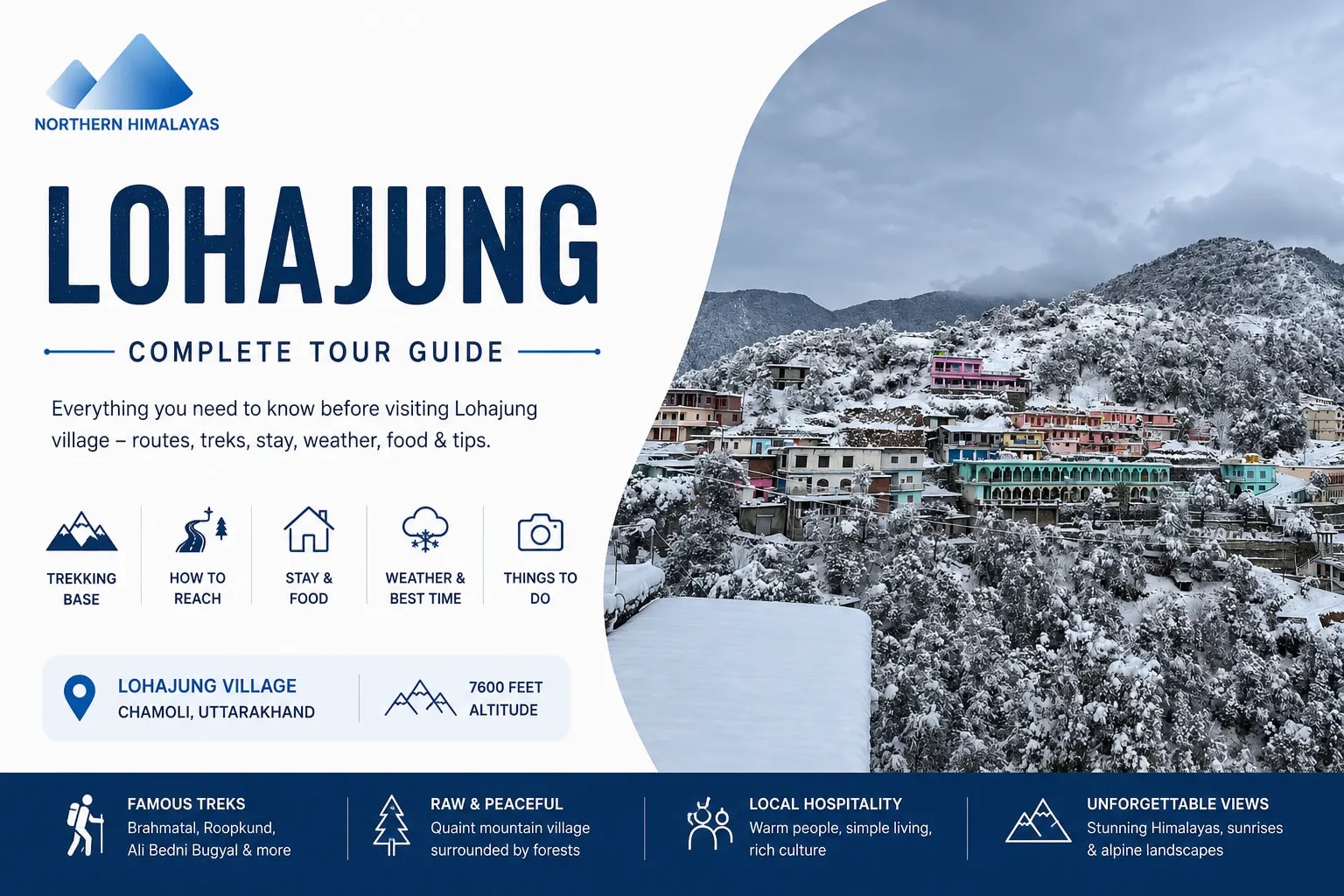
There’s a moment during every Himalayan trek when the road ends, the mountains begin to feel bigger, and your city routine finally disappears from your head. For many famous Uttarakhand treks, that moment starts in Lohajung village. Whether you are heading toward Roopkund, Brahmatal, Ali Bedni Bugyal, or exploring hidden Kumaon-Garhwal routes, Lohajung becomes more than just a base camp.
Most travelers searching about Lohajung usually have practical doubts. How difficult is the road journey? Is the network available? What is the altitude? Is winter too harsh? Can beginners stay there comfortably? This detailed guide covers everything you realistically need to know before visiting Lohajung village, including travel routes, weather, accommodation, trekking conditions, food facilities, and important ground-level advice that first-time travelers often miss.
A brief introduction to Lohajung
Lohajung is a small Himalayan village located in Chamoli district of Uttarakhand at an altitude of around 7,600 feet. It sits quietly between dense oak forests, mountain ridges, and deep valleys, serving as the main base point for several high-altitude treks in the Garhwal Himalayas.
Unlike commercial hill stations, Lohajung has managed to retain its raw mountain atmosphere. You won’t find crowded cafes, luxury malls, or flashy tourism here. Instead, you’ll experience simple mountain homes, cold morning winds, slow village life, and panoramic Himalayan views that feel untouched.
The village holds spiritual and mythological significance too. According to local beliefs, Goddess Parvati fought a demon named Lohasur here, which is how Lohajung got its name — “Loh” from Lohasur and “Jung” meaning battle.
For trekkers, Lohajung is extremely important because many iconic Himalayan routes begin from here:
-
Monal Top Trek
-
Bagji Bugyal Trek
-
Ronti saddle trek
-
Homkund trek
The village also works as an acclimatization point before trekkers gain higher altitude.
What surprises most first-time visitors is how peaceful the environment feels. Even during peak trekking season, Lohajung still feels calm compared to tourist-heavy destinations like Manali or Mussoorie.
What Makes Lohajung village Different
Many Himalayan villages look beautiful, but Lohajung feels different because of its balance between accessibility and wilderness. You can reach it by road, but once you arrive, it still feels isolated enough to give you a true mountain experience.
One major difference is the surrounding terrain. Lohajung sits in a region where forests, meadows, ridgelines, and snow zones connect naturally. Within a short distance, landscapes change dramatically.
Another thing that stands out is the trekking culture. Almost every local family has some connection with trekking:
-
Homestays
-
Guides
-
Porters
-
Rental stores
-
Campsite management
-
Local logistics
Because of this, trekkers are treated warmly here. Locals understand mountain travel challenges better than regular tourist towns.
The village also offers exceptional Himalayan views during clear weather. Peaks like Nanda Ghunti and Trishul become visible from certain viewpoints near Lohajung, especially during sunrise.
Winter transforms the village completely. Snowfall covers rooftops, forest trails become white, and temperatures drop sharply. During this time, Lohajung feels like a proper Himalayan winter settlement instead of just a trek base.
Unlike crowded hill stations where tourism feels commercial, Lohajung still gives travelers a feeling of authenticity.
Treks start from lohajung
Lohajung is one of the most important trekking hubs in Uttarakhand because several famous Himalayan treks begin from here. The village acts as the gateway between road connectivity and remote alpine terrain.
-
Brahmatal Trek: Perhaps the most famous winter trek in India. This trail takes you to the frozen Brahmatal Lake, where Lord Brahma is said to have meditated. The trek is unique because it offers a bird's-eye view of the Roopkund trail and the massive mountains of Mt. Trishul and Mt. Nanda Ghunti.
-
Roopkund Trek: Though currently facing various environmental regulations and closures, this is the legendary "Mystery Lake" trek. Lohajung has historically been the primary base for this 8-day expedition into the heart of high-altitude history.
-
Ali Bedni Bugyal: For those who love meadows, this trek is unrivaled. It takes you to some of the largest high-altitude alpine meadows in Asia. The trail from the village leads through ancient oak and rhododendron forests before opening up into the vast green carpets of Ali Bugyal.
-
Mount Trishul Base Camp: For serious mountaineers, Lohajung is the starting point for expeditions targeting the base of the majestic 7,120-meter Trishul peak.
Each of these treks requires a different level of preparation, but they all share the same starting ritual: a briefing in the village market and a final bag-pack check at a local lodge.
How to Reach Lohajung from Delhi, Rishikesh, and Dehradun
Reaching this remote village is an adventure in itself, requiring a long journey through the winding roads of the Garhwal Himalayas.
From Delhi:
The most common way is to take an overnight train or a Volvo bus to Haridwar/ Rishikesh. From Kathgodam, it is a 10-12 hour drive (approx. 210 km). It is highly recommended to hire a private taxi or coordinate with your trek operator for a pickup, as public buses are rare and extremely slow on this route.
From Rishikesh/Dehradun:
If you are coming from the yoga capital, the journey is longer and more rugged. You will travel via Srinagar, Karnaprayag, and Tharali. The distance is roughly 260 km, taking about 11-13 hours. Shared taxis (Boleros) leave early in the morning from the Natraj Chowk in Rishikesh. If you miss the 5:00 AM window, your chances of reaching the village on the same day diminish significantly.
Logistical Breakdown:
The route takes you through the beautiful "Prayags" (confluences). You will witness the merging of rivers at Devprayag and Karnaprayag. After turning off from the main Badrinath highway at Karnaprayag, the roads become narrower and more prone to delays. Always plan for a "buffer day" when traveling to this region in the monsoon or peak winter.
Hire Cab from Delhi / Dehradun / Haridwar / Rishikesh -
If you are looking for a trusted service to handle the sharp turns and steep climbs of the mountain roads, Chamoli Taxi Service is an excellent choice with experienced mountains drivers.
Road Conditions and Travel Experience to visit Lohajung
The road to Lohajung is a masterclass in Himalayan engineering, but it isn't for the faint of heart. For the first 150 km (from Kathgodam), the roads are generally well-paved and wide enough for two-way traffic. However, once you cross the town of Tharali and begin the final ascent towards Debal, the conditions change.
The final 30 km stretch is where the "real" mountain driving begins. The road becomes a single lane with steep drops on one side. During the winter (December to February), you might encounter black ice—a thin, invisible layer of ice on the road that makes vehicles skid. During the monsoon (July to September), this region is prone to minor landslides that can block the path for several hours.
The experience, however, is visually stunning. You pass through terraced fields, crossing the Pindar River multiple times. The transition from the tropical heat of the plains to the temperate forests and finally the sub-alpine air of the village is a sensory journey. Experienced mountain drivers are a must; if you are driving yourself, ensure your vehicle has high ground clearance and that you are comfortable with steep hair-pin bends.
Lohajung Altitude and Weather
Sitting at an altitude of 2,316 meters (7,600 feet), the village experiences a temperate climate that can turn freezing within minutes. Understanding the weather here is critical for your packing strategy.
-
Summer (April to June): The weather is pleasant. Daytime temperatures hover around 15°C to 20°C, while nights drop to a crisp 5°C. This is when the rhododendrons are in full bloom, making the approach to the village look like a painting.
-
Monsoon (July to August): Expect heavy downpours. The village is often shrouded in mist, and humidity levels are high. Trekking is difficult, but the landscape turns an impossible shade of green.
-
Autumn (September to November): The "Goldilocks" period. Clear blue skies, sharp views of the peaks, and stable temperatures.
-
Winter (December to March): The village often receives snowfall. Temperatures can plummet to -5°C at night. This is the peak season for the Brahmatal trek, and the village takes on a festive, snowy atmosphere.
For any trekker, the advice is simple: always carry a windcheater and at least one warm layer, regardless of the month you visit. The mountain wind at this altitude has a way of biting through light clothing as soon as the sun goes down.
Things to do in Lohajung Village
While most people treat the village as a mere pitstop, there is plenty to experience if you have a spare day for acclimatization.
-
Visit the Local Temple: The temple dedicated to Goddess Parvati is the cultural heart of the village. It’s a great place to observe local architecture and participate in evening aartis.
-
Short Hike to Aajan Top: Just a 2-hour uphill walk from the market, Aajan Top offers a 360-degree view of the surroundings. It is the perfect "acclimatization walk" to test your lungs before the actual trek begins.
-
Explore the Market: The local market is a treasure trove of trekking wisdom. Strike up a conversation with the shopkeepers; many are retired guides with incredible stories about the Roopkund mystery.
-
Photography: The sunset views from the ridge are legendary. Mount Trishul often turns a brilliant orange, a phenomenon known as "Alpenglow," which is a dream for landscape photographers.
-
Community Interaction: Visit the local govt. school or sit at a tea stall. The Garhwali cultures are rich with folklore, and the locals are usually happy to share their way of life with respectful travelers.
Where to Stay in Lohajung
Accommodation in the village has evolved from basic trekkers' huts to more structured lodges.
-
Trekker Lodges: Most trekkers stay in lodges managed by trekking companies. These are typically dormitory-style rooms with attached bathrooms. They are clean, functional, and designed for early morning departures.
-
Guest Houses: There are several privately run guest houses that offer private rooms with attached bathrooms. These are better for families or couples who want a bit of privacy before heading into tent life.
-
Homestays: For those seeking an authentic experience, a few families offer homestay facilities. This is the best way to enjoy authentic local cuisine and learn about the Pahadi lifestyle.
-
GMVN (Garhwal Mandal Vikas Nigam): The government-run tourist rest house is a reliable option, offering basic rooms at standardized prices.
Booking Tip: During peak winter (January) or summer (May), the village can get completely sold out. Always book your stay at least 2-3 weeks in advance. Don't expect luxury; the focus here is on warmth, hygiene, and a good night's sleep.
Best time to visit lohajung
The "best" time depends entirely on what you want to achieve.
If you are a photographer looking for clear views of the Himalayan range, October and November are unparalleled. The monsoon has washed away the dust, and the air is at its clearest.
For snow lovers, January and February are the months to visit. The village itself often turns white, and the Brahmatal trail becomes a winter wonderland. However, be prepared for road closures and carry extreme winter gear.
If you are a beginner looking for the most comfortable trekking conditions, May and June are ideal. The trails are dry, the days are long, and the weather is predictable.
Avoid July & August if you can, as the heavy rains can make the journey from Rishikesh to Lohajung dangerous due to falling rocks/ landslide/ route closer. Also, the leeches on the lower trails during this time can be a nuisance for inexperienced trekkers.
Accommodation, Food & Facilities in lojaung village
Facilities in Lohajung village are surprisingly decent considering its remote location, but you must manage your expectations.
Food:
Expect simple, nutritious Indian meals. Dal, Chawal, Sabzi, and Roti are the staples. Most lodges serve "trekker meals" designed to be high in carbohydrates. Do try the local Mandua ki Roti (finger millet bread) and Kumaoni Raita. Avoid heavy, oily food or non-vegetarian meals a day before your trek, as your digestion slows down at high altitudes.
Mobile Connectivity:
BSNL is the most reliable network here. JIO and Airtel might work in certain spots in the market but are generally unreliable. Data speeds are slow—enough for a WhatsApp message, but don't count on being able to upload high-res videos or join Zoom calls.
Electricity & ATMs:
Electricity is available but prone to frequent cuts during bad weather. There is no ATM in the village. The last reliable ATMs are in Tharali or Dewal. Ensure you carry enough cash for your entire trek, including tips for guides and emergency expenses, as digital payments are still not widely accepted in the village.
Why we prefer Northern Himalayas for treks starts form lohajung
Choosing the right trek operator matters a lot in Lohajung because mountain logistics directly affect safety and comfort.
Northern Himalayas is often preferred because of their local operational experience in the Lohajung region.
What actually matters in a trek operator
Not fancy marketing.
Real factors include:
-
Local guide experience
-
Weather understanding
-
Reliable transport
-
Campsite management
-
Emergency handling
Why local expertise helps
Operators familiar with Lohajung understand:
-
Seasonal route conditions
-
Snow behavior
-
Water availability
-
Forest regulations
This becomes important during winter treks where weather changes quickly.
Note: Safety, realistic planning, and experienced local staff matter far more than luxury arrangements in Himalayan trekking.
Important Tips for Travellers
-
Acclimatize Properly: Spend at least 24 hours in the village before starting your trek. Use this time to walk around and let your lungs adjust to the 7,600-foot altitude.
-
Cash is King: I cannot stress this enough—carry physical cash. The nearest ATM is hours away, and network issues often render UPI useless.
-
Pack Light but Smart: You can leave your extra luggage (city clothes) at your lodge in the village. Only take what is essential for the trail.
-
Respect the Culture: The Himalayas are considered sacred. Avoid loud music, be mindful of your waste (take your plastic back!), and always ask for permission before taking photos of locals.
-
Hydration: Start increasing your water intake as soon as you reach the village. Dehydration is the fastest way to get altitude sickness.
-
Medical Checkup: Even if you feel fit, get a basic checkup. Mention any history of asthma or heart conditions to your trek leader immediately upon arrival.
FAQs
Q: Is there mobile network in Lohajung?
A: Yes, but it is limited. BSNL has the best coverage for calling. Idea/Airtel/Jio may work intermittently for basic data in the main market area, but expect complete blackouts during bad weather.
Q: Can I get trekking gear on rent in the village?
A: Absolutely. The village market has several shops that rent out high-quality trekking shoes, jackets, poles, and even ponchos. However, if you have a specific size or preference, it’s always better to carry your own. Most of the trek companies like Northern Himalayas provide rental gear for their trekkers directly in base camp.
Q: How difficult is the journey from Rishikesh?
A: It is a long, 10-12 hour winding drive. If you suffer from motion sickness, take an Avomine or similar medication an hour before starting. The views are beautiful, but the constant turns can be taxing.
Q: Is it safe for solo female trekkers?
A: Yes, the village and the trekking community are generally very safe and respectful. However, it is always advisable to join a registered trekking group or hire a certified local guide.
Q: What is the last point for fuel?
A: If you are driving yourself, the last reliable petrol pump is in Karanprayag /Tharali. Ensure your tank is full before making the final climb to the village.
Q: Is Lohajung safe for beginners?
Yes, Lohajung itself is beginner-friendly. However, treks starting from Lohajung vary in difficulty. Brahmatal is suitable for beginners with basic fitness, while routes like Roopkund are more demanding.
Q: Does it snow in Lohajung village?
Yes, Lohajung receives snowfall during winter, especially from late December to February. Snow intensity changes yearly depending on weather conditions.
Q: Can families visit Lohajung without trekking?
Yes, families can visit Lohajung for peaceful mountain stays, village experience, and snow views during winter. However, facilities remain basic compared to commercial hill stations.